
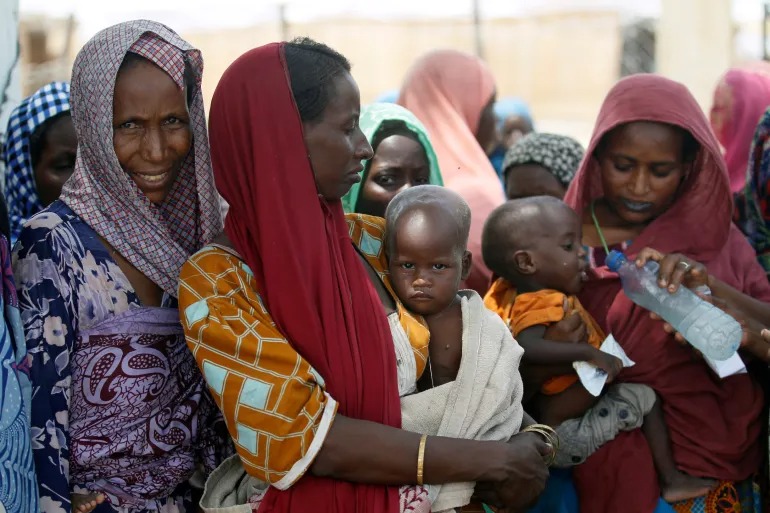

The United Nations Children’s Fund (UNICEF) sounded the alarm on Wednesday over a rapidly intensifying cholera outbreak threatening the lives of tens of thousands of children across West and Central Africa. With the rainy season underway, the agency warned that nearly 80 million children face heightened risk of exposure to the disease.
“Heavy rainfall, widespread flooding, and large-scale displacement are accelerating the spread of cholera and putting children’s lives in serious jeopardy,” said Gilles Fagninou, UNICEF’s Regional Director for West and Central Africa.
As cholera cases surge across borders — especially in the Democratic Republic of Congo and Nigeria — UNICEF described the situation as a public health emergency in the making. The organization emphasized the urgency of scaling up humanitarian response efforts before the situation spirals beyond control.
“We are in a race against time,” Fagninou said. “Together with national authorities and partners, we’re working to deliver clean water, basic healthcare, and critical nutrition support to the most vulnerable children.”
A Regional Crisis Deepens
UNICEF has identified the Democratic Republic of Congo as the epicenter of the current outbreak. In the month of July alone, over 38,000 cases and 951 deaths have been recorded — a staggering toll not seen since the country’s last major outbreak in 2017.
Children under the age of five account for more than one in four infections, raising fears of rising child mortality unless swift action is taken. The situation in Kinshasa is particularly alarming: health facilities are overwhelmed, and a sharp 8% spike in mortality has been reported over the past four weeks due to flooding and poor sanitation.
In Nigeria, the second hardest-hit country, 3,109 suspected cholera cases and 86 deaths were reported by the end of June. Cholera remains endemic in Nigeria, with multiple outbreaks recorded in recent years — and health workers say the current trend suggests another major wave may be underway.
A Threat Across Borders
UNICEF says the risk of cross-border transmission is growing. Countries including Chad, Ghana, Côte d’Ivoire, Togo, and the Republic of Congo are all battling sustained outbreaks.
• Ghana reported 612 cases as of April 28.
• Côte d’Ivoire logged 322 cases and 15 deaths by mid-July.
• Togo reported 209 cases and five deaths by late June.
Meanwhile, fragile states such as Niger, Liberia, Benin, Cameroon, and the Central African Republic are on high alert. These nations are considered highly vulnerable to outbreaks due to weak healthcare infrastructure, poor sanitation systems, and limited access to clean water.
Cholera and Children: A Deadly Mix
Cholera is a waterborne bacterial disease that causes severe diarrhea and dehydration. While treatable through oral rehydration salts and antibiotics, the illness can be fatal within hours if left untreated — especially among children.
UNICEF emphasized that young children are particularly vulnerable, citing compounding factors such as poor hygiene, malnutrition, weak immunity, and a lack of access to clean water and sanitation. The agency is especially concerned about rural and underserved communities that remain outside the reach of conventional aid efforts.
“We’re expanding our outreach to the most remote areas, empowering communities, and doing everything possible to ensure no child is left behind,” Fagninou said.
$20 Million Appeal to Curb the Spread
UNICEF is urgently appealing for $20 million in additional funding over the next three months to scale up its cholera response. The funds would support life-saving interventions across healthcare, water and sanitation services, community outreach, and risk communication.
Without immediate action, the agency warns, the region could face a catastrophic escalation, with thousands more children at risk of severe illness or death.
As rains continue to lash already vulnerable regions, the challenge now lies not just in treatment, but in halting cholera’s advance — one village, one child, one drop of clean water at a time.


