
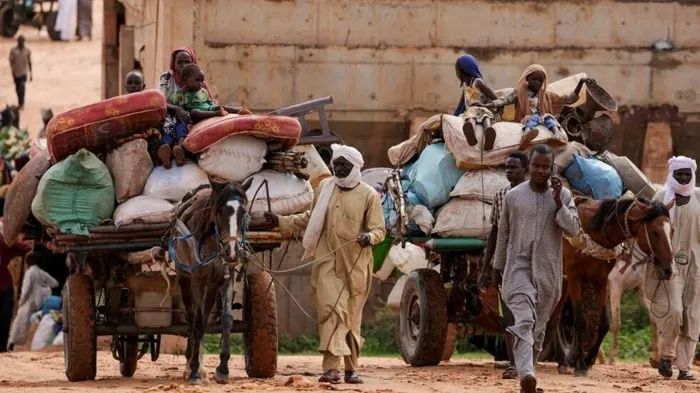

The United Nations has warned of an unprecedented humanitarian catastrophe in Sudan, describing it as the world’s largest displacement crisis, as more than 15 months of conflict devastate the country and hollow out its capital, Khartoum.
Following a recent mission, Edem Wosornu, Director of Operations and Advocacy at the UN Office for the Coordination of Humanitarian Affairs (OCHA), said Khartoum has been reduced to a “ghost city” after fierce fighting between the Sudanese Armed Forces (SAF) and the Rapid Support Forces (RSF) since April 2023.
The war has forced millions to flee their homes, left basic services in ruins, and caused severe shortages of food, water, and healthcare. The UN estimates that over 30 million Sudanese now require urgent humanitarian aid.
Wosornu said the devastation was “unlike anything” she had witnessed in nearly 25 years of humanitarian work, noting that UN teams were unable to access their OCHA offices in Khartoum due to unexploded ordnance.
The crisis has triggered widespread hunger, with nearly 25 million people facing severe food insecurity. Famine has been reported in parts of Darfur and Kordofan. The World Health Organization (WHO) warns that 770,000 children under five could suffer from severe acute malnutrition in 2025, while UNICEF reports a 46% rise in malnutrition cases in Darfur in the first five months of the year.
Sudan’s healthcare system is collapsing, with WHO documenting 174 attacks on medical facilities since the war began. Cholera has spread to all 18 states, causing nearly 100,000 suspected cases since July 2024, alongside outbreaks of measles, malaria, dengue, and polio.
The UN is urging immediate and unhindered humanitarian access, increased funding, and a halt to hostilities to prevent further deterioration of the crisis.


