
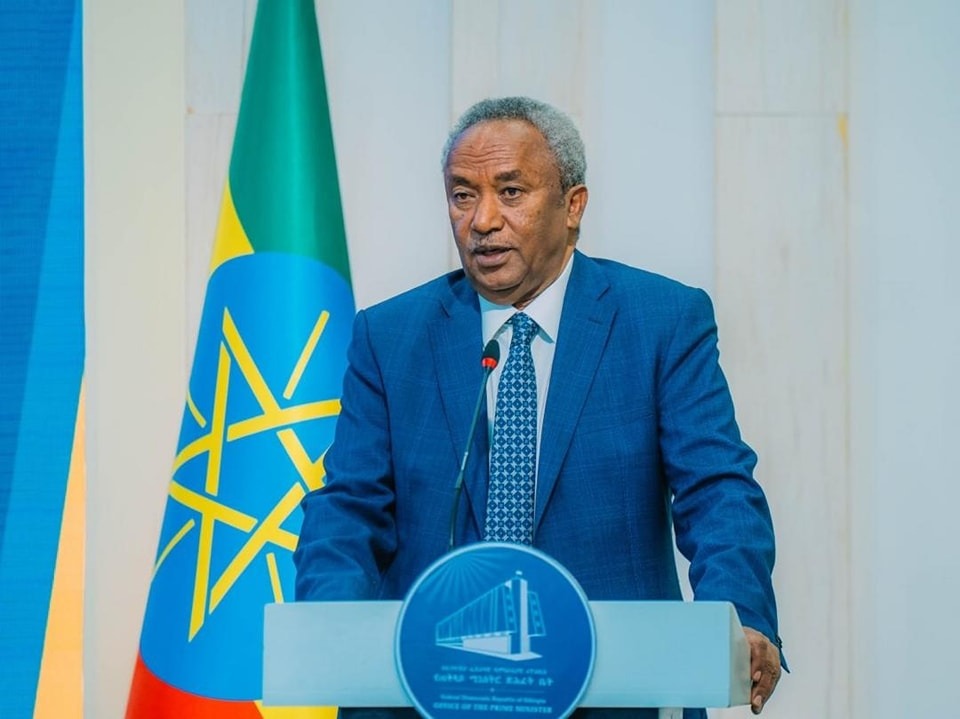

Tigray Interim President Tadesse Worede has stated that the armed forces in the Tigray region will not be disarmed until key elements of the Pretoria Agreement are fully implemented.
In remarks reported by DW Amharic on Monday, Tadesse emphasized that disarmament must follow formal demobilization and the reintegration of fighters into their communities—components he insists are integral to the Pretoria Agreement.
His comments come in response to recent claims by Ethiopia’s Chief of Defense Staff, General Berhanu Jula, who alleged at a public event in Jimma that the Tigray People’s Liberation Front (TPLF) has yet to surrender its heavy weaponry—despite the disarmament provision being a cornerstone of the peace accord that ended the two-year war between the Federal government and the TPLF.
Tadesse also addressed the ongoing military training in Tigray, clarifying that “the military training is not preparation for war or for a specific mission. As long as the forces remain, the training will continue.”
He tied the prospect of lasting peace to the resolution of what he called “Tigray’s demands,” stating, “Tigray’s territory should be restored to its pre-war boundaries, and all displaced people must return.”
The Federal government has accused the TPLF and its regional allies of politicizing the issue of internally displaced persons (IDPs), claiming it has always been willing to facilitate their return. However, it says political actors in Tigray—implicitly referring to the TPLF—have obstructed the process for political leverage.
Tadesse placed responsibility on the Federal government to create conditions that remove any justification for continued military mobilization or the maintenance of Tigray’s armed forces.
Criticism from Within Tigray
Despite his position, Tadesse Worede is facing increasing criticism from prominent figures and political groups within Tigray.
General Tsadkan Gebretensae, a former Chief of Defense Staff and longtime TPLF commander dating back to its guerrilla days in the 1970s, accused Tadesse of lacking the political will and determination to address Tigray’s internal challenges. He also questioned the Federal government’s motives in appointing Tadesse as interim president.
Opposition political parties in the region have echoed these concerns, accusing Tadesse of being too closely aligned with the TPLF and prioritizing the group’s interests over broader regional concerns.
Meanwhile, both the TPLF and the Interim Administration are facing growing resistance from opposition forces operating in the region, signaling continued instability despite the formal end of hostilities.


