
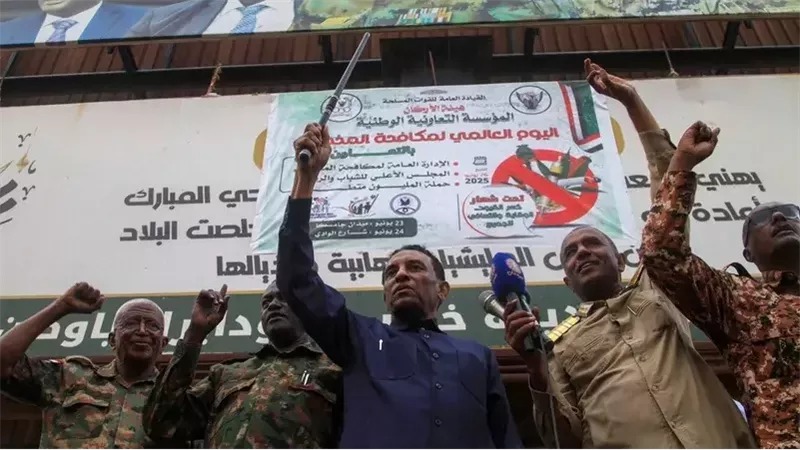

Sudan’s Prime Minister Kamil Idris made his first official visit to Khartoum on Saturday since taking office in May, marking a symbolic return to the war-ravaged capital as the military-backed government eyes the city’s gradual reintegration into administrative functions.
Accompanied by senior officials, Idris toured key infrastructure sites, including the devastated airport, bridges, and water stations. Speaking during the visit, he vowed to rebuild the capital and reaffirmed the government’s plan to restore ministries to Khartoum—despite continued violence in other parts of the country.
“The capital will rise again as a proud national symbol,” Idris stated, according to Sudan’s state news agency. He also pledged comprehensive reform programs and encouraged the return of at least a portion of the estimated 3.5 million residents who fled the capital since the conflict began.
Khartoum has suffered extensive damage since the outbreak of war in April 2023 between the Sudanese Armed Forces (SAF) and the paramilitary Rapid Support Forces (RSF). The fighting has led to the displacement of over 10 million people within Sudan, with an additional four million fleeing across borders, triggering the world’s largest hunger and displacement crisis.
$700 Billion Reconstruction Challenge
Rebuilding Sudan, and particularly Khartoum, presents an enormous financial challenge. According to government estimates, the cost of nationwide reconstruction could reach $700 billion—nearly half of which would be required for the capital alone.
As part of his tour, Idris visited the Giad Oil Refinery in northern Khartoum—the country’s largest petroleum facility—which was severely damaged during the conflict. Though recaptured in January, officials say full rehabilitation of the refinery, which previously processed 100,000 barrels per day, could take years and cost at least $1.3 billion.
The visit comes as authorities begin cleanup and recovery operations in Khartoum, including the burial of war victims and removal of thousands of unexploded munitions, while attempting to restore basic administrative services.
Al-Burhan Returns to Khartoum
Sudan’s de facto leader and army chief Abdel Fattah Al-Burhan also arrived in Khartoum on Saturday aboard a civilian flight—the first such entry since the war began. His arrival at the city’s recently reclaimed airport, once under RSF control for nearly two years, was seen by military officials as a symbolic assertion of SAF dominance in the capital.
In recent months, the army has reclaimed strategic locations in Khartoum, including the Presidential Palace and army headquarters, reinforcing its presence after significant territorial losses earlier in the conflict.
However, large parts of Sudan remain under RSF control or active conflict zones, particularly in South Kordofan and the Darfur region. Recent reports accuse the RSF of massacres in Darfur, with hundreds killed as the group attempts to expand its territorial hold.
Humanitarian Catastrophe Unfolds
Sudan now faces an unprecedented humanitarian disaster. Nearly 25 million people—over half the population—are experiencing acute food insecurity, according to international organizations. The collapse of services and ongoing violence have exacerbated suffering across all regions of the country.
Despite the grim backdrop, Idris and military leaders are moving forward with plans to stabilize key regions and rally international support for reconstruction, though funding sources remain unclear amid global donor fatigue and complex political dynamics.


