
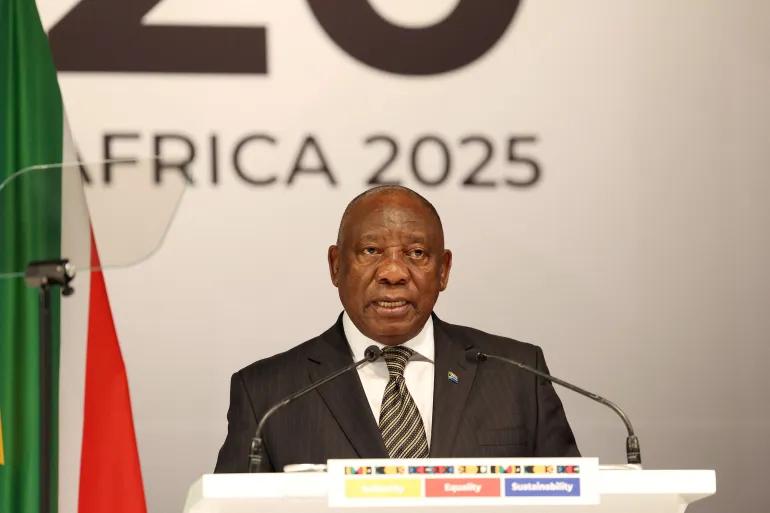

South African President Cyril Ramaphosa has vowed to continue his flagship national dialogue initiative despite a high-profile walkout by the Democratic Alliance (DA), the largest coalition partner in his fragile unity government.
Speaking Friday amid mounting political tensions, Ramaphosa declared that the dialogue — launched after the 2024 elections to tackle South Africa’s economic and social crises — “will proceed without delay or disruption, and without interference from any party that does not prioritize the interests of the South African people.”
The president’s comments came after the DA suspended its participation in the dialogue in protest over the sudden dismissal of its senior member, Deputy Trade Minister Andrew Whitfield, who was removed for undertaking a trip to the United States without formal clearance.
Although the DA remains part of the coalition cabinet, its exit from the national talks has escalated friction within the government, which has struggled to present a unified front since its formation last year following a tightly contested election.
DA leader John Steenhuisen sharply criticized the national dialogue process, calling it “a waste of public time and resources,” and accused the ruling African National Congress (ANC) of sidelining coalition partners and making unilateral decisions.
The ANC and DA — long-standing rivals — joined forces in a surprise power-sharing agreement in mid-2024, following an election that left no party with a clear majority. Since then, however, repeated disputes over governance style and cabinet roles have tested the coalition’s resilience.
Ramaphosa has urged the DA to nominate a replacement for Whitfield, but the party has yet to respond publicly to the request. Analysts warn that the standoff may deepen, potentially jeopardizing the stability of the unity government.
The national dialogue, which the president hopes will lay the groundwork for inclusive reform, is designed to address long-standing grievances including poverty, unemployment, crime, and corruption. Ramaphosa has framed the initiative as a vehicle for national healing and political renewal.
However, the withdrawal of the DA — South Africa’s second-largest political party — raises questions about the dialogue’s credibility and effectiveness. Critics argue that without full buy-in from all major political forces, the initiative risks being seen as an ANC-led public relations exercise rather than a genuine platform for reform.
The latest political drama has also rattled investors, with business leaders expressing concern over the coalition’s internal instability and the risk of stalled decision-making on key economic and fiscal issues.
For now, President Ramaphosa is pressing ahead, insisting that the process will not be derailed by political brinkmanship. “We will not allow distractions or narrow interests to derail our commitment to the people of South Africa,” he said.
Whether the coalition can weather this latest crisis — and keep the national dialogue on track — remains to be seen.


