
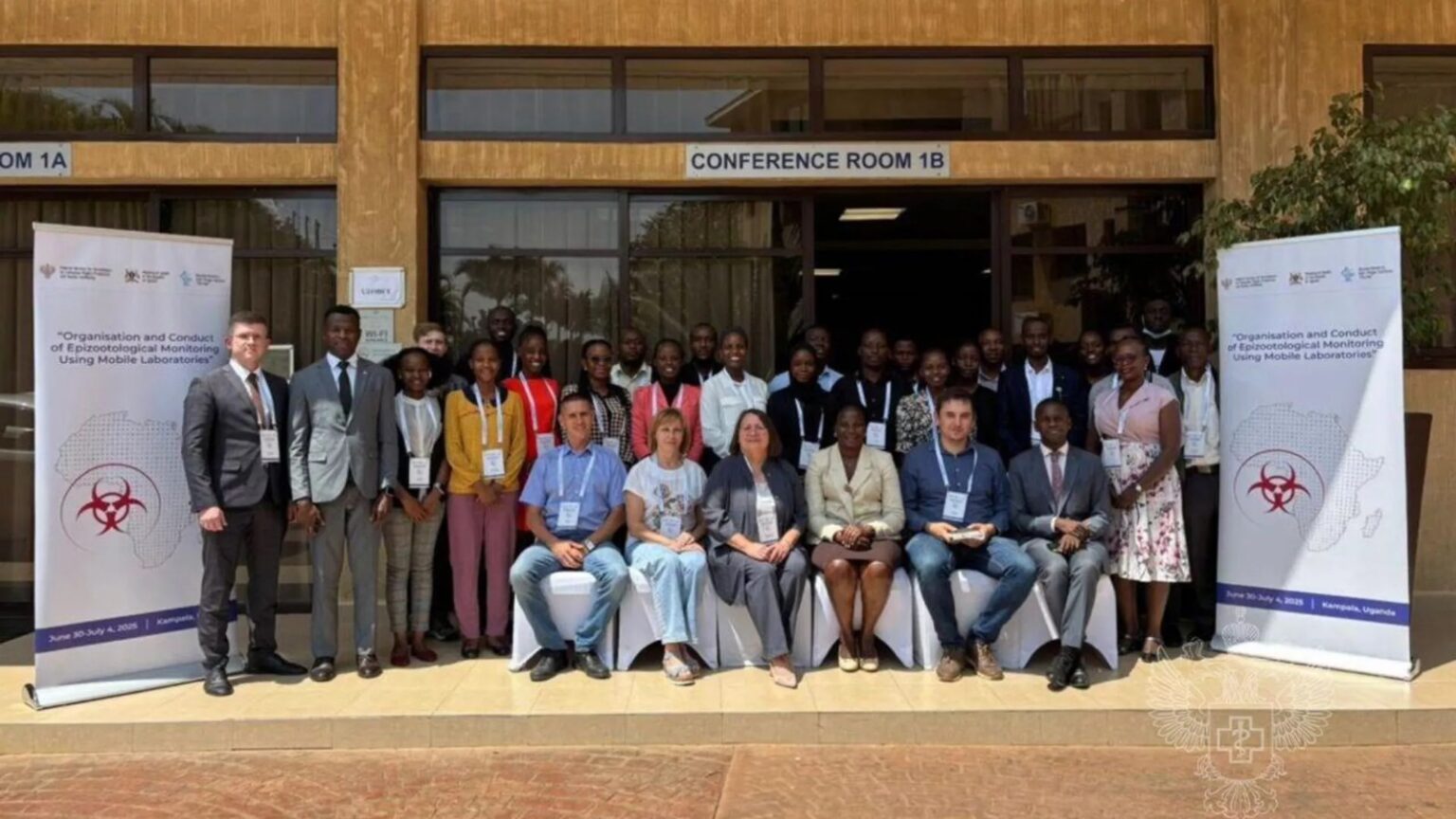

Russia’s consumer protection and health watchdog, Rospotrebnadzor, has launched a training program in Uganda aimed at strengthening the country’s capacity to detect and respond to infectious disease threats, Russian officials said on Tuesday.
The training, held in the capital Kampala, is part of a broader Russia-Africa cooperation program focused on combating epidemic-prone diseases and improving public health systems across the continent.
According to a statement from Rospotrebnadzor, the program is designed to help Ugandan specialists learn how to operate mobile laboratories and rapidly identify dangerous pathogens during potential outbreaks.
The courses also focus on monitoring zoonotic diseases—those transmitted from animals to humans—with the goal of early detection and prevention.
“Leading Russian experts are working closely with 30 medical professionals from Uganda’s Ministry of Health to build local capacity in outbreak response and laboratory diagnostics,” the statement said.
The initiative reflects growing engagement between Russia and African countries in the fields of health security and infectious disease surveillance.
Similar programs have previously been conducted in other African nations as part of Russia’s push to expand its soft power and scientific cooperation across the Global South.
Uganda has faced multiple outbreaks in recent years, including Ebola and Crimean-Congo hemorrhagic fever, prompting international support to bolster its disease surveillance systems.


