
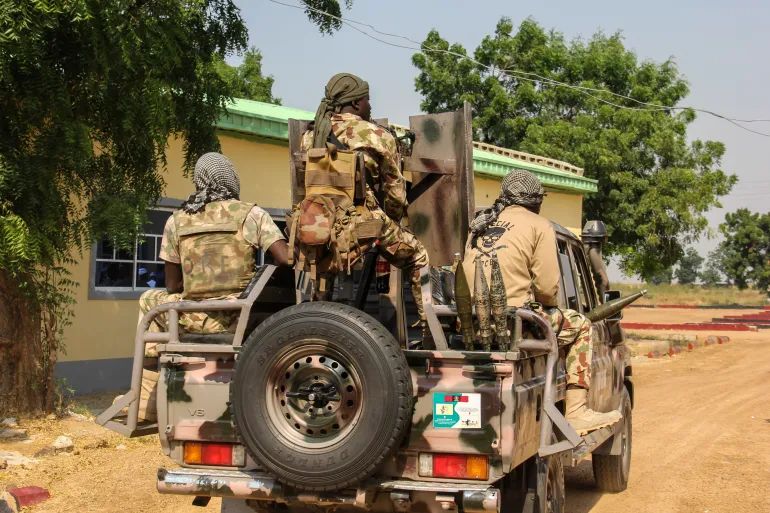

Nigeria’s military has claimed significant progress in its ongoing counterinsurgency efforts in the country’s troubled northwest, announcing the killing of at least 95 armed fighters during a large-scale operation in Niger State this week. The offensive targeted remote areas long plagued by banditry, extortion, and kidnapping, underscoring the scale of Nigeria’s security challenges and the growing complexity of rural conflict zones.
According to a classified UN report obtained by international media, Nigerian ground and air forces jointly launched a coordinated assault on suspected militant strongholds in the Warari and Ragada regions. The operation, which involved airstrikes followed by heavy artillery engagement and ground sweeps, reportedly disrupted an imminent attack planned by armed groups known locally and officially as “bandits.”
For over a decade, Nigeria’s northwestern states—particularly Zamfara, Katsina, Kaduna, and Niger—have grappled with rising insecurity driven by the expansion of loosely organized armed groups. These groups have evolved from cattle-rustling and land-dispute militias into more structured, militarized factions involved in arms trafficking, ransom kidnappings, and illegal taxation of rural communities.
While the military reported “neutralizing a number of terrorists” and confirmed the death of one of its personnel, it withheld the exact number of militant casualties. Intelligence sources cited a strategic decision by the Nigerian army to reduce the public disclosure of operational details, in order to prevent armed groups from adapting their tactics.
Security analysts say the northwest’s deteriorating security landscape has become increasingly intertwined with jihadist activity in the northeast, where Boko Haram and the Islamic State’s West Africa Province (ISWAP) continue to operate. Some armed factions in the northwest have reportedly begun coordinating logistics and intelligence with these extremist groups, further complicating efforts to contain violence.
Despite improved cooperation between air and ground units, the military’s intensified reliance on airstrikes has drawn criticism from rights organizations. Past aerial operations have been linked to high civilian casualties, raising questions about the proportionality of force and the protection of non-combatants in conflict zones.
These developments highlight the broader governance vacuum in Nigeria’s rural areas, where state institutions remain weak or absent and communities are often left to negotiate their own security arrangements. As the country prepares for the 2026 general elections, the growing militarization of internal conflicts and the expanding footprint of armed groups present a serious challenge to national stability.
Observers say that while the military’s recent successes may disrupt specific networks temporarily, long-term peace in the region will depend on a mix of security reform, economic investment, and locally-driven reconciliation initiatives to address the root causes of violence.


