
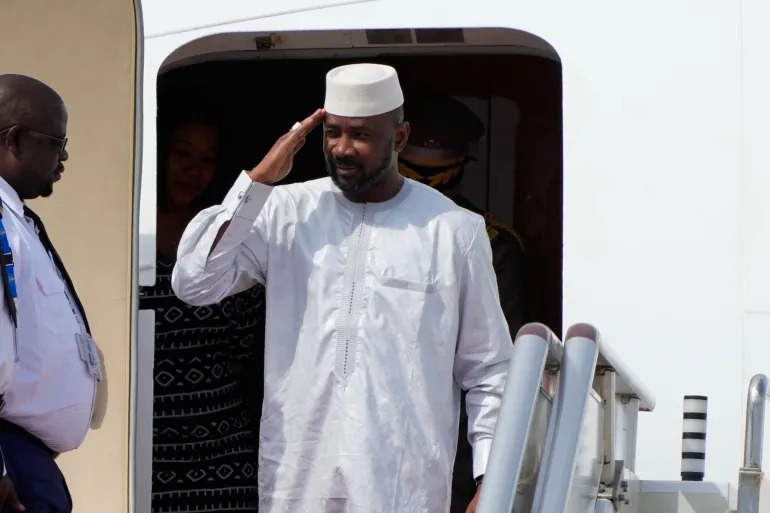

Mali’s interim leader Assimi Goïta has signed into law a decree granting himself a five-year presidential term, renewable indefinitely, without elections—further entrenching military rule in the West African country.
The law, signed on Tuesday and published Thursday, was approved last week by a military-appointed legislative council. It allows Goïta to remain in power until at least 2030, despite earlier commitments by Mali’s transitional government to return to civilian rule.
According to the new legislation, Goïta may continue as head of state for multiple terms “as long as necessary,” citing the need to restore peace and stability amid ongoing security challenges.
The cabinet endorsed the draft law in June, just months after the government, in March 2024, reiterated its intention to hold elections and restore constitutional order.
Goïta, who seized power in a 2021 coup, initially pledged to combat jihadist insurgencies and transition to a democratically elected government. However, the military has since delayed electoral deadlines and taken further steps to consolidate its authority.
The new law follows a series of restrictive measures imposed by the junta, including the dissolution of political parties and the suspension of political gatherings announced in May.
The move was supported by outcomes from a national consultation led by the military council, which recommended that Goïta be appointed president for a renewable five-year term without elections. The national assembly—dominated by pro-junta figures and boycotted by most political groups—also called for the dissolution of political parties and tougher regulations on party formation.
Observers say the developments mark a further rollback of political freedoms in Mali and deepen concerns over the country’s prolonged transition under military control.


