
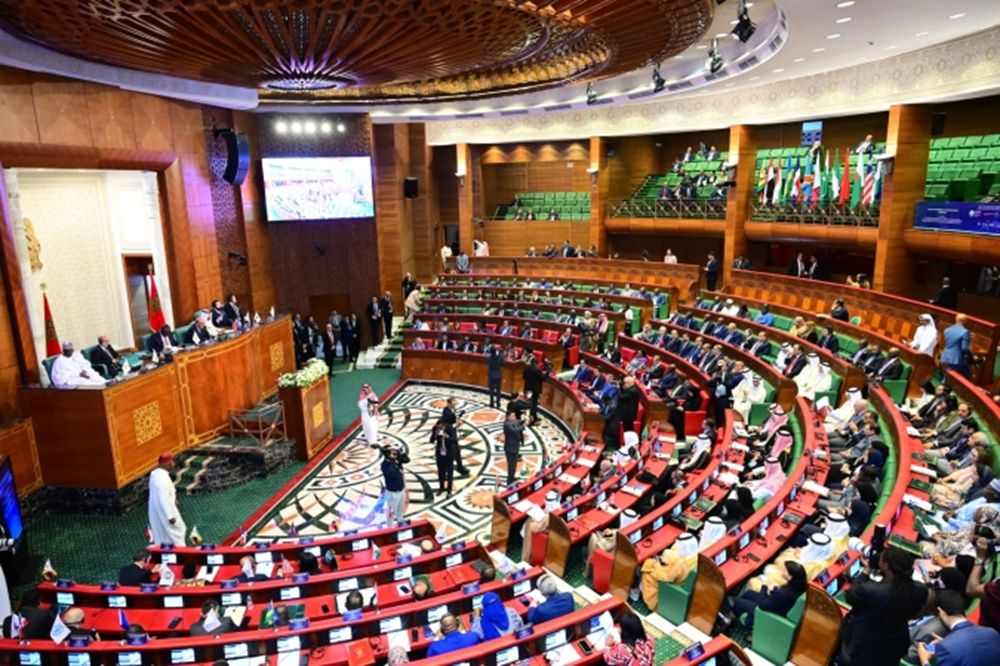

Morocco’s legislative elections have reshaped the balance of power among the country’s political parties, with the Authenticity and Modernity Party (PAM) emerging as the largest party with 97 seats, while the National Rally of Independents (RNI) declined to 66 and the Justice and Development Party (PJD) returned strongly with 54 seats, according to preliminary results.
Moroccan journalist Mohamed Taoufik Ameziane told DNE Africa that the results had rearranged the political landscape, particularly through the return of the PJD to the House of Representatives in significantly greater strength than in the 2021 election.
“The legislative elections can first be read through the return of the Justice and Development Party to the House of Representatives with this number of seats, which carries clear political significance given the wide gap between its 2026 result and its performance in the 2021 elections,” Ameziane said.
He noted that the PJD had recovered a substantial part of its parliamentary presence, bringing renewed competition among political forces whose positions within Morocco’s institutional landscape had shifted after the previous election.
The PJD secured 54 seats, placing fourth, while the RNI, which led the outgoing government, came second with 66 seats. PAM topped the preliminary results with 97 seats, followed by Istiqlal with 65.
Ameziane said the RNI’s decline compared with its 2021 performance had opened a discussion about the political and social record of the outgoing five-year government.
“This comes particularly amid continued public debate over the rising cost of living, purchasing power, and citizens’ expectations regarding employment and social services,” he explained.
He warned, however, that electoral results should not be attributed to a single factor.
“Part of the decline can be read as a reflection of discontent linked to some government decisions and policies, although the voting results remain shaped by a range of interconnected political, electoral and local factors,” Ameziane noted.
Beyond the four leading parties, he said most political forces broadly retained their positions within the parliamentary landscape, although with variations in the number of seats won.
The results show that the election did not completely overturn the existing political order, but instead redistributed some of the balance of power among established parties. Istiqlal, the Popular Movement, the Socialist Union of Popular Forces and the Party of Progress and Socialism all remained among the eight largest parliamentary forces.
Ameziane also highlighted the performance of the Left Alliance, which secured eight seats.
“Although this result does not allow it to reach the number required to form a parliamentary group, it gives this current an institutional presence within the House of Representatives and provides a new platform to express its positions and participate in legislative and political debate,” he said.
He described the result as a potentially important step in rebuilding the institutional presence of the left.
The election’s significance, however, extends beyond the redistribution of parliamentary seats, Ameziane said, pointing to the political negotiations that will follow the vote.
PAM’s first-place finish leaves the party facing a new phase of consultations over the formation of a governing majority, while the composition of the 395-seat House means that coalition-building will require multiple partners.
“Attention will now turn to the shape of the majority that will emerge, the composition of the new government and the figures who will be responsible for managing the 2026-2031 legislative term,” Ameziane said.
He added that the incoming government would face a broad economic and social agenda, including employment, purchasing power, healthcare, education, social protection, investment and regional development.
The next government will also face political and institutional challenges related to rebuilding public trust and strengthening participation in public life, he noted.
The elections recorded nationwide turnout of 38.08%, compared with 50.86% in 2021 and 42.27% in 2016, according to Morocco’s Interior Ministry. Nearly 6 million voters took part in the September 23 vote.
“With the ballot boxes bringing the electoral competition to an end, the results are opening a new phase of political negotiations, whose central theme will be the formation of the next majority,” Ameziane concluded.
The eventual coalition arrangements and government choices will provide a clearer indication of the political direction Morocco will take during the next five-year legislative term.


