
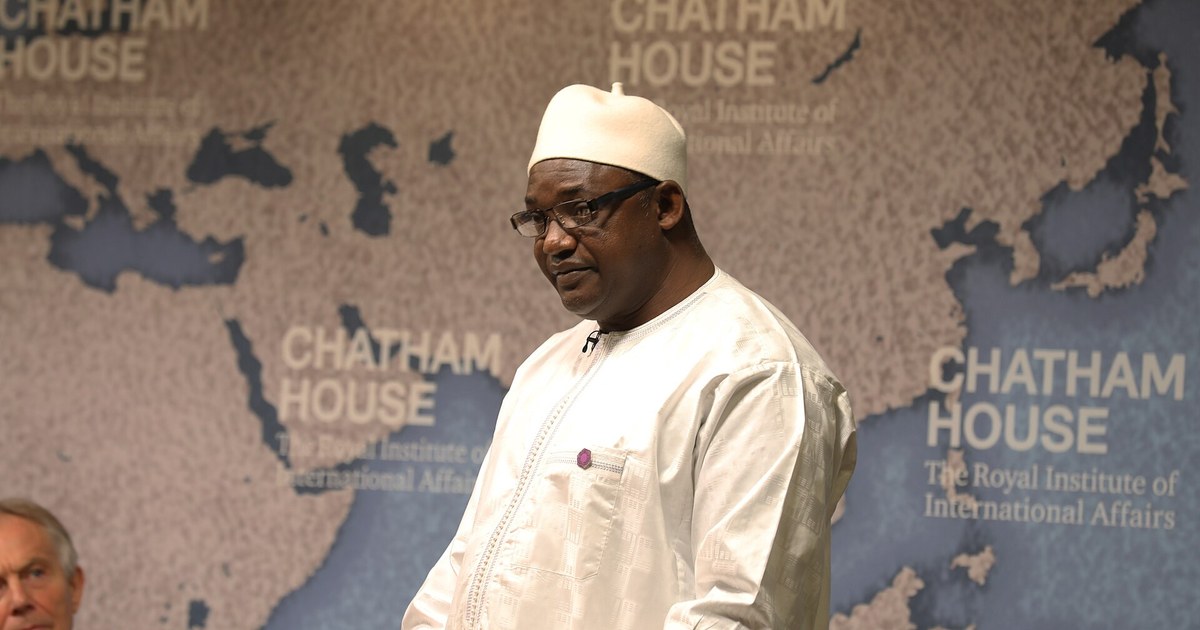

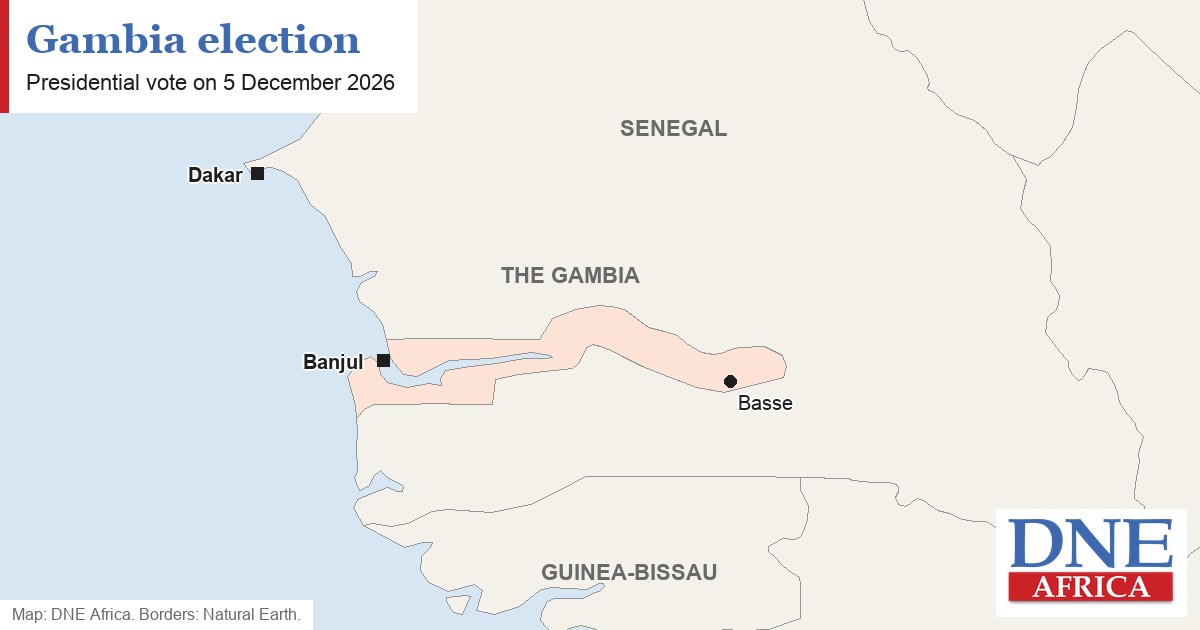
The Gambia election on 5 December has five confirmed candidates so far, including President Adama Barrow, after the Independent Electoral Commission accepted their nomination papers this week.
Mr Barrow is seeking a third five-year term in a country whose constitution sets no limit on presidential terms. The Independent Electoral Commission (IEC) rejected two other aspirants and asked six more for further documents, with the nomination period due to close on Saturday 14 November.
Who is standing in the Gambia election?
Joseph Colley, the IEC chairman, told a media briefing that five sets of nomination papers had been reviewed, found to be in order and accepted, Kerr Fatou reported. The candidates are:
- Adama Barrow, the incumbent, of the National People’s Party;
- Ousainou Darboe of the United Democratic Party, a former vice-president and long-standing opposition leader;
- Talib Ahmed Bensouda of Unite;
- Isatou Touray, a former vice-president, standing as an independent;
- Modou Lamin Sima of the Alliance of Progressive Citizens.
The commission received 18 applications in all, according to Africanews. The nomination process opened on 3 November, The Point said.
Why were some Gambia election nominations rejected?
The IEC turned down the candidates of the Gambia Labour Party and the National Democratic Party. Mr Colley said one had publicly acknowledged holding dual citizenship and had submitted a school certificate that the examinations council and the school concerned did not authenticate. In the other case, he said, the date of birth in school records differed from the one on the identity document given to the commission.
The National Democratic Party disputes the decision and says the commission has no grounds to exclude its candidate, Kerr Fatou reported.
Six aspirants, four of them independents, have yet to complete verification. Mr Colley said the outstanding requirements included proof of citizenship, evidence that any foreign citizenship had been renounced, and additional signatures from registered voters. More names could therefore be added to the Gambia election ballot before nominations close.
What is at stake in the vote?
Mr Barrow came to power after defeating Yahya Jammeh, who had ruled for 22 years, in December 2016, and won again in 2021. The 1997 constitution places no cap on the number of terms a president may serve. Mr Barrow has promised a new constitution with term limits if he is re-elected, The Point reported on 11 November. An earlier draft constitution failed in the National Assembly in 2020.
Mr Darboe, a lawyer who was the main challenger to Mr Jammeh for two decades, is the best-known opposition figure. Mr Bensouda, a former mayor of Kanifing, the country’s largest municipality, left the United Democratic Party to lead his own movement.
The Gambia election is one of several in west and central Africa in the coming months. Voters in Cabo Verde go to the polls on 15 November, with regional observers in place, and Cameroon holds legislative and local elections in February.
What happens next?
The IEC said it would give further updates as it examines the remaining files. The final list of candidates should be known after nominations close on 14 November, leaving about three weeks of campaigning.
FAQ
When is the Gambia election?
The presidential election is scheduled for 5 December 2026.
How many candidates have been cleared?
Five as of the commission’s latest update: Adama Barrow, Ousainou Darboe, Talib Ahmed Bensouda, Isatou Touray and Modou Lamin Sima. Six other files were still being verified.
Can Adama Barrow run for a third term?
Yes. The 1997 constitution does not limit the number of presidential terms. Mr Barrow has said he would introduce term limits through a new constitution if re-elected.
Who runs the Gambia election?
The Independent Electoral Commission, chaired by Joseph Colley, registers candidates and organises the vote.


