
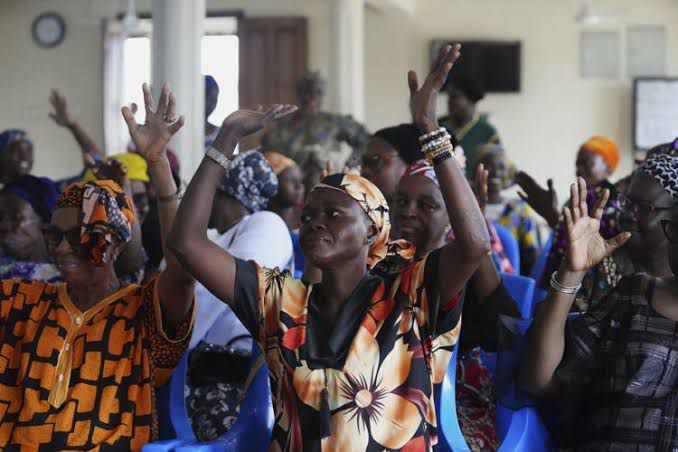

In the bustling suburb of Somolu, the rhythmic beat of drums fills the air at the Christian Mission for the Deaf — but here, worship is silent. Congregants raise their hands, gesture fluidly, and share in a service conducted entirely in sign language.
Founded in 1956 during Nigeria’s colonial era, the church was created to serve the country’s deaf and mute community. Today, it remains a rare safe haven in a society where traditional beliefs often stigmatise people with disabilities, sometimes viewing them as victims of curses or divine punishment.
Pastor Remi Akinremi, one of the church’s leaders, rejects those notions outright. “The fact we can communicate with our hands — sign language — is the miracle itself,” he says. Each Sunday, he delivers spirited sermons to dozens of worshippers, reinforcing a sense of belonging many lacked before joining.
Beyond its spiritual role, the church runs a sign language teaching unit and a learning centre, equipping members with tools to better understand and engage with the world. For many, it has become more than just a place of worship.
“The church has great importance for us, the deaf,” Akinremi says. “It introduces us to Christ, but also gives us a community. Before, many of us lived in isolation within our families.”
Nigeria is home to an estimated nine million people living with deafness or hearing impairments. For those who attend the Christian Mission for the Deaf, the sanctuary in Somolu offers something beyond faith — a shared identity and a bridge to the wider world.


