
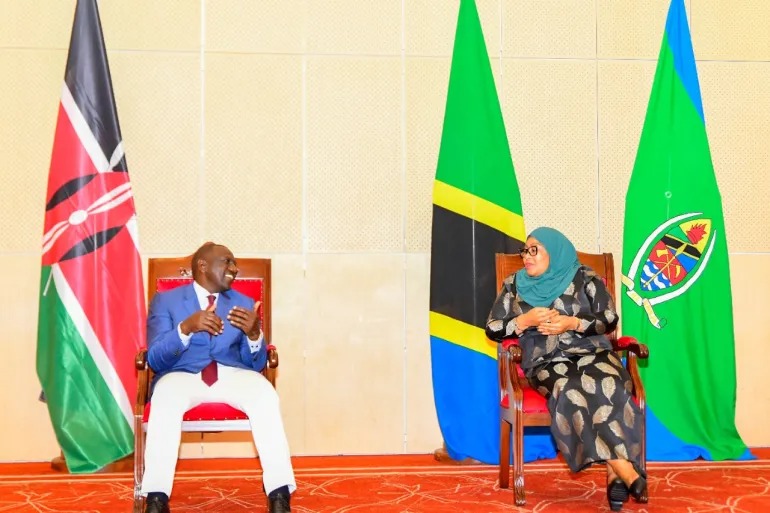

Diplomatic tensions have flared between Kenya and Tanzania after Tanzania announced a controversial ban on foreigners engaging in 15 categories of small and medium-sized business activities. Nairobi has officially protested the decision, calling it discriminatory and a breach of the East African Community (EAC) Common Market Protocol.
Under the new policy, foreign nationals — including citizens from EAC member states — are prohibited from applying for or renewing licenses in a wide range of businesses. These include mobile money transfer services, electronics repair, cleaning services, beauty salons, small-scale mining, tour guiding, running radio and TV stations, real estate brokerage, and operating small-scale industries.
Kenya’s Trade Minister, Moses Kuria, strongly criticized the measure, warning that it undermines the right of EAC citizens to operate businesses across member states. In a sharply worded statement, Kuria demanded the immediate reversal of the ban, stating:
“This move restricts legitimate investments by East African citizens and threatens the very foundation of our regional economic integration.”
He pointed to Article 13 of the EAC Common Market Protocol, which guarantees the right of establishment and freedom to conduct business without discrimination among member states. Kenya argues that the Tanzanian decision clearly violates this provision.
Further complicating matters, Kenya also expressed concern over new taxes introduced by Tanzania’s 2025 Finance Act, including a 10% excise duty and a 15% industrial development levy — fees that Nairobi says disproportionately affect foreign entrepreneurs, especially Kenyans operating in Tanzania.
In Parliament, several Kenyan lawmakers escalated the rhetoric, calling for reciprocal measures. Some even went as far as proposing bans on Tanzanian-operated businesses and individuals, including informal traders and beggars reportedly crossing into Kenyan cities.
While no retaliatory steps have been officially enacted, Minister Kuria warned that “reciprocity remains an option should Tanzania disregard Kenya’s concerns.”
Talks Set for August
The growing tension comes as the two countries prepare for a bilateral summit in August. The meetings, which were originally scheduled to focus on tobacco trade and customs issues, will now be overshadowed by the latest dispute.
Kenya and Tanzania, the two largest economies in the EAC bloc, have had a history of trade-related friction — often stemming from regulatory and policy differences despite their shared commitment to the common market.
Tanzanian Traders Back the Ban
In Tanzania, however, the move has been met with approval among local traders who view the restrictions as a way to level the playing field.
Severin Moshi, chairman of the Kariakoo Traders’ Association in Dar es Salaam — a major commercial hub — applauded the decision, saying:
“This is about protecting local livelihoods. Some foreign traders were operating illegally or using fake licenses. The new policy restores fairness to the market.”
He argued that unchecked foreign involvement in petty and small-scale businesses has long put pressure on Tanzanian citizens, particularly in informal sectors where competition is fierce and oversight weak.
Still, critics warn the ban could send a protectionist message and unravel hard-won regional gains. It also raises fears of a tit-for-tat spiral between two key players in East Africa’s economy.
As the EAC seeks deeper integration, the latest row between Nairobi and Dodoma underscores just how fragile the bloc’s unity remains when national interests collide with regional ideals.
Whether diplomacy will prevail in the August meetings remains to be seen — but for now, the economic and political rift between Kenya and Tanzania is only widening.


