
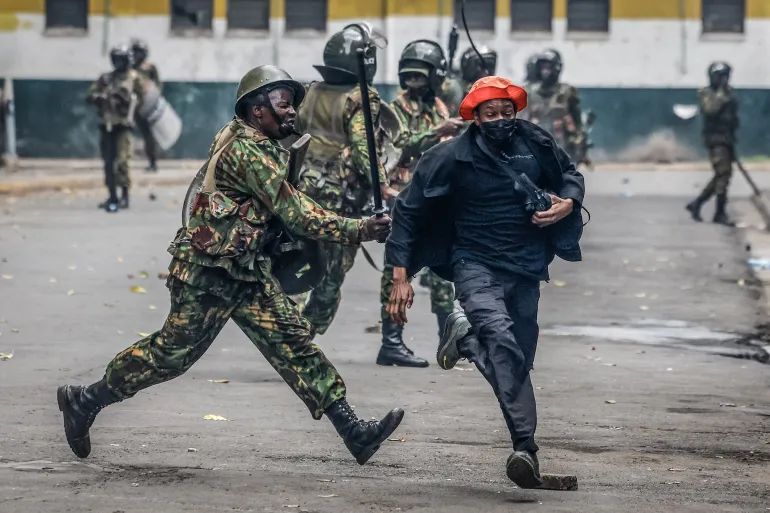

The Kenyan government is facing mounting human rights criticism following a wave of mass arrests targeting hundreds of protesters and activists in recent weeks, amid growing public anger over the country’s economic and political situation.
Rights organizations have accused the authorities of weaponizing the law to silence dissent, saying security forces have relied on “vague and overly broad” legislation to criminalize peaceful assembly. Activists say journalists and human rights defenders have also been charged under these controversial laws, which international watchdogs describe as “political tools to suppress citizens’ voices.”
According to a report by The Guardian, Kenyan authorities have invoked the Public Order Act and the Computer Misuse and Cybercrimes Act to bring charges such as “spreading false information” and “inciting public disorder.” Rights groups contend these provisions are being used to stifle free expression and clamp down on dissent.
Over the past weeks, heavy-handed security operations have swept through Nairobi and other cities, including Mombasa and Kisumu, leading to the arrest of more than 300 people — among them university students, activists, and journalists covering the protests. Demonstrators have been calling for improved living conditions and accountability for corruption.
Critics, especially from Kenya’s “Generation Z” youth movement, accuse President William Ruto’s administration of abusing legal instruments to curtail freedom of expression and restrict civic space.
The government, however, has denied these allegations, insisting that security measures are aimed at “protecting public property and ensuring safety,” and that those detained “broke the law.”
Kenya’s opposition has warned of “a dangerous slide toward authoritarian rule,” cautioning that continued repression could trigger a wider social explosion, particularly given soaring unemployment and the rising cost of living.
International organizations, including Human Rights Watch and Amnesty International, have urged an independent investigation into the alleged abuses, calling on Kenya — as a democratic state — to uphold international human rights standards and guarantee the rights to free expression and peaceful assembly.
As arrests and protests continue, Kenya faces a critical test of its democratic institutions and its ability to address public grievances without resorting to legal and physical repression.


