
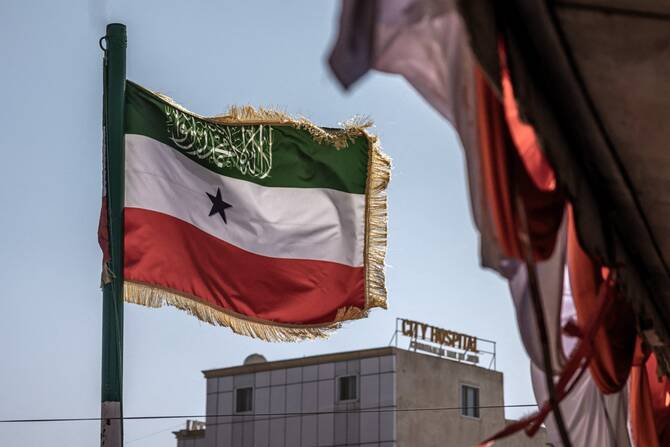

Israel formally recognized Somaliland as an independent state on Friday, becoming the first United Nations member to grant sovereign status to the breakaway territory in a move that threatens to reshape alliances across the Red Sea and the Horn of Africa.
Prime Minister Benjamin Netanyahu and Foreign Minister Gideon Sa’ar signed a mutual declaration of recognition with Somaliland President Abdirahman Mohamed Abdullahi (Irro), establishing full diplomatic relations. The agreement includes the immediate exchange of ambassadors and the opening of embassies in Jerusalem and Hargeisa.
Israel-Somaliland Strategic Pivot
The deal, which Netanyahu described as being “in the spirit of the Abraham Accords,” marks a significant victory for Somaliland’s three-decade-long quest for international legitimacy. While the territory has operated as a de facto independent state with its own currency and military since 1991, it had lacked formal recognition from any sovereign power until now.
For Israel, the move secures a strategic foothold along the Gulf of Aden, a vital maritime corridor for global trade and energy shipments. The two nations pledged to “immediately expand” cooperation in security, agriculture, and technology.
“This recognition represents a milestone in Somaliland’s pursuit of international legitimacy,” the Office of the President in Hargeisa said in a statement. “It reflects the mutual respect and shared interests that have long underpinned the relationship between our peoples.”
DNE Africa reported earlier that several countries, reportedly including the United States, Israel, and the United Arab Emirates, are in the final stages of an agreement to grant official recognition to the self-declared republic of Somaliland.
Regional Rejection and Diplomatic Pushback
The announcement has sparked a coordinated regional backlash led by Egypt and its partners. On Friday, Egyptian Foreign Minister Badr Abdelatty held emergency consultations via telephone with his counterparts from Somalia, Turkey, and Djibouti to address what they termed “dangerous developments” in the region.
In a joint show of opposition, Somalia’s Foreign Minister Abdelsalam Abdi Ali, Turkey’s Hakan Fidan, and Djibouti’s Abdelkader Hussein Omar expressed their “absolute rejection and condemnation” of Israel’s recognition of Somaliland.
According to a statement from the Egyptian Foreign Ministry, the ministers emphasized:
- Sovereign Integrity: Full support for the unity and sovereignty of the Federal Republic of Somalia and the rejection of any unilateral measures that undermine its territory.
- International Precedent: The ministers warned that recognizing breakaway regions sets a “dangerous precedent” that threatens international peace and security, violating the UN Charter and established principles of international law.
- Legitimacy: A firm refusal to acknowledge “parallel entities” that conflict with the unity of the Somali state.
The diplomatic calls also touched upon broader regional concerns, with the ministers reaffirming their categorical rejection of any plans aimed at the displacement of the Palestinian people—a stance shared by the vast majority of the international community.
The recognition comes at a time of heightened tensions in the Red Sea. Analysts suggest the alliance could provide Israel with enhanced intelligence and maritime surveillance capabilities in a region increasingly contested by Iran-backed Houthi rebels and other regional actors.
Economic Interests
Beyond security, the agreement focuses on economic integration. Somaliland’s Berbera port has seen significant investment from the UAE in recent years, and Israel’s entry into the landscape suggests a deepening of the “Red Sea alliance” involving Gulf states and Western-aligned partners.
Netanyahu has invited President Abdullahi to Jerusalem for an official state visit to finalize sector-specific trade agreements. Shares of Israeli defense and agricultural technology firms saw modest gains in late-day trading following the announcement, as investors weighed the potential for new government contracts in East Africa.


