
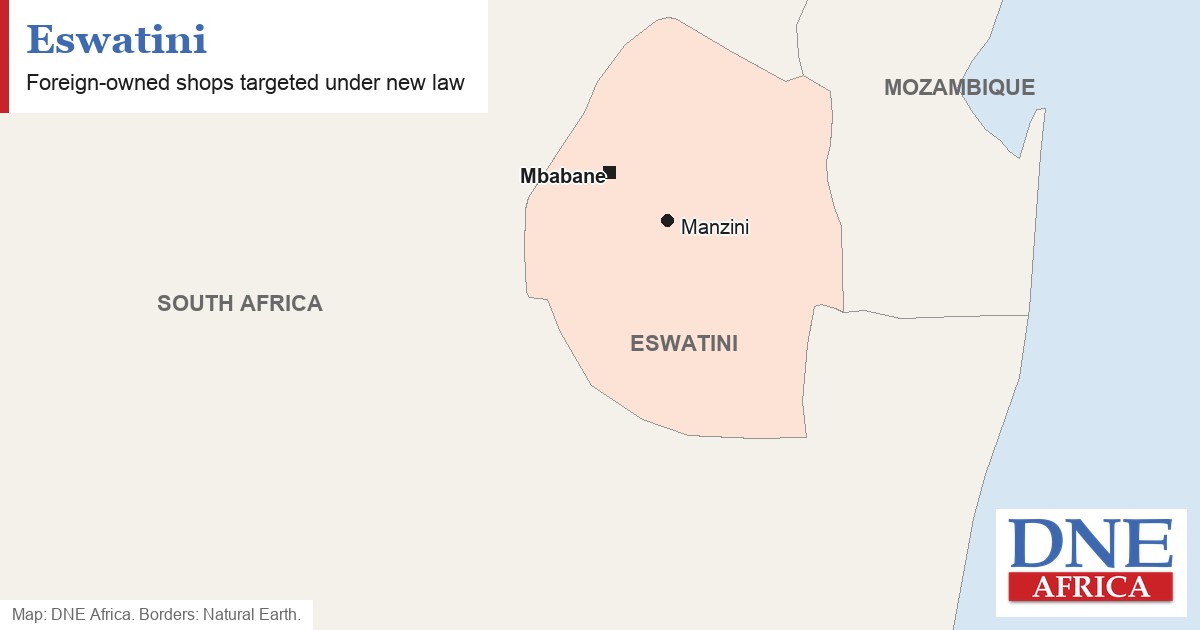

Eswatini foreign businesses will get at least 12 months to leave, Parliament has agreed, as the trade ministry closes Asian-owned shops under a new law, the BBC reported.
The Citizen Economic Empowerment Act seeks to raise ownership and participation by citizens, known as emaSwati, in a kingdom where about 70% of people live below the poverty line. The BBC said the crackdown comes amid growing pressure on foreign-owned businesses in the region.
What does Eswatini’s new law do?
The legislation followed complaints from local traders that foreign-owned businesses were encroaching on traditional retail markets and threatening livelihoods, the BBC said. The government says the law is meant to widen economic opportunities for citizens, amid concern that poverty and hunger could fuel unrest. The trade ministry began inspections in August, and some businesses checked in areas such as Mbabane were found to be fully compliant. Inspectors also raised concerns over days off, annual leave and overtime for employees at some foreign-owned firms, and at least one case remains under investigation.
How did MPs divide over the deadline?
Mbabane East MP Welcome Dlamini told Parliament on Tuesday that ministry officials had begun enforcing the law by closing Asian-owned shops. He asked why foreign owners could not be given three years to train local successors. Hhohho Regional MP Tanele Magagula said businesses owned by foreigners in rural areas should be seized immediately, and asked why struggling local traders should wait.
Parliament then agreed on at least 12 months. The BBC noted that unless the law is formally amended to reflect that timeline, the ministry could continue enforcing its provisions as written, so the deadline is not yet binding.
How does this compare with the region?
The BBC linked the move to growing pressure on foreign-owned businesses in southern Africa. In South Africa, anti-immigration campaigns have led to raids, arrests and looting, and DNE Africa has reported on violent protests in Durban and on tensions over xenophobia. Kenya has also stepped up action against foreign traders, according to the BBC. The Eswatini government has not been quoted in the report beyond its stated aim.
What happens next?
Lawmakers will need to decide whether to amend the Act to include the 12-month grace period. The report did not say how many shops have closed. Official notices appear on the Eswatini government website.
FAQ
What is the Citizen Economic Empowerment Act?
It is a new Eswatini law that aims to increase ownership and participation by citizens in the economy.
How long do foreign owners have to leave?
Parliament agreed on at least 12 months, though the law has not yet been amended to say so.
Which businesses are being closed?
The BBC reported closures of Asian-owned shops, following inspections that began in August.


