
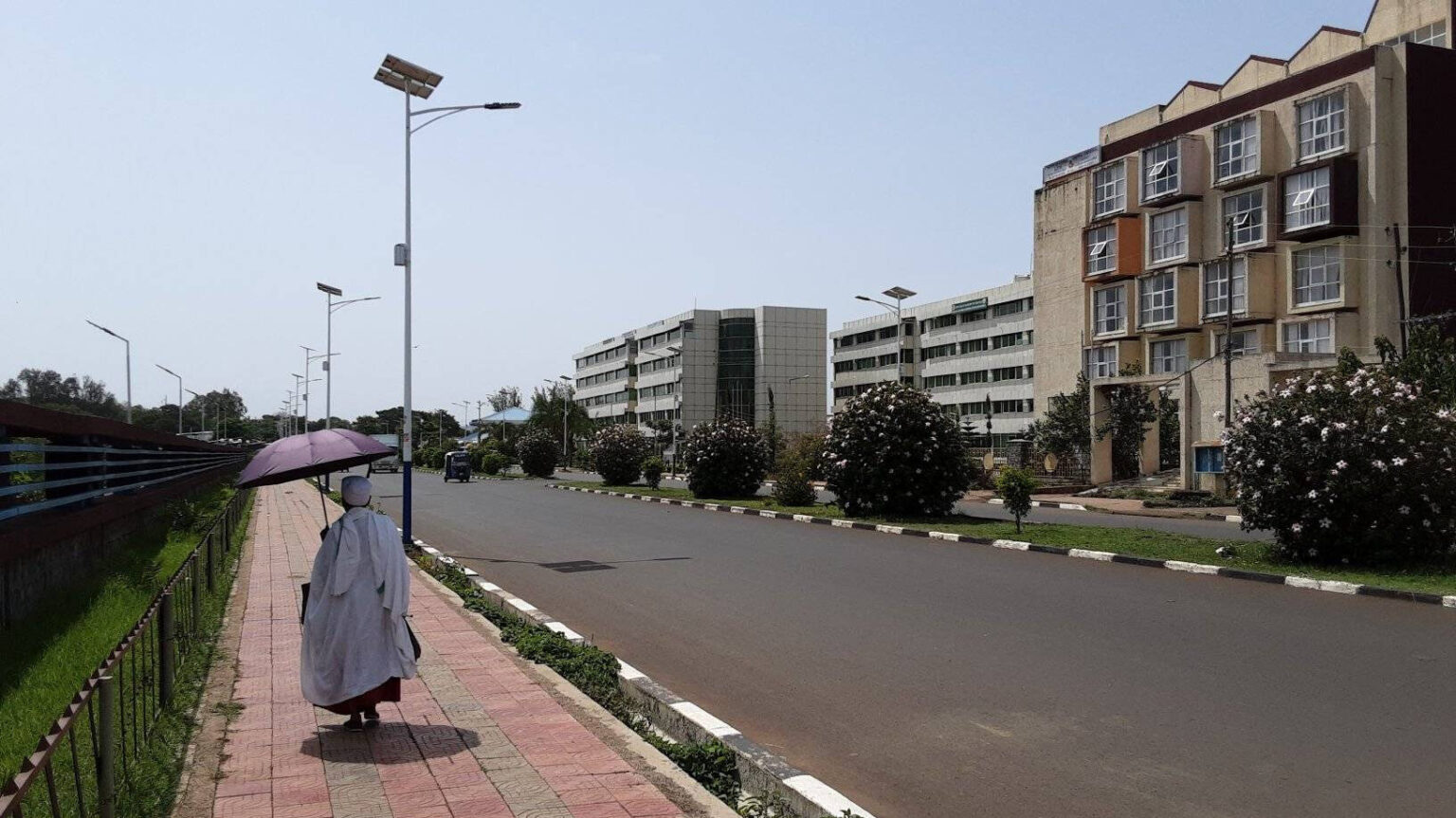

Authorities in Ethiopia’s restive Amhara region have partially lifted a months-long curfew in the regional capital Bahir Dar, signaling a modest improvement in the local security situation amid persistent conflict with Fano militia forces.
In a statement issued Thursday, the Bahir Dar City Security Council announced that restrictions imposed on movement and commercial activities have been eased, allowing residents and most vehicles to circulate freely throughout the city at all hours. However, motorcycles and the widely used three-wheeled Bajaj taxis remain subject to nighttime operating bans, as authorities continue to cite ongoing threats linked to insecurity.
The curfew—originally enacted in July 2024—was part of a broader security crackdown imposed following escalating violence between federal security forces and the Fano militia group, a loosely organized but influential Amhara armed movement. The federal government declared a state of emergency across Amhara in August 2023, which was later extended in June 2024, as fighting intensified in both urban and rural areas.
According to Thursday’s statement, residents are now permitted to move around the city without time restrictions, provided they carry official neighborhood identification. Commercial businesses are allowed to operate 24/7, a shift from previous restrictions that forced early closures.
The new measures also stipulate that while most vehicles are now permitted on city roads without a curfew, motorcycles remain banned entirely, and Bajaj taxis may not operate after 6:00 p.m. Authorities claim the vehicles have frequently been used in coordination with criminal activity and militia movement.
Officials noted that security has “significantly improved” in Bahir Dar, crediting enhanced law enforcement operations and strong public cooperation for the stabilization. Despite the lifting of certain restrictions, authorities reiterated that carrying firearms in public remains illegal, except for designated security personnel and those authorized within specific zones.
The statement further warned that any vehicles found on the road without proper front and rear license plates would be subject to confiscation and legal action.
Ongoing Crisis and Humanitarian Fallout
Despite the local easing of curfew measures, the broader security and humanitarian crisis across Amhara persists. The federal government’s April 2023 decision to dismantle regional special forces triggered widespread unrest and an upsurge in resistance from Fano fighters—long seen by some in the region as protectors of Amhara interests, but labeled insurgents by the state.
Since then, the conflict has led to extensive displacement, civilian casualties, destruction of property, and the disruption of basic services. Internet access and communications have been routinely cut in parts of the region, with Bahir Dar experiencing near-total blackouts during curfew periods. Only a handful of institutions, including universities, were granted limited connectivity.
International and domestic human rights organizations, including Amnesty International and the Ethiopian Human Rights Commission, have documented allegations of extrajudicial killings, arbitrary detentions, and forced disappearances. The African Union, United Nations, United States, and European Union have all issued repeated calls for de-escalation, dialogue, and respect for human rights.
Both the federal and Amhara regional governments continue to assert that their operations are targeted solely at “illegal armed groups,” and deny accusations of collective punishment or harm to civilians.
As the conflict enters its third year, the partial easing of restrictions in Bahir Dar offers a limited reprieve—but does little to address the underlying causes of instability. Observers say that absent a credible political dialogue, tensions in Ethiopia’s second-most populous region are likely to persist.


