
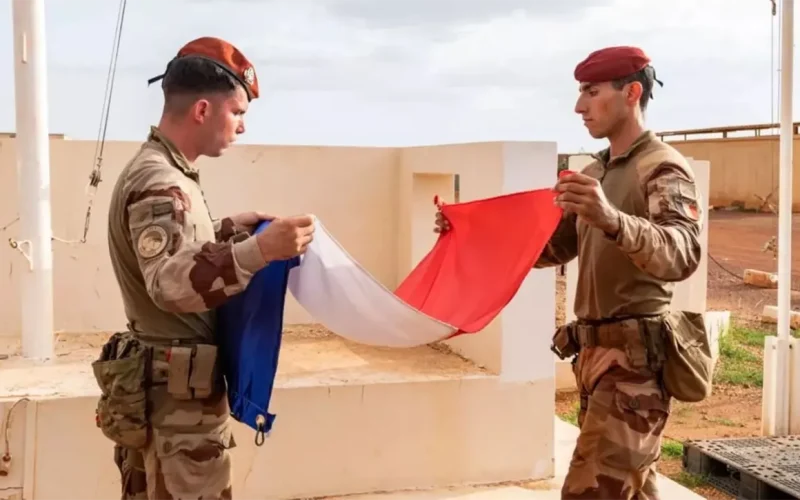

For over six decades, Chad was a crucial ally to French and US forces in their counter-insurgency operations in the Sahel. But both lost influence because of repeated mistakes.
The Sahel region is now regarded as the “epicentre of global terrorism”.
In our recent research, we argue that France and the US put their national interests and those of local elites first for decades, believing that stability could be maintained through military interventions. In doing so, they overlooked critical local factors such as history, religion, negotiations, and the needs of local populations.
The recent dissolution of the Chad-France defence pact marks the end of France’s influence in the Sahel. Chad was the last stronghold of French influence there.
Reflecting Chad’s strategic importance, a French foreign ministry official declared in September 2024: “We cannot afford to lose Chad.” Yet, it has happened.
Chad isn’t alone. A few hours before that announcement, the Senegalese president, Bassirou Diomaye Faye, called for the closure of French military bases in his country, mirroring similar actions in Niger, Burkina Faso and Mali in recent times.
France failed to recognise that the era of the empire was over.
The end of the Chad-France defence pact raises questions about who Chad might turn to next and what this means for the region. It marks a shift away from direct western influence in the Sahel and creates an opening for other global powers looking to expand their presence to come.
Why Chad ditched the French defence pact
Chad is a central African country that falls within the Sahel belt, a region of Africa that lies between the Sahara and the tropical savannahs to the south. A former colony of France with about 20 million people, it is landlocked and shares borders with Sudan, Libya, Niger, Central African Republic, Cameroon and Nigeria.
Chad is led by 40-year-old President Mahamat Idriss Déby, who assumed power in 2021 following the death of his father, Idriss Déby Itno, who had ruled since a successful coup in 1990. In May 2024, Mahamat Idriss Déby was sworn in as a civilian president after an election that opposition groups contested and alleged was rigged.
Since independence, France had relied on “colonial pacts” with its former colonies to control their monetary policies and defence agreements, limiting their sovereignty. Chad’s foreign minister, Abderaman Koulamallah, said ending these defence pacts was about taking back sovereignty.
French troops had been stationed in Chad under this defence pact for decades. Ending it breaks a long-standing agreement between the two countries. Déby described the agreement as one established in a different era, with different circumstances and actors, and now obsolete.
Another reason Déby gave was that ending the defence pact fulfilled a promise he made on 23 May 2024, the day he was sworn in as a civilian president, marking Chad’s transition from military rule to civilian leadership.
The push to make this promise may be linked to widespread anti-French sentiment in Africa, as well as demands from civil liberty organisations and opposition parties in Chad for the end of the military pact. The recent killing of over 40 Chadian soldiers by Boko Haram jihadists in an attack on a military base may have been the final trigger for the decision.
Mamadou Doudet, an opposition leader, criticised the French troops for failing to assist Chad during the attack, stating there was no need for their presence. Déby echoed this sentiment, claiming the agreement brought no substantial benefit to Chad in addressing challenges like terrorist attacks.
Meanwhile, the foreign minister emphasised that France remained “an essential partner”, but Chad must be treated as a sovereign state that is “very jealous of its sovereignty.” It echoes what the Senegalese president said:
Senegal is an independent country; it is a sovereign country and sovereignty does not accept the presence of military bases in a sovereign country.
Alongside these public explanations, personal considerations may have also shaped Déby’s decision. He may be unhappy with an inquiry opened by France last July into allegations of using about 900,000 euros (US$965,000) from Chad’s treasury to buy luxury clothing in Paris. This is an allegation Déby has rejected as unfounded.
The power dynamics in the Sahel
When French troops leave Chad within the next six months, it may mark the end of direct French and western influence in the Sahel. Chad is seeking new partners and is unlikely to replicate the old defence pact with France with another state. The central African nation has received military aid from the UAE, received weapons from Israel, acquired Turkish training aircraft and drones, and is now exploring ties with Russia and Hungary.
Most of the countries that Chad shares borders with are already Russian allies, like Sudan, Libya, Niger and the Central African Republic. Russia’s influence is rising as that of France and the US fades. The US and France are now seeking partners in coastal west Africa.
Last November, France secured a partnership with Nigeria. The two countries signed agreements to strengthen their cooperation, including in the exploration of solid minerals.
Many might expect Chad to turn to Russia or China, but in our view this is unlikely. The central African nation is likely to seek multiple major partners while avoiding undue influence from any single one.
If Chad adopts this approach, it could help sustain its sovereignty and address the concerns of anti-French advocates. However, it remains to be seen whether such agreements will prioritise the needs of local populations and foster negotiations with the warring parties for lasting peace.
In addition, Chad could strengthen military cooperation with Mali, Niger and Burkina Faso, members of the Alliance of Sahel States, to boost counter-terrorism efforts in the region.
The events currently unfolding in Syria, including the collapse of Bashar al-Assad’s regime, signal the weaknesses of Assad’s backers, such as Russia and Iran, while enhancing the influence of Turkey and Israel, which opposed his regime. These geopolitical shifts could influence Chad’s choice of partners and prompt other Sahel countries to reassess their alliances.
Without their military bases in the Sahel, France and the US would find it more challenging to continue their counterinsurgency operations in the region. As countries in the Sahel take greater control of their security, cooperation among them will be crucial to achieving shared goals.
Ezenwa E. Olumba, Doctoral Research Fellow, Conflict, Violence, & Terrorism Research Centre, Royal Holloway University of London and Bernard Nwosu, Senior Research Fellow, Development Studies, University of Nigeria
This article is republished from The Conversation under a Creative Commons license. Read the original article.


