
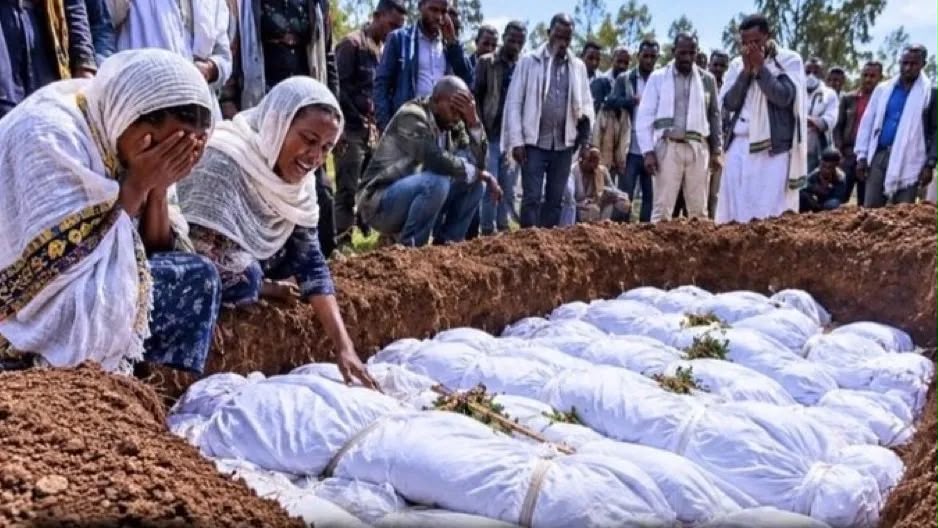

The death toll from a deadly armed attack on civilians in Endeto, Robe Woreda, in Ethiopia’s Oromia Region, has risen to more than 36 after additional victims succumbed to their injuries, prompting renewed calls for an independent investigation into the latest violence in the troubled Arsi Zone.
Deutsche Welle Amharic reported that local residents confirmed funeral ceremonies for 34 people killed during the October 30 attack, which was carried out by armed combatants in the morning. At least two more victims have since died after being among 10 critically injured people evacuated to medical facilities in Robe and Asella.
The latest fatalities have pushed the reported death toll beyond 36, while concerns remain over the security situation in the area. Although the main road connecting Endeto to neighbouring districts has reopened following blockades, residents say fears of further attacks persist. Disruptions to telecommunications have also complicated communication and access to information.
The Endeto killings add to a series of deadly attacks on civilians across Arsi in recent weeks, raising fresh concerns about the protection of vulnerable communities and the authorities’ ability to prevent recurring violence.
The latest assault occurred less than two weeks after another deadly attack in neighbouring Shirka Woreda, where human rights monitors reported at least 48 civilians killed, alongside widespread destruction of private property.
Rights organisations, church leaders and local civil society groups have repeatedly sounded the alarm over attacks affecting Orthodox Christian communities, clergy and farming families across the region. The repeated incidents have intensified demands for effective civilian protection, independent investigations and accountability for those responsible.
The Ethiopian Human Rights Council issued a statement expressing grief over the latest casualties and calling on federal and Oromia regional authorities to launch an independent investigation into the Endeto attack, as well as previous assaults targeting Orthodox Christian communities.
The council stressed the need to identify and hold those responsible accountable, while urging authorities to ensure adequate security and humanitarian assistance for affected families and communities displaced or otherwise impacted by the violence.
Despite the growing death toll, neither the Oromia regional government nor federal security authorities had issued a public comment on the latest casualties at the time of publication.
The Oromo Liberation Army (OLA), which local witnesses reportedly said was operating in the area, had not confirmed or denied involvement in the attack.
The circumstances surrounding the assault, the identities of those responsible and the extent of the security response remain unclear. Calls for an independent investigation are growing as successive attacks continue to raise serious questions about civilian safety and accountability in Arsi.


