

Mali’s Council of Ministers has granted Roscan Gold Mali SARL a permit to build and operate a large gold mine at Kandiolé-Nord, in the Kéniéba circle of the western Kayes region, for up to 12 years.
The decision moves Toronto-listed Roscan Gold from explorer towards developer, and adds to a pipeline of new mines as Mali tries to rebuild gold output after a two-year standoff with miners over its 2023 mining code.
What did Mali’s government decide on Roscan Gold?
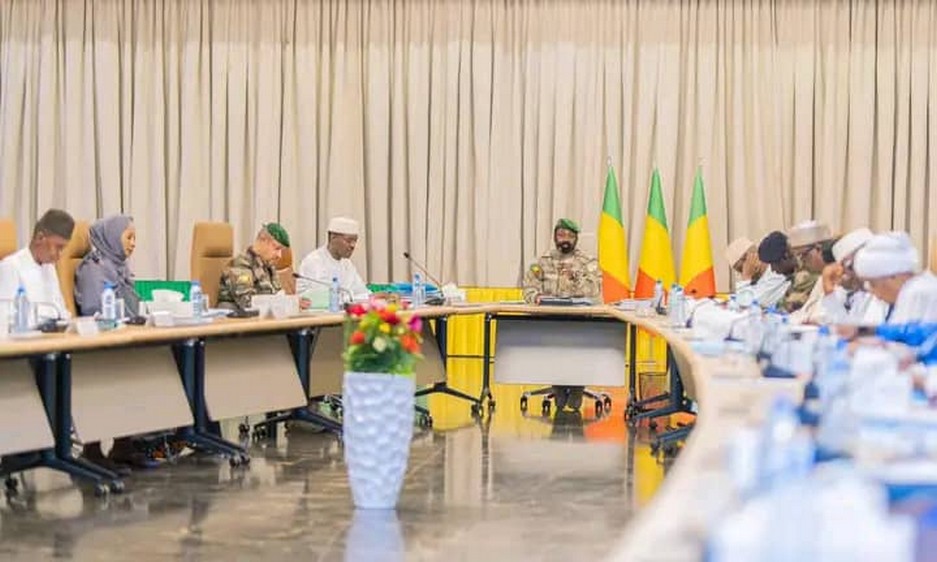
On the report of the minister of mines, the council adopted a decree “granting a large gold mine exploitation permit” to Roscan Gold Mali SARL at Kandiolé-Nord, according to the communique of the Council of Ministers of Friday 27 November, published in full by AMAP, Mali’s state news agency, on Sunday. The permit runs for a maximum of 12 years.
The exploration licence behind it was formed by merging the original Kandiolé-Nord permit with the neighbouring Mankounké permit, which Ouani-Or SARL transferred to the company, the communique said. It said “intensive work” there had shown “an economically exploitable deposit in the form of a large mine”, and that Roscan Gold applied under the mining code and the 2023 law on local content in the mining sector.
The same meeting, chaired by transitional president Assimi Goïta, adopted a new national statistics plan for 2026-2030 and allocated land in Ségou for a new secondary school, the communique said. Roscan Gold had made no public statement on the permit by Sunday evening.
How big is the Kandiolé gold project?
Roscan Gold’s preliminary economic assessment, published on 2 March 2026 and prepared by Bara Consulting, describes a contractor-run open-pit operation feeding a carbon-in-leach plant at about 2.5mn tonnes of ore a year for roughly 13 years. It plans to mine four deposits, Mankouke South, Mankouke Central, Kabaya and KN1, and to recover 835,693 ounces of gold at an average grade of 0.89 grammes a tonne.
The company put initial capital at $218.7mn and sustaining capital at $78.5mn. At a base-case gold price of $3,100 an ounce, it estimated an after-tax net present value of $498mn at a 5 per cent discount rate, an internal rate of return of 43 per cent and a payback of 2.8 years. All-in sustaining costs were put at $1,200 an ounce in the first four years and $1,568 over the life of the mine. The study is at a ±30 per cent level of accuracy, and the company said mineral resources “do not have demonstrated economic viability”.
The study’s fiscal model includes a sliding-scale state royalty, a 1 per cent net smelter royalty and 33 per cent corporate income tax. In March, chief executive Nana Sangmuah said the mining permit application was “in the final stages of review” and that the company had begun talks on project financing. A detailed environmental and social impact assessment and a study of possible resettlement are still to be completed, according to the study.
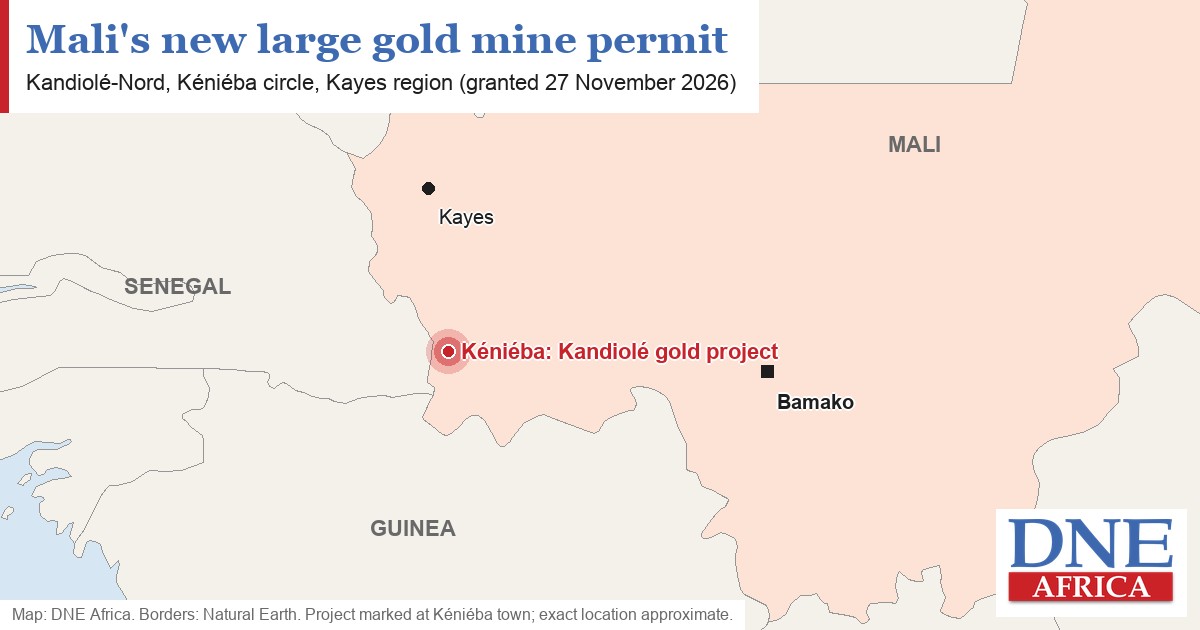
The project lies about 400km by road from Bamako and 25km east of B2Gold’s Fekola mine, the country’s largest gold producer, the company says. The Kéniéba belt runs across the border into eastern Senegal, where work began this week on Fortuna’s Diamba Sud gold mine.
Why does the Roscan Gold permit matter for Mali’s gold output?
Gold is Mali’s main export, and production has fallen since the 2023 mining code. That law, Law No. 2023-040 of 29 August 2023, lets the state take up to 10 per cent of new projects free of charge with an option to buy a further 20 per cent, and reserves a stake for Malian investors, according to the text of the code.
Industrial output fell to 42.2 tonnes in 2025 from 54.8 tonnes in 2024 and a peak of 66.48 tonnes in 2023, provisional mines ministry figures reported by Reuters showed. The fall followed the suspension of Barrick’s Loulo-Gounkoto complex, which the government placed under provisional administration before the two sides settled in late 2025. Mali sold gold from the disputed mine during the standoff.
Output has since recovered. Industrial production reached 23.5 tonnes in the first half of 2026, up from about 18 tonnes a year earlier and above the government’s forecast of 21.2 tonnes, according to ministry data reported by Reuters. In August the council granted a large-mine permit for B2Gold’s Menankoto project, and Toubani Resources’ Kobada mine is targeting first gold in 2027, the same report said.
The Roscan Gold permit follows the government’s push, shared with its partners in the Alliance of Sahel States, to take a larger share of mining revenue. The government said in December 2025 that an audit had recovered 761bn CFA francs ($1.2bn) in arrears from mining companies, Reuters reported.
What happens next for Roscan Gold?
Roscan Gold said in March that it planned to seek project financing shortly after the permit was granted, and that environmental baseline work and engineering studies were under way. Its study lists a detailed environmental and social impact assessment, continued consultation with local communities and an assessment of possible resettlement as the work still needed before the project can advance.
FAQ
What permit did Roscan Gold receive in Mali?
Mali’s Council of Ministers granted Roscan Gold Mali SARL a large gold mine exploitation permit at Kandiolé-Nord, in the Kéniéba circle of the Kayes region, for a maximum of 12 years, on 27 November 2026.
How much gold could the Kandiolé project produce?
Roscan Gold’s March 2026 preliminary economic assessment estimates 835,693 ounces of recovered gold over about 13 years, with an initial capital cost of $218.7mn. These are company estimates, not reserves.
Who owns Roscan Gold?
Roscan Gold Corporation is a Canadian company listed on the TSX Venture Exchange under the ticker ROS. Its Malian subsidiary, Roscan Gold Mali SARL, holds the permit.
How much gold does Mali produce?
Mali’s industrial gold output was 42.2 tonnes in 2025 and 23.5 tonnes in the first half of 2026, according to mines ministry figures reported by Reuters. Artisanal mining added about six tonnes in 2025.


