
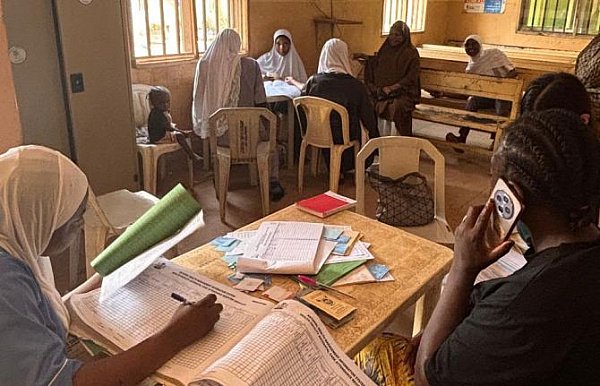

Nigeria’s mentor mothers, women living with HIV who coach pregnant women through treatment, often pay for patients’ transport and phone calls themselves, UNAIDS said on Thursday as it urged the government to fund the programme.
The appeal matters because Nigeria has one of the world’s highest rates of mother-to-child HIV transmission, and the programme’s donor support is shrinking as governments take over the HIV response.
What do mentor mothers in Nigeria do?
Mentor mothers have been through pregnancy and childbirth with HIV themselves. They help other women start treatment, stay on it and bring their babies for testing, according to a report from UNAIDS based on visits to clinics in Gwagwalada, near Abuja, in Abuja itself and in Mararaba, Nasarawa State.
One mentor mother in Mararaba, diagnosed in 2009, told UNAIDS she counsels women at antenatal visits, helps them tell their partners and calls or visits after the birth. All four of her own children tested HIV-negative, she said.
Monthly support groups at a community clinic in Gwagwalada bring pregnant women together for information on treatment and prevention. “We learn from each other,” one young mother told UNAIDS.
How big is the mother-to-child HIV gap in Nigeria?
Without treatment, the risk of a mother passing HIV to her baby during pregnancy, birth or breastfeeding is 15-45%; with treatment that suppresses the virus it falls below 1%, according to UNAIDS.
In 2025 more than 45,000 pregnant women living with HIV in Nigeria needed services to prevent transmission, but an estimated 61% were on treatment, and the estimated transmission rate, including during breastfeeding, was 20.4%, UNAIDS said.
Nigeria has about 2 million people living with HIV, one of the largest numbers in the world, according to UNAIDS estimates (about 1.9 million in the 2018 national survey), so even a small gap in services for pregnant women affects thousands of babies a year. A young mother in Gwagwalada told UNAIDS she hopes to train as one of the mentor mothers and reach women in northern Nigeria with little access to information.
Why do mentor mothers pay out of their own pockets?
The medicines are free, but reaching them is not. A mentor mother at Asokoro District Hospital in Abuja told UNAIDS she spent about 7,000 naira ($6) on transport on the day she was interviewed, about 6.5% of her monthly pay of 107,000 naira ($79). Mentor mothers link women to pick-up points closer to home and sometimes deliver medicines themselves, often at their own cost, the agency said.
Stigma is the other obstacle. Some women cannot tell their husbands or families and take their medicines in secret. “Two or three doses missed, they lose their motivation,” a mentor mother in Gwagwalada said.
The head of the Association of Women Living with HIV/AIDS in Nigeria said many mentor mothers are on short-term contracts with little job security and need regular training and mental health support, according to UNAIDS.
What does UNAIDS want Nigeria’s government to do?
Krittayawan Boonto, UNAIDS country director for Nigeria, called for the programme to be part of the minimum package of public health services. “As governments take charge of funding, management and implementation of the HIV response, the Nigerian mentor mother programme that started in 2017 is a cost-effective intervention that can be expanded and integrated into the national Community Health Workforce Initiative,” she said.
The call comes as cuts in international funding hit prevention services across Africa, which UNAIDS warned of in a report this week. The government has not publicly responded to the appeal.
FAQ
Who are mentor mothers in Nigeria?
Women living with HIV who have had children themselves and support pregnant women and new mothers to start and stay on treatment. The programme began in 2017.
How many pregnant women in Nigeria with HIV were on treatment in 2025?
An estimated 61% of more than 45,000 who needed services, according to UNAIDS.
What is UNAIDS asking for?
That mentor mothers become part of Nigeria’s public health minimum package and the national Community Health Workforce Initiative.


