
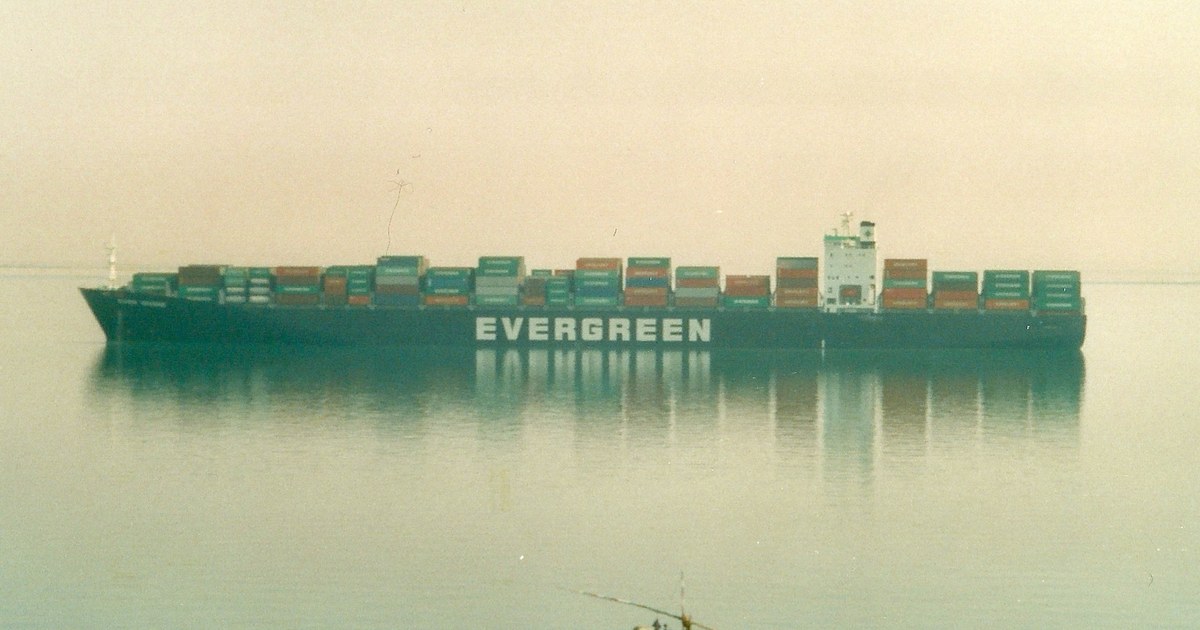

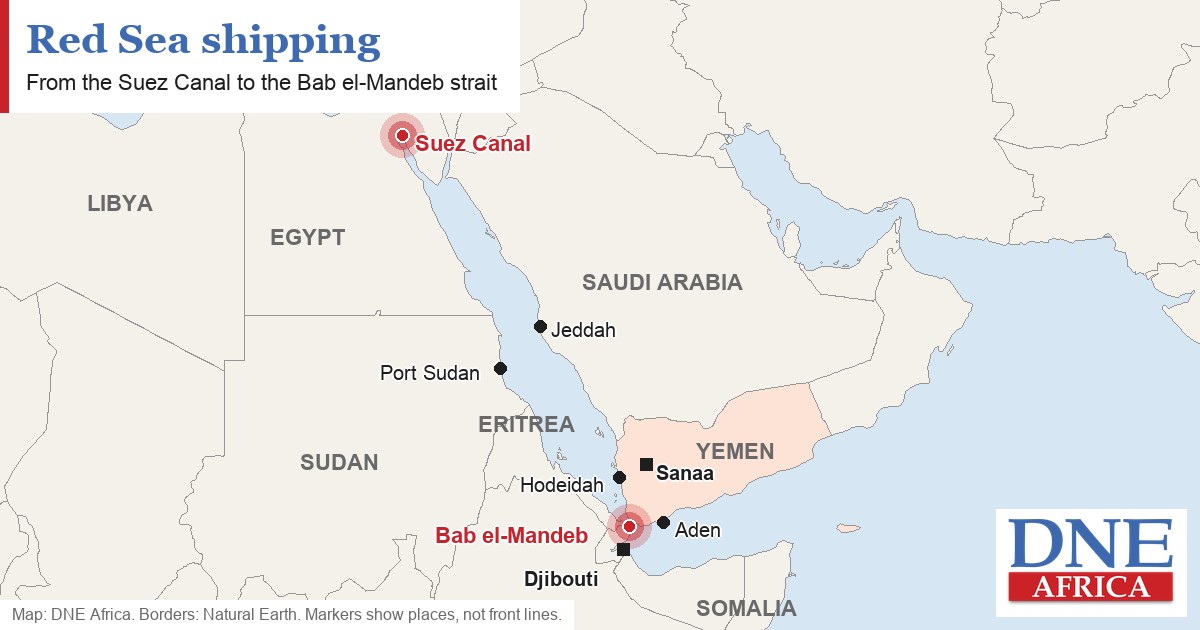
Red Sea shipping, the Asia-Europe route through the Bab el-Mandeb strait and Egypt’s Suez Canal, has been disrupted since Yemen’s Houthis began attacking ships in November 2023; three years on, the container lines are returning.
Last updated: 26 November 2026
Red Sea shipping matters greatly to Africa. The Suez Canal is one of Egypt’s main sources of foreign currency, Djibouti, Eritrea, Sudan and Somalia sit on the sea’s African shore, and ports from Mombasa to Durban have felt the change in trade routes. In November 2026 Maersk told Egypt’s president it would bring its whole network back to the canal, as the Houthis threatened Saudi Arabia’s Red Sea ports and took control of Yemen’s side of the strait.
In brief
- The Houthis seized the Galaxy Leader on 19 November 2023 and went on to attack dozens of ships, saying they were acting over the war in Gaza; most container lines diverted around the Cape of Good Hope.
- Red Sea shipping attacks cut Suez Canal revenue sharply: President Abdel Fattah al-Sisi said in December 2024 that Egypt had lost nearly $7bn that year.
- Attacks paused after the Gaza ceasefire of October 2025, resumed in 2026 after the US-Israeli war with Iran, and since July 2026 the Houthis say they are enforcing a “maritime embargo” on Saudi Arabia.
- Canal revenue more than doubled year on year to $593mn in November up to 24 November, the Suez Canal Authority said, as Maersk, Hapag-Lloyd, Evergreen and ONE sent ships back.
What is happening to Red Sea shipping now?
Red Sea shipping is moving in two directions at once: the lines are returning to the Suez route, and the war in Yemen has reached the water’s edge.
Maersk’s chief executive, Vincent Clerc, told President Sisi in Cairo on 25 November that the company was working to bring all its services back through the Red Sea and the Suez Canal over the coming months, according to a statement from the Egyptian Presidency. Mr Sisi said ships crossing the canal were safe and faced no threats, the Presidency said, as DNE Africa reported. Maersk and Hapag-Lloyd had said on 16 November that three more of their joint services would switch from the Cape route to Suez between December and January, gCaptain reported.
The Suez Canal Authority said revenue from 1 to 24 November reached $593mn, against $295mn a year earlier, from 1,194 ships against 886, figures carried by Asharq Business, as DNE Africa reported. Before the crisis the canal handled 70 to 80 ships a day; it now handles about 35, the authority said.
On land, Yemeni government forces withdrew on 15 November from Dhubab and the Bab el-Mandeb area to defend Aden, Reuters reported, citing the Southern Armed Forces’ announcement of a “redeployment”. The Houthis had taken that coast, including the port of Mokha and Perim island, in September. On 17 November the Houthi military spokesman, Yahya Saree, said the strait was “safer” with the group on its shore.
Red Sea shipping now faces a new threat: on 25 November Mr Saree named Jeddah, Jizan and Yanbu as targets and told shipping companies to move their vessels out, after coalition air strikes on Yemen’s Hodeidah port. The Saudi-led coalition said a projectile hit Jizan port causing minor damage and that a drone was intercepted near Jeddah Islamic Port, as DNE Africa reported.
Who are the parties and what does each say it wants?
The Houthis. The movement, formally Ansar Allah, has controlled Sanaa and much of northern Yemen, including the Red Sea port of Hodeidah, since 2014. From 2023 to 2025 it said it targeted Red Sea shipping linked to Israel to press for an end to the war in Gaza. In July 2026 it declared a “maritime embargo” on Saudi Arabia, which it said answered what it calls Saudi Arabia’s “siege” of Yemen. The US and Saudi Arabia say Iran arms the group.
Yemen’s government. The internationally recognised government, led by the Presidential Leadership Council under Rashad al-Alimi and based in Aden since 2015, accuses the Houthis of threatening navigation in the Red Sea and Bab el-Mandeb. On 24 November Mr al-Alimi asked the EU’s representative for a partnership to protect commercial shipping, Al-Wasat reported.
The Saudi-led coalition. The coalition, which backs the government, says its strikes on Hodeidah target the Houthis’ “operational capabilities” and weapons shipments, and it said in July it would respond with force to the embargo.
Egypt. Cairo’s position is that the states on the Red Sea’s shores should be responsible for its security and for protecting Red Sea shipping. Foreign Minister Badr Abdelatty said on 21 November that militarisation and a growing foreign military presence raise tension and threaten trade, according to a statement from the Egyptian Ministry of Foreign Affairs, as DNE Africa reported.
Sudan and Eritrea. Meeting Egypt in Aswan the same day, their foreign ministers agreed that responsibility for Red Sea security “lies with the littoral states”, the Egyptian ministry said, in a three-way statement.
Djibouti. It hosts US, French, Chinese, Japanese and Italian military bases on the African side of the strait that all Red Sea shipping must pass. DNE Africa found no new statement from its government on the latest Houthi advance.
Outside powers and shipping lines. The UN Security Council demanded an end to the attacks in resolution 2722 in January 2024 and has asked for monthly reports on them since. The EU’s naval mission, Aspides, escorts ships; Britain sanctioned the Houthi movement and four officials on 24 November, the UK government said.
How did the Red Sea shipping crisis begin?
- 19 November 2023: the Houthis seize the car carrier Galaxy Leader, six weeks after the start of the Gaza war.
- December 2023: major container lines pause Red Sea shipping; the US launches Operation Prosperity Guardian.
- 10 January 2024: the Security Council adopts resolution 2722; US and British strikes on Houthi targets begin two days later.
- March 2024: the Rubymar becomes the first ship sunk; three crew are killed on the True Confidence.
- 6 May 2025: an Oman-brokered truce ends US strikes and Houthi attacks on US ships.
- July 2025: the Magic Seas and the Eternity C are sunk.
- October 2025: the Gaza ceasefire; attacks on merchant ships stop from about mid-November.
- January 2026: Maersk sends its first service back through Suez.
- 28 February 2026: the US and Israel strike Iran; Houthi officials say attacks on shipping will resume.
- 14 June 2026: a US-Iran memorandum consolidates a ceasefire; no Houthi attacks on shipping follow for weeks, according to Security Council Report.
- 20 July 2026: the Houthis declare a “maritime embargo” on Saudi Arabia and claim attacks on Saudi tankers.
- 11 August 2026: the Egyptian-owned Tihamah is hit near Bab el-Mandeb; at least six people are killed.
- September 2026: the Houthis take Mokha, Perim island and the coast at the strait.
- 15 November 2026: government forces withdraw from Dhubab and the Bab el-Mandeb area.
- 25 November 2026: the Houthis threaten Saudi Red Sea ports; Maersk tells Mr Sisi it plans a full return.
What has the Red Sea shipping crisis cost?
Seafarers have paid with their lives. Three crew died on the True Confidence in March 2024, and more on the Tutor and the Eternity C. On the Tihamah, a Tanzania-flagged ship with Egyptian owners, four crew were killed on 11 August 2026, three Pakistanis and one Indonesian, Yemen’s transport ministry said, and two rescuers died in a second strike. The Houthis did not formally claim the attack.
For Egypt the cost of the Red Sea shipping crisis is counted in canal revenue. President Sisi put the loss at nearly $7bn in 2024. Revenue recovered to $4.6bn in the 2025/26 financial year, up 23%, according to the Suez Canal Authority, still well below the $10.25bn of 2022/23.
In Yemen, the renewed war on land has killed more than 1,600 people and displaced more than 300,000 since July, the UN said, according to AFP. Djibouti received more than 2,000 Yemenis fleeing the west-coast fighting in September, the IOM said, as DNE Africa reported.
Red Sea shipping disruption also raises costs further south. Egypt, Sudan, Eritrea, Djibouti and Somaliland have been hurt by lower traffic and higher freight and insurance costs, the Africa Center for Strategic Studies said in a 2026 assessment, which counted 12 Houthi attacks or attempted attacks on ships in the southern Red Sea since July and at least 23 piracy attacks in the Gulf of Aden since April.
What are neighbours, the AU, the UN and outside powers doing?
Egypt, Sudan, Eritrea and Somalia met at leaders’ level in New Alamein in October and issued a declaration on Red Sea security. The Security Council has renewed its reporting request every six months, most recently through resolution 2812 in January 2026.
On how far the Houthis can now control Red Sea shipping, the Africa Center said the capture of Mokha and Perim had strengthened the group’s hold over the 32km-wide strait and warned of links between the Houthis and al-Shabaab in Somalia. ISS Africa assessed that a Houthi grip on the strait was implausible, given the foreign navies based in Djibouti. DNE Africa found no study on the subject from African Narratives.
What to watch next for Red Sea shipping
- Whether Maersk and Hapag-Lloyd’s AE2 service starts its Suez rotation from Ningbo on 4 December as planned, followed by AE3 on 20 December and AE1 on 14 January.
- Whether the Houthis act on their threat against Jeddah, Jizan and Yanbu, and how insurers price Red Sea shipping in response.
- The fighting north of Aden, and whether government forces try again to retake the coast at the strait.
- Talks between Washington and Tehran, since Houthi attacks have tracked the wider conflict with Iran.
FAQ
Why is Red Sea shipping disrupted?
Yemen’s Houthis began attacking ships in November 2023, saying they were acting over the war in Gaza. Since July 2026 they say they are enforcing an embargo on Saudi Arabia, and they now hold Yemen’s shore of the Bab el-Mandeb strait.
How much has the Suez Canal lost from Red Sea shipping attacks?
President Sisi said Egypt lost nearly $7bn in canal revenue in 2024. Revenue has since recovered: the Suez Canal Authority reported $593mn from 1 to 24 November 2026, double the figure a year earlier.
Are ships returning to the Red Sea?
Yes, in stages. Maersk, Hapag-Lloyd, Evergreen and ONE have moved services back to the Suez route, and Maersk told Egypt’s president on 25 November that it aims to return its whole network in the coming months.
Which African countries are affected by Red Sea shipping attacks?
Egypt loses canal revenue, and Djibouti, Eritrea, Sudan and Somalia, on the sea’s African shore, face lower traffic, higher insurance costs and spillover from Yemen’s war, according to the Africa Center for Strategic Studies.


