
By using this site, you agree to the Privacy Policy and Terms of Use.
Accept
DNE Africa
  • Home
  • Politics
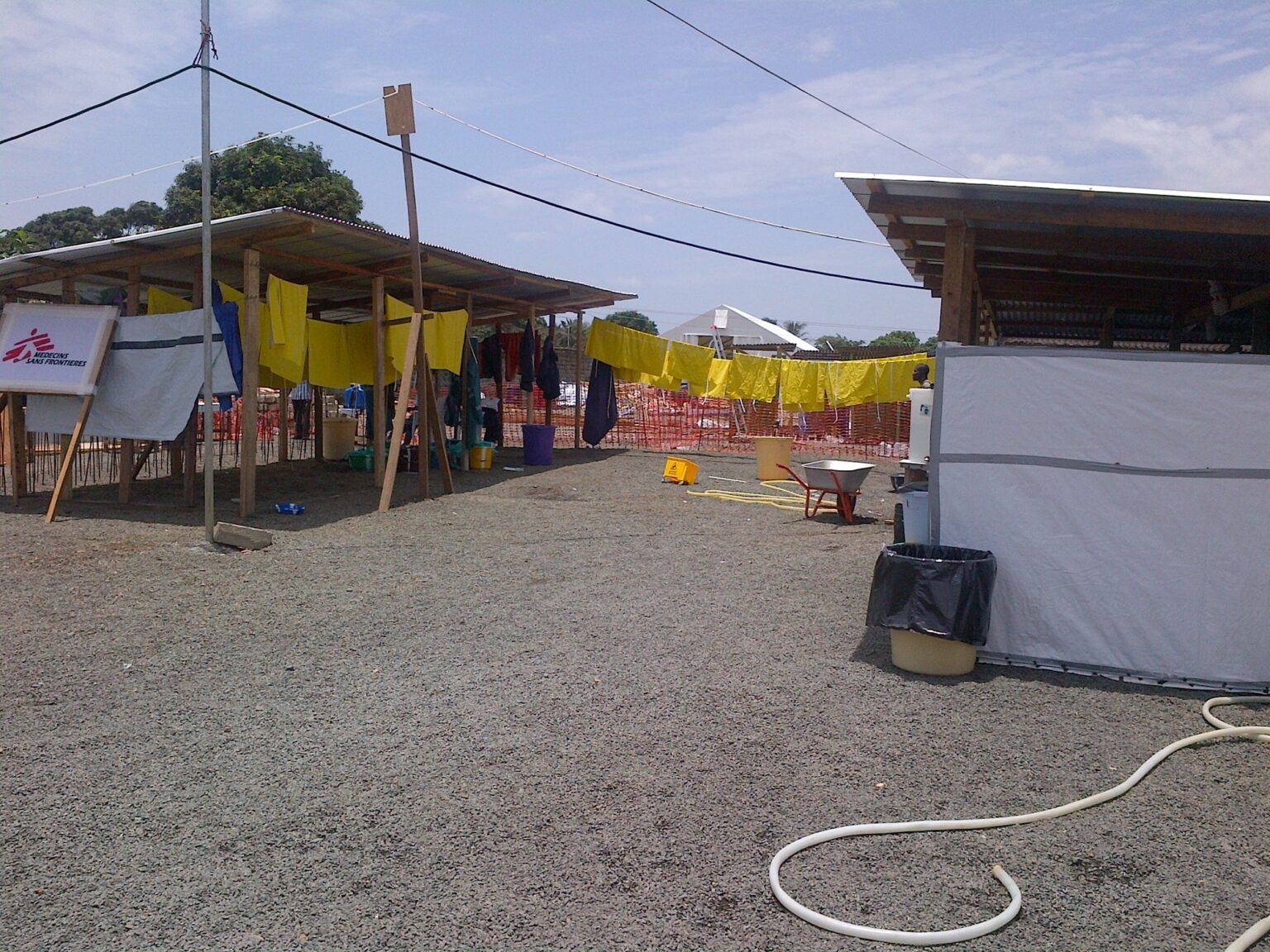
    Ebola loperamide study: workers in protective equipment at ELWA-3, the MSF Ebola treatment unit in Liberia, during the 2014 epidemic
    Health

    Ebola loperamide study ties diarrhoea drug to survival in west Africa

    By DNE Africa 8 Min Read
    Strait of Hormuz seen from the International Space Station, between the Gulf and the Gulf of Oman
    World

    Iran’s Guards claim full control of Strait of Hormuz after blast

    By DNE Africa November 26, 2026
    Gabon cement map showing the CIMAF plant at Owendo, next to Libreville
    Business

    Gabon cement capacity grows as CIMAF opens line before clinker ban

    By DNE Africa November 26, 2026
  • Business
    Tunisia central bank headquarters in Tunis, behind a row of palm trees
    Business

    Tunisia central bank holds rate at 7% as deficit doubles

    The BCT warned of persistent inflation pressure as the energy bill pushed…

    By DNE Africa 7 Min Read
    55671458312 033583048f c 1
    Business
    AfDB Launches Initiative to Strengthen Africa’s Sovereign Credit Rating Capacity
    African stock markets: signs of the Botswana, BRVM, Casablanca, Egyptian, Ghana, Mauritius, Nairobi, Nigerian, Tunis and Johannesburg exchanges
    Business
    African stock markets fall as Johannesburg drops 1.4% and Tunis gains
    Gambia petroleum minister's sector: officials pose at the inauguration of an electricity access project in The Gambia
    Business
    Gambia petroleum minister Nani Juwara to speak at Dakar oil summit
    Niger petroleum minister Hamadou Tini speaks at a lectern during the West African mining week in Ouagadougou
    Business
    Niger petroleum minister Hamadou Tini to speak at Dakar energy summit
  • Culture
  • Opinion
  • Technology
  • Sports
  • World
  • My Bookmarks
Reading: Ebola loperamide study ties diarrhoea drug to survival in west Africa
Sign In
  • About us
DNE AfricaDNE Africa
Font ResizerAa
  • Home
  • Politics
  • Business
  • Culture
  • Opinion
  • Technology
  • Sports
  • World
  • My Bookmarks
Search
  • Home
  • Politics
  • Business
  • Culture
  • Opinion
  • Technology
  • Sports
  • World
  • My Bookmarks
Have an existing account? Sign In
Follow US
© 2026 DNE Africa. All rights reserved.
Ebola loperamide study: workers in protective equipment at ELWA-3, the MSF Ebola treatment unit in Liberia, during the 2014 epidemic

Ebola loperamide study ties diarrhoea drug to survival in west Africa

DNE Africa
Last updated: November 26, 2026 12:02 pm
By DNE Africa 8 Min Read
Share
Workers at ELWA-3, the Médecins Sans Frontières Ebola treatment unit in Liberia, September 2014. Photo: CDC Global / Wikimedia Commons, CC BY 2.0
SHARE

Ebola patients with diarrhoea who were given loperamide during the 2013-16 west African epidemic were less likely to die, according to an Ebola loperamide study of 5,509 patients published on Wednesday in The Lancet Global Health.

Contents
What did the Ebola loperamide study find?How was the research done, and what are its limits?What does the Ebola loperamide study mean for WHO guidance?Why does it matter for Congo’s Ebola outbreak?FAQWhat is the Ebola loperamide study?Does the Ebola loperamide study prove the drug saves lives?Does the Ebola loperamide study apply to Congo’s outbreak?Who funded the research?

The findings matter because loperamide is a cheap, widely available tablet, and most Ebola deaths come early, when patients lose large amounts of fluid. The authors said WHO should reassess the drug for its supportive-care guidance, as the Democratic Republic of the Congo battles the largest Ebola outbreak in its history.

What did the Ebola loperamide study find?

The researchers analysed records of patients treated in Guinea, Liberia and Sierra Leone between 4 January 2014 and 1 April 2016, held on the Ebola platform of the Infectious Diseases Data Observatory (IDDO). Of 13,859 patients from 21 Ebola treatment units, 5,509 from 20 units had laboratory-confirmed Ebola and documented diarrhoea; 52% were women and girls.

Patients recorded as receiving loperamide had a hazard ratio for death of 0.39 half a day into treatment and 0.34 on day one, according to the study in The Lancet Global Health. That means an estimated risk of dying at that point about a third of the risk for patients not given the drug. The authors said the protective effect lasted through the 30-day follow-up.

Loperamide slows the gut and reduces diarrhoea. The authors wrote that Ebola deaths peak early in the illness, especially where heat and the risk of infection limit rehydration through a drip.
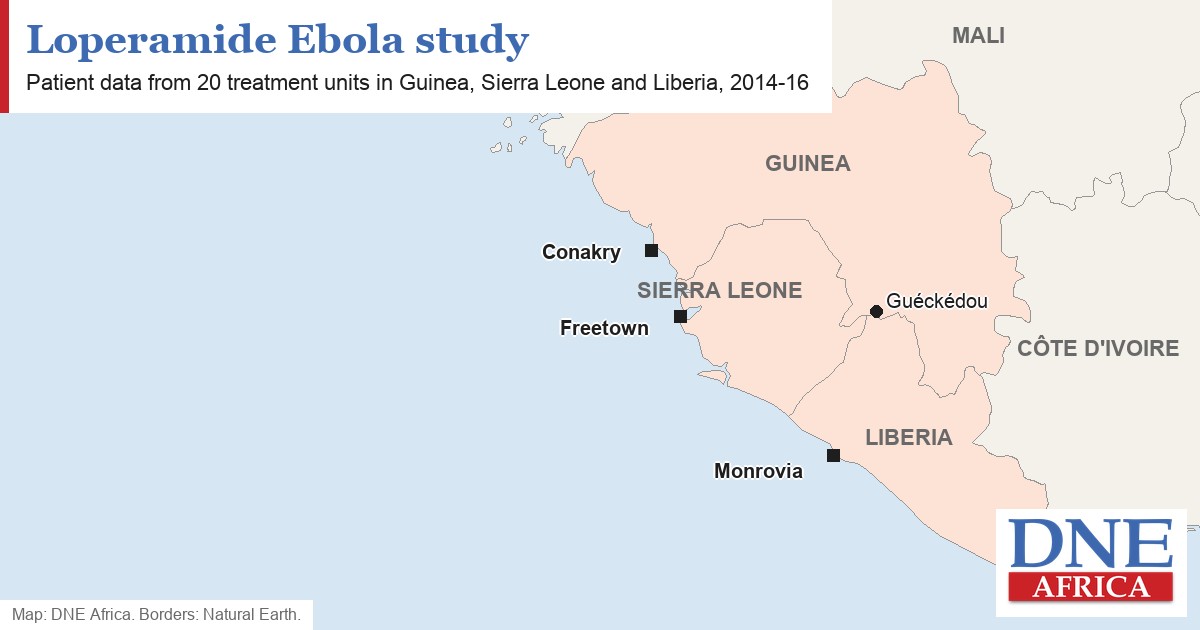
Ebola loperamide study map of Guinea, Sierra Leone and Liberia, where the patients analysed were treated in 2014-16
Map: DNE Africa

How was the research done, and what are its limits?

The Ebola loperamide study is observational: doctors chose whether to give the drug, so sicker or healthier patients may have been treated differently. To deal with that, the authors used an instrumental variable method, comparing patients by how often their treatment unit had recently prescribed loperamide, a habit of the unit rather than a choice about the patient.

The method rests on the assumption that a unit’s prescribing habit affected survival only through the drug itself, and not through other differences in care between units. The authors said sensitivity tests and “negative-control” checks, which look for effects where none should exist, supported their estimate. The results are not those of a randomised trial, and the analysis relies on treatment as it was recorded in the field during an emergency.

The lead author is Heather Hufstedler of the Heidelberg Institute of Global Health in Germany, with Till Bärnighausen as senior author. Co-authors include Armand Sprecher of Médecins Sans Frontières and researchers in Sierra Leone, at Connaught Hospital, Njala University and the health ministry, and at the Institut Pasteur de Dakar. The work was funded by the EU’s Horizon 2020 programme and the Canadian Institutes of Health Research, and the authors declared no competing interests.

What does the Ebola loperamide study mean for WHO guidance?

The authors said WHO guidance “has varied in its support” for loperamide in Ebola patients with diarrhoea, and that no earlier analysis of individual patient data had tested its effect on survival. They said their results support reassessing the drug for WHO’s supportive-care guidance and considering its use, with further evaluation, where intravenous fluids cannot be given, including in some treatment units and in emergency care in communities and homes.

WHO had not published a response to the study at the time of writing.

Protective eyewear drying outside the Kerry Town Ebola treatment unit in Sierra Leone, 2015
Protective eyewear outside the Kerry Town Ebola treatment unit, Sierra Leone, 2015. Photo: Corporal Paul Shaw / UK Ministry of Defence, Open Government Licence v1.0

Why does it matter for Congo’s Ebola outbreak?

The west African epidemic, which began in Guéckédou in Guinea, caused more than 28,600 cases and 11,300 deaths, according to the World Health Organization. It was caused by the Zaire species of the virus.

Congo’s current outbreak is caused by a different species, Bundibugyo virus, which the study did not cover. As of 17 November, Congo had reported 11,613 confirmed cases, including 5,678 deaths, a fatality rate of 48.9%, across eight provinces, WHO said in its latest outbreak update. It is the largest Ebola outbreak recorded in the country. WHO said 452 of the 720 deaths in the three weeks to 17 November happened in communities rather than treatment centres, and that no vaccine or specific treatment is approved for Bundibugyo virus disease.

WHO says rapid testing and optimised supportive care can reduce deaths. Its emergency committee decided on 18 November that the outbreak remains a public health emergency of international concern. DNE Africa has reported on the outbreak at six months and on teams trapped by fighting in Ituri.

FAQ

What is the Ebola loperamide study?

It analysed 5,509 patients with confirmed Ebola and diarrhoea treated in Guinea, Liberia and Sierra Leone in 2014-16, and was published on 25 November 2026 in The Lancet Global Health.

Does the Ebola loperamide study prove the drug saves lives?

No. It is an observational study using an instrumental variable method, not a randomised trial. The authors called for further evaluation and for WHO to reassess its guidance.

Does the Ebola loperamide study apply to Congo’s outbreak?

The study looked at the Zaire species of the virus. Congo’s outbreak is caused by Bundibugyo virus, which the study did not cover.

Who funded the research?

The EU’s Horizon 2020 programme and the Canadian Institutes of Health Research funded it. The authors declared no competing interests.


You Might Also Like

Africa CDC board delays verdict on Kaseya’s second term

Djugu violence prompts UN mobile base in DR Congo’s Ituri

Lesotho HIV targets surpassed at 98-99-99, AIDS commission says

Eastern Congo mortality doubled amid aid cuts and war, study finds

AfDB Backs Sierra Leone’s Bid to Host Regional Data Embassy with $750,000 Grant

TAGGED:EbolaLiberiaSierra Leone
Share This Article
Facebook Twitter Pinterest Whatsapp Whatsapp LinkedIn Reddit Telegram Email Copy Link

You Might Also Like

Acute hunger map of East and Southern Africa highlighting Uganda, Kenya, Zambia, Malawi, Mozambique and Madagascar
Health

Acute hunger in East and Southern Africa could hit 16.4mn, report says

By DNE Africa 7 Min Read
Togo vaccination coverage: banner announcing the malaria vaccine's addition to the national immunisation programme outside the Kabou health centre
Health

Togo vaccination coverage rose to 90% over 45 years, study finds

By DNE Africa 8 Min Read
CPHIA 2026 opening in Addis Ababa: Abiy Ahmed, Samia Suluhu Hassan, Evariste Ndayishimiye and Jean Kaseya on stage
Health

CPHIA 2026 opens in Ethiopia with AU push on maternal health

By DNE Africa 8 Min Read

More Popular from DNE AFRICA

Warraq fire: burning vehicles on the Ring Road in Giza, Egypt, on the night of the fuel tanker crash
Society

Egypt arrests driver over Warraq fire as toll reaches 31

By DNE Africa 8 Min Read
Odola app founder Ismail Ahmed, the WorldRemit founder, in a 2015 portrait

WorldRemit founder Ismail Ahmed launches Odola app for US migrants

By DNE Africa
Strait of Hormuz seen from the International Space Station, between the Gulf and the Gulf of Oman
World

Iran’s Guards claim full control of Strait of Hormuz after blast

By DNE Africa 6 Min Read
Ad imageAd image
Business

Djibouti budget for 2027 rises to 188bn francs with sukuk plan

The cabinet's draft finance law grows 11.6% on the revised 2026 budget, after revenue fell short…

By DNE Africa
Technology

EasyEquities security incident locks out South African investors

The investment platform's second security scare in three months follows a breach at mortgage lender SA…

By DNE Africa
Technology

Gabon TikTok talks turn to social media law compliance and creator pay

The three-day visit tests how Gabon, which suspended social networks in February, will work with the…

By DNE Africa
Business

AfDB Launches Initiative to Strengthen Africa’s Sovereign Credit Rating Capacity

The African Development Bank Group (AfDB) has launched a Sovereign Credit Rating Initiative to strengthen African…

By Ahmed Emam
World

World news today: Houthi Saudi port attacks, Iran Hormuz mine claim

Yemen's Houthis said they hit Saudi Arabia's Jeddah and Jizan ports, Iran claimed a gas carrier…

By DNE Africa
DNE Africa

News by Africans, For Africans

Categories

  • Science
  • Health
  • Entertainment
  • Business
  • The Escapist

Quick Links

  • Advertise with us
  • Newsletters
  • Complaint

DNE Africa.All Rights Reserved.

Welcome Back!

Sign in to your account

Username or Email Address
Password

Lost your password?