
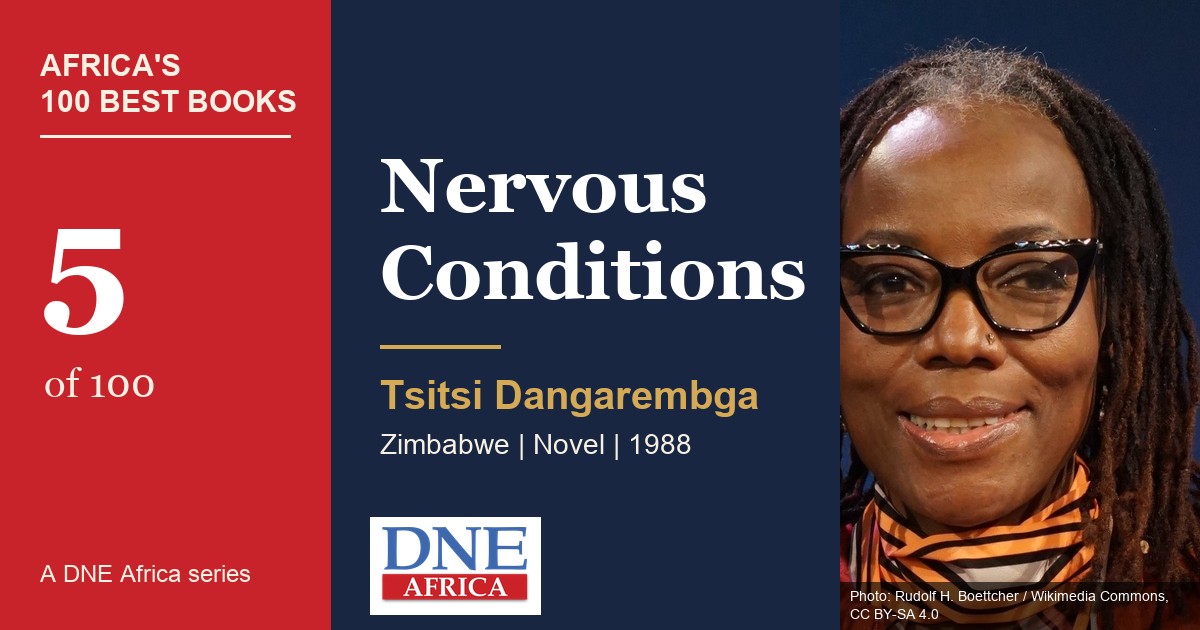

Nervous Conditions, the 1988 novel by Zimbabwe’s Tsitsi Dangarembga about a village girl’s hunger for schooling in 1960s Rhodesia, is partly a story about losing the Shona language, and it took 36 years to be published in Shona.
Africa’s 100 Best Books, No. 5 of 100. See the full list and every article in the series.
The gap matters because Nervous Conditions is one of the most widely taught African novels, yet it reached readers at home in Shona only in 2024, as Kusagadzikana, translated by the Zimbabwean novelist Ignatius Mabasa. Zimbabwean writers now use the translation to ask why so few of the country’s classics exist in its own languages.
The standard account is well known. Dangarembga’s manuscript was turned down by publishers in Zimbabwe in the early 1980s and was published in London by The Women’s Press in 1988, making her the first Black Zimbabwean woman to publish a novel in English, according to Rhodes University, which gave her an honorary doctorate in 2025. It won the Commonwealth Writers’ Prize for the Africa region in 1989, began a trilogy completed by The Book of Not (2006) and This Mournable Body (2018), and was placed in the top 12 of Africa’s 100 best books of the 20th century, according to the African Studies Centre Leiden.
A note on method: Nervous Conditions is in copyright and DNE Africa found no legal free copy of the full text. This article checked the passages it quotes against the Faber edition through Google Books’ search, and draws on Zimbabwean writers and published criticism.
Table of Contents
In this article
What is Nervous Conditions about?
The novel is narrated by Tambudzai, or Tambu, a girl from a poor farming family in rural Rhodesia, looking back on her childhood in the 1960s and early 1970s. Its first sentence is one of the best known in African fiction: “I was not sorry when my brother died.”
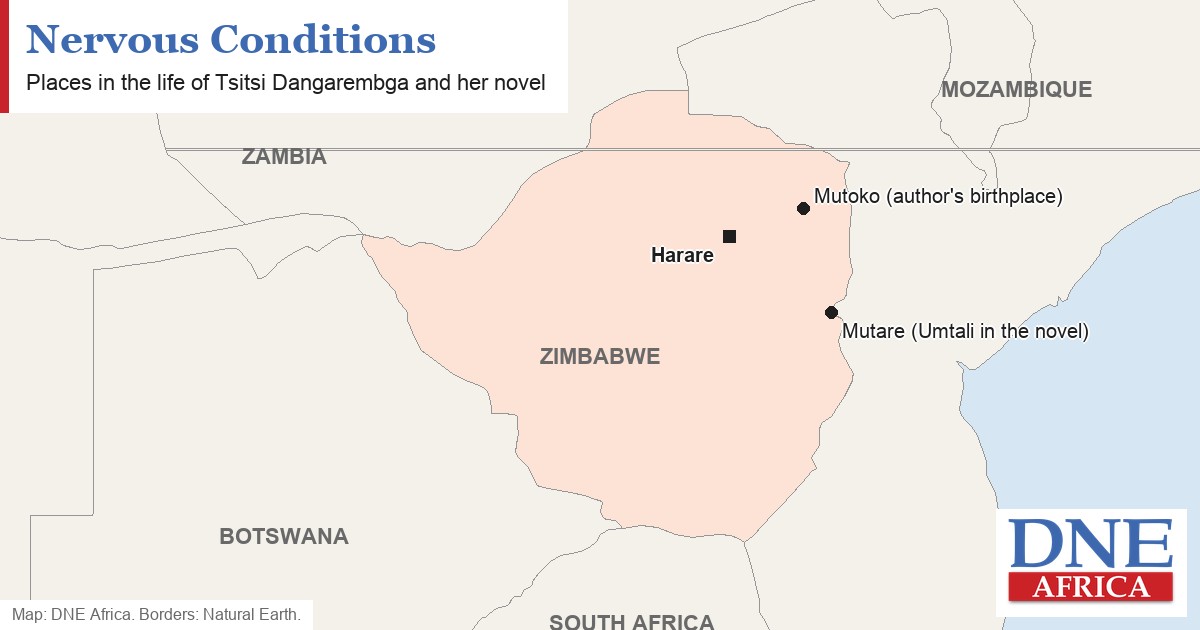
The brother is Nhamo, chosen by the family to be educated at the mission school run by their uncle Babamukuru, the family’s head and benefactor, who studied in England. When Nhamo dies, Tambu takes his place at the mission near Umtali, the town now called Mutare. There she lives with Babamukuru; his wife Maiguru, who holds a master’s degree but defers to her husband; and their daughter Nyasha, who has grown up partly in England and argues with her father about almost everything.
The title comes from the novel’s epigraph, taken from Jean-Paul Sartre’s introduction to Frantz Fanon’s The Wretched of the Earth: “the condition of native is a nervous condition”. Dangarembga gives that idea to particular people. Tambu’s mother, her aunt Lucia, Maiguru and Nyasha each meet the limits set by colonial rule and by the family’s men in a different way, and Nyasha’s rebellion against her father costs her dearly. DNE Africa will not give away how the book ends.
Why is Nervous Conditions a novel about language?
Education is Tambu’s way out of poverty, and the novel never stops counting its price. One of the first shocks of her new life is that her cousins, back from England, can barely speak Shona. “Shona was our language. What did people mean when they forgot it?” Tambu asks.
Her mother sees the same thing as a danger. Later in Nervous Conditions she warns against too much “Englishness” and says of Tambu’s cousin: “That boy Chido can hardly speak a word of his own mother’s tongue.”
The irony is hard to miss. A novel that treats the loss of Shona as a wound was written in English and published abroad. African classics are seldom translated into African languages, Tinashe Mushakavanhu, a Zimbabwean scholar, wrote in The Conversation Africa in February 2024, and Nervous Conditions had appeared in a dozen or more languages, among them Dutch, French, German, Italian and Spanish, before it appeared in Shona.
How did Nervous Conditions come home in Shona?
The Shona edition, Kusagadzikana, was published in early 2024 by House of Books, a Zimbabwean publisher, alongside Hakuna Zvakadaro, a Shona translation of The Book of Not by the writer and academic Tanaka Chidora, according to Chidora and Mushakavanhu. Only This Mournable Body, the third book, remains untranslated into Shona.
Mabasa, a novelist who wrote the first PhD thesis in Shona, told Mushakavanhu that he began translating Nervous Conditions around 1999, while teaching it in the United States as a Fulbright scholar. He stopped after three chapters because Dangarembga was in a legal dispute over the rights to the book, and started again from the beginning in 2022. The dispute, with Ayebia Clarke Publishing in Britain, became public in 2020, when Dangarembga sought legal help, Brittle Paper reported. The novel is now published by Faber in Britain and Graywolf Press in the United States.
The title was the hardest part, Mabasa said, because the “nervousness” of the novel is physical, psychological and spiritual at once. He settled on Kusagadzikana partly because Chidora had used the word the same way in his translation of the sequel. Dangarembga’s way of going deep into her characters’ minds is not usual in Shona writing, he said, and translating it was at times “like deboning a fish”.
What do Zimbabwean writers say about the novel now?
For Mabasa the translation is a political act. The women whose lives the book describes could never buy or read it in English, he argued, and in Shona it can be “discussed under a tree by ordinary folk”, not only by academics in air-conditioned conference rooms.
Philani A Nyoni, a Zimbabwean poet, put the argument most sharply in an interview with Mabasa for LitNet in March 2024. Nervous Conditions is about Shona people living lives in which everything has a Shona name, he wrote, so writing it in English was already a kind of translation; the Shona edition, in his view, was less a translation than a repatriation.
Mabasa used the same interview to blame policy. Zimbabwe lacks measures that encourage publishing and translation in its own languages, he said, which is why Charles Mungoshi’s Waiting for the Rain, Chenjerai Hove’s Bones and Dambudzo Marechera’s The House of Hunger have not been translated either. About 96% of the young writers he mentors do not write in Shona or Ndebele, he said. Dangarembga, he added, told him during the work that she did not know how he had captured the novel’s voice.
Mushakavanhu described reading Tambu’s story in Shona as being “like waking up in a dream”. The international view, set out by the philosopher Kwame Anthony Appiah in his introduction to the Faber edition, is that the book’s power lies in how fully it realises Tambu’s world. Zimbabwean critics add a question Appiah does not dwell on: in which language that world was meant to be heard.
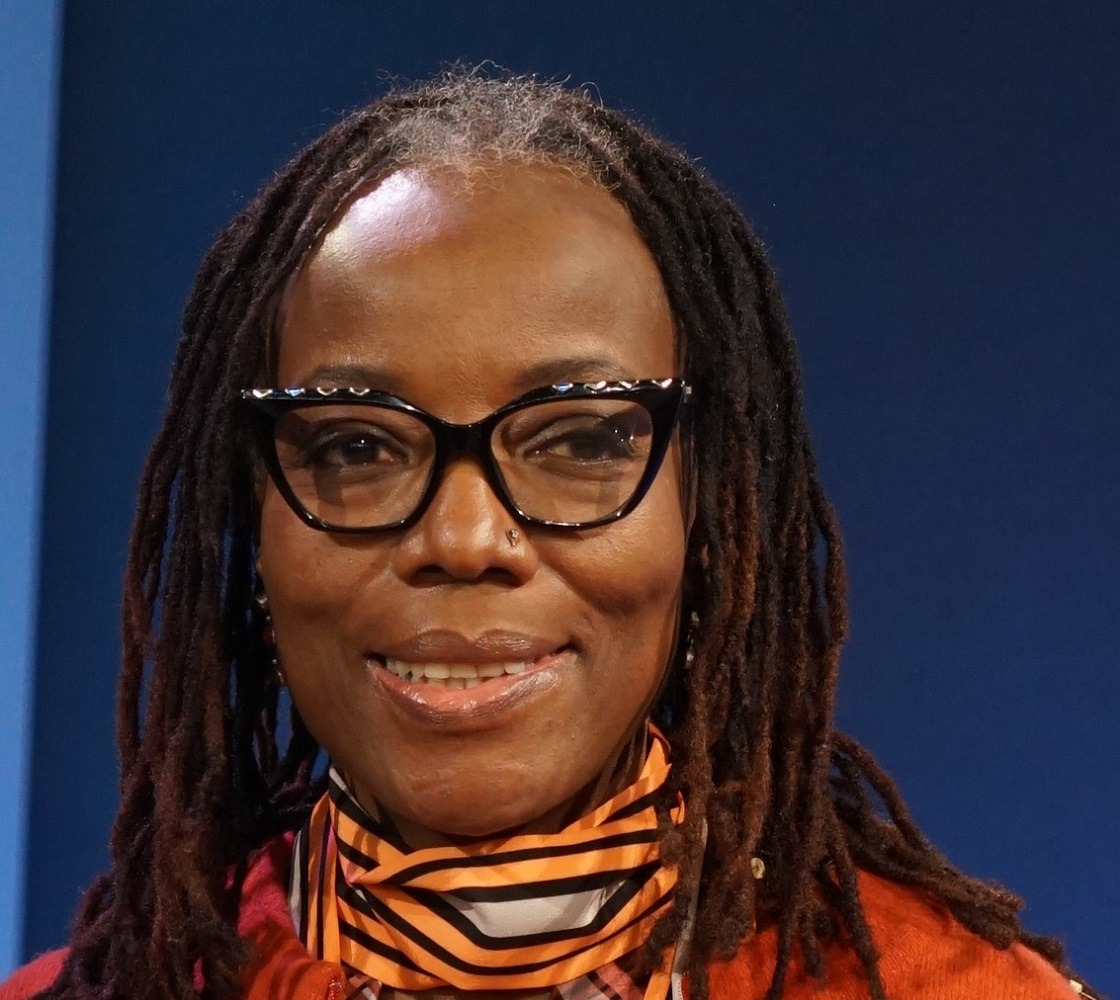
Who is Tsitsi Dangarembga?
Dangarembga was born in Mutoko, in what was then Southern Rhodesia, in 1959. She began pre-clinical medical studies at Cambridge, returned home around independence in 1980, took a psychology degree at the University of Zimbabwe and later studied directing at the German Film and Television Academy in Berlin, according to Rhodes University. Of the rejections by Zimbabwean publishers, she said at the time that it was “very difficult for men to accept the things that women write and want to write about”, she said at the time, as Mushakavanhu recalls.
She is also a film-maker whose films include Everyone’s Child (1996). This Mournable Body was shortlisted for the Booker Prize in 2020, and she received the Peace Prize of the German Book Trade in 2021. In January she received a lifetime achievement award at the Sharjah Festival of African Literature in the United Arab Emirates, the Zimbabwean outlet Greedy South reported.
In July 2020 she was arrested during an anti-corruption protest in Harare. A magistrate convicted her in September 2022 of inciting public violence, and she was fined and given a suspended sentence. The High Court in Harare set aside the conviction in May 2023, finding the magistrate had misdirected herself, Africanews and the Zimbabwean daily NewsDay reported.
How does the novel read today?
Read now, Nervous Conditions is less a story of escape than its first sentence promises. Tambu tells it as an older woman who knows what schooling cost her, and the book lets the reader see more than the young Tambu does: that Maiguru’s degree has not freed her, that Babamukuru is both generous and controlling, and that Nyasha’s anger is a form of clear sight. Babamukuru is never a caricature, which is why the family’s arguments still feel current to readers who have had to choose between a scholarship and home.
Its weakness, if it has one, is that the colonial state stays mostly at the edges of the family story, and the war that would end Rhodesia is hardly heard. Dangarembga followed Tambu further into that history in the later books. Like Mariama Bâ’s So Long a Letter, No. 3 in this series, it is a book in which women’s private lives carry the political argument, and like Ngũgĩ wa Thiong’o’s A Grain of Wheat, No. 4, it has become part of a long argument at home about which language African literature should speak. Kusagadzikana is one answer.
Questions for discussion
- Tambu says she was not sorry when her brother died. How does that first sentence change the way you read the rest of the book?
- Maiguru has a master’s degree but little power at home. What does the novel suggest education can and cannot change?
- Is Babamukuru a villain, a victim or both?
- Nyasha has lost much of her Shona. Is her rebellion a result of living between two languages?
- Would Nervous Conditions be a different book if it had first been written in Shona? Does a translation published 36 years later change its meaning?
Read next in the series
- So Long a Letter by Mariama Bâ (Senegal), No. 3: a woman’s account of marriage, polygamy and friendship.
- Bones by Chenjerai Hove (Zimbabwe), No. 41: one of the Zimbabwean classics Mabasa says still await a Shona translation (coming soon).
- Stories from a Shona Childhood by Charles Mungoshi (Zimbabwe), No. 13: childhood in rural Zimbabwe, the world Tambu leaves (coming soon).
Also in the series: Things Fall Apart by Chinua Achebe and The Cairo Trilogy by Naguib Mahfouz.
More from Africa’s 100 Best Books
- Previous, No. 4: A Grain of Wheat by Ngugi wa Thiong'o (Kenya)
- Next, No. 6: Fantasia: An Algerian Cavalcade by Assia Djebar (Algeria)
- All 100 books in the series
FAQ
Who wrote Nervous Conditions?
Tsitsi Dangarembga, the Zimbabwean novelist and film-maker, born in 1959. It was her first novel, published by The Women’s Press in London in 1988.
What is Nervous Conditions about?
It follows Tambudzai, a girl from a poor rural family in 1960s Rhodesia, who gets the chance to study at her uncle’s mission school after her brother dies, and what that education costs her and the women around her.
Is Nervous Conditions available in Shona?
Yes. Ignatius Mabasa’s Shona translation, Kusagadzikana, was published by House of Books in Zimbabwe in 2024, 36 years after the English original.
Where does the title Nervous Conditions come from?
From the novel’s epigraph, a line in Jean-Paul Sartre’s introduction to Frantz Fanon’s The Wretched of the Earth: “the condition of native is a nervous condition”.
Is Nervous Conditions part of a trilogy?
Yes. Tambu’s story continues in The Book of Not (2006) and This Mournable Body (2018), which was shortlisted for the Booker Prize in 2020.


