
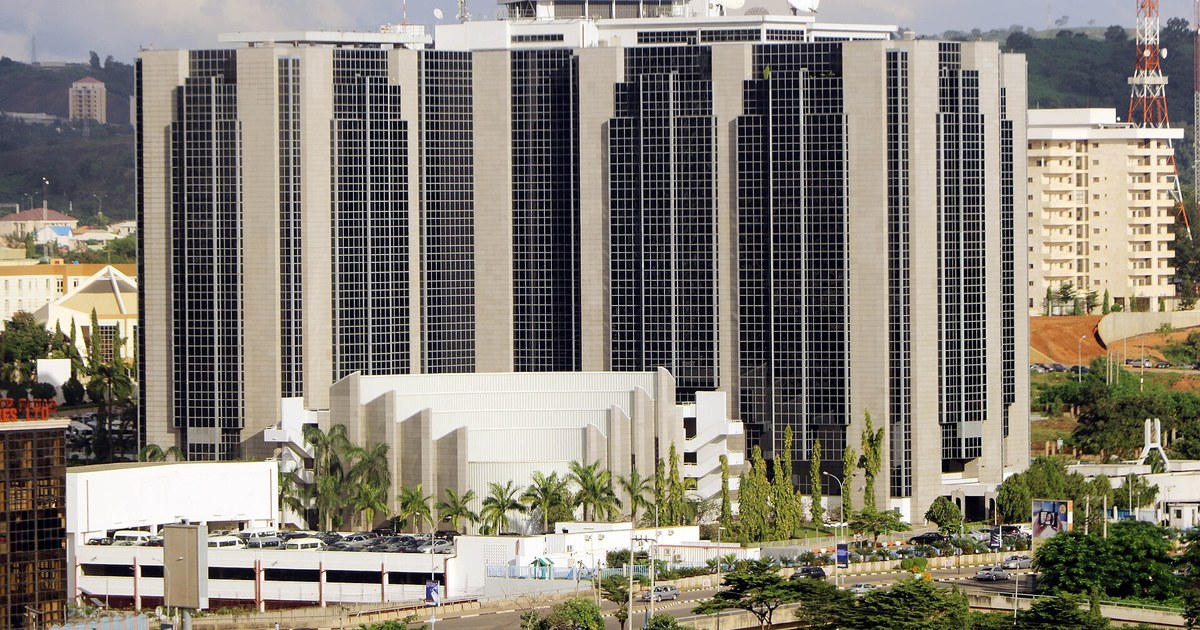

The Central Bank of Nigeria (CBN) kept its benchmark interest rate at 23% on Tuesday 24 November, holding the CBN interest rate for the first time since a September cut as it weighs slowing disinflation against election spending.
The decision matters for a country where inflation has fallen for five straight months but remains above 14%. On the same day President Bola Tinubu asked the House of Representatives to cut the 2026 federal budget by about N3.15trn, from N68.32trn to N65.18trn.
Why did the CBN keep its interest rate at 23%?
The Monetary Policy Committee voted at its 308th meeting, held in Abuja on 23 and 24 November, to retain the monetary policy rate at 23%, according to the bank’s Communique No. 165. Ten members attended. It also kept the corridor around the rate at +50/-300 basis points and the cash reserve requirement at 45% for commercial banks, 16% for merchant banks and 75% for non-TSA public sector deposits.
Olayemi Cardoso, the governor, said members noted the fall in headline inflation but that “prevailing headwinds” had “slowed the pace of moderation in price pressures”. Holding the rate, he said, would “further anchor inflation expectations and support the disinflation process”.
The committee named its risks: the Middle East conflict, which could keep energy prices high, and extra spending from the festive season and “election-related activities” ahead of the 2027 polls. It expected exchange rate stability and harvest-season food supply to keep inflation falling.
What do the numbers show?
Headline inflation eased to 14.06% in October from 14.63% in September, the communique said. Core inflation fell to 10.78% from 12.95%, and food inflation to 19.13% from 19.59%. The composite purchasing managers’ index rose to 53.2 points, from 53.0, and gross external reserves stood at $54.02bn on 17 November, enough for 10.26 months of imports.
The hold follows a run of moves this year. The bank cut the rate by 50 basis points to 26.5% in February, held it at that level in May and July, then cut it to 23% in September, Premium Times reported. The committee also welcomed a memorandum of understanding between the CBN and the Nigerian National Petroleum Company meant to raise foreign exchange inflows.
Keeping the CBN interest rate unchanged also leaves real rates, the gap between the policy rate and inflation, at close to nine percentage points.
What is in Tinubu’s revised 2026 budget?
In a letter dated 20 November and read in the House on Tuesday, Mr Tinubu asked lawmakers to repeal and re-enact the 2026 Appropriation Act with a revised fiscal framework, Nairametrics reported. The revision keeps the N31.46trn deficit and projects federal revenue of N33.72trn and capital spending of N26.23trn.
The president said the changes would align the budget with “existing obligations and available resources”: regularising spending by the NNPC on behalf of the federation, covering underprovided debt service and recognising capital warrants already issued.
The rate decision comes as Nigeria prepares for its 2027 elections. The government has also said that electricity tariffs will not rise in 2027, while violence has marred early campaigning, such as the attack that led to a curfew in Delta State.
What happens next?
The committee said future decisions on the CBN interest rate would stay “data-driven”. Its next meeting is set for 22 and 23 February 2027, after the National Bureau of Statistics publishes November, December and January inflation figures. The House must still consider the revised budget.
FAQ
What is the CBN interest rate now?
The CBN interest rate, the monetary policy rate, is 23%. The Monetary Policy Committee kept it there on 24 November 2026 after cutting it from 26.5% in September.
Why did the CBN not cut the interest rate again?
The committee said inflation was still falling but more slowly, and cited risks from Middle East energy prices and festive and election-related spending.
What was Nigeria’s inflation rate in October 2026?
Headline inflation was 14.06% in October 2026, down from 14.63% in September, according to the CBN communique citing official data.
When is the next CBN interest rate decision?
The Monetary Policy Committee’s next meeting is scheduled for 22 and 23 February 2027.


