
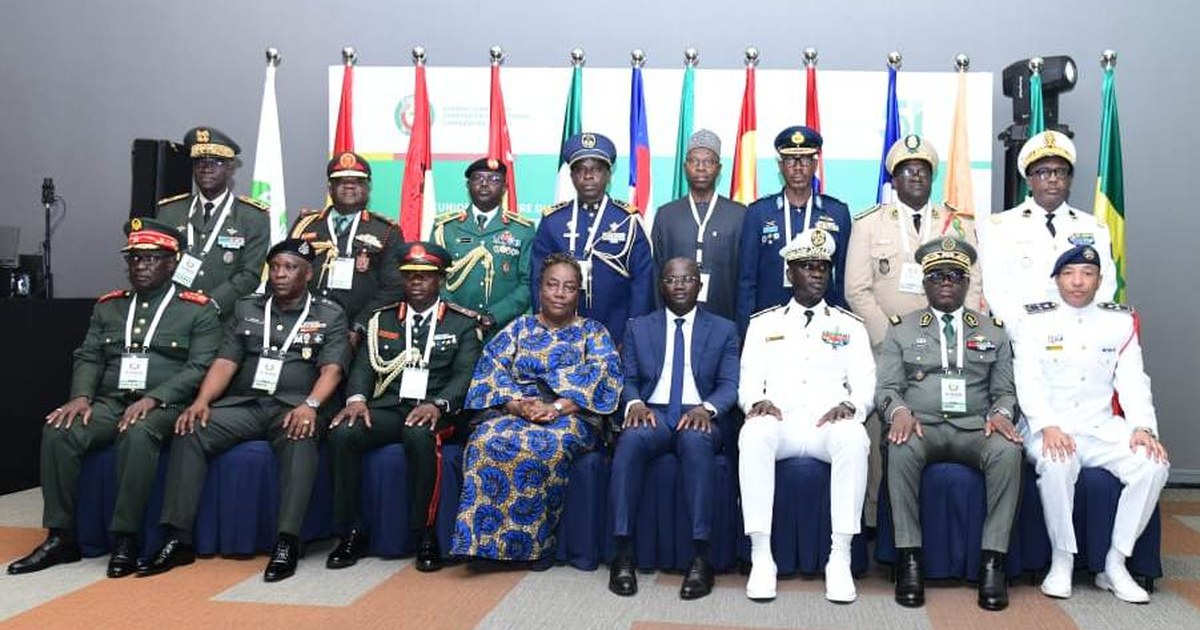

ECOWAS defence chiefs have set December 2027 as the target date to deploy the bloc’s ECOWAS counter-terrorism force, after a meeting in Dakar last week that also gave the brigade until July 2027 to put its operational framework in place.
The decision, taken at the 45th ordinary meeting of the Committee of Chiefs of Defence Staff from 16 to 18 November, is the latest timetable for a force first announced in 2025 and repeatedly held up by funding and troop shortfalls. West African states face rising attacks by jihadist groups, including in coastal countries such as Benin and Togo.
What did the defence chiefs decide on the ECOWAS counter-terrorism force?
The chiefs agreed to speed up plans to deploy the regional counter-terrorism force by December 2027 and adopted a roadmap to meet that deadline, the defence chiefs’ committee said at the close of the meeting, as reported in French by the Senegalese news site Seneweb on Monday. The meeting reviewed the regional security situation and the collective response to terrorism, violent extremism, organised crime and maritime insecurity.
Talks focused on the brigade’s funding, equipment and command post, and on deploying the bloc’s Maritime Task Force, the ECOWAS Commission said when the meeting opened. Vice-Admiral Oumar Wade, chief of the general staff of Senegal’s armed forces, took over the committee’s chair from Sierra Leone’s Lieutenant-General Amara Bangura.
Vice-Admiral Wade called the counter-terrorism brigade “a key priority”, with its operational framework to be established by July 2027, and stressed the urgency of resolving its funding and capability gaps, the Commission said.
Why has the ECOWAS counter-terrorism force taken so long?
ECOWAS announced in March 2025 that it would activate a 5,000-strong standby force to fight jihadist groups. In February 2026 defence chiefs cut the initial contingent to 1,650 troops, citing low commitments from member states, according to an analysis by the German Institute for International and Security Affairs (SWP). Ministers have also met in Abuja to work out how the brigade would be paid for.
Readiness for the ECOWAS counter-terrorism force is uneven. An ECOWAS inspection of Nigerian units pledged to the standby force this month found gaps in medical support, communications and logistics, the bloc said.
Francess Piagie Alghali, the ECOWAS commissioner for political affairs, peace and security, told the opening session that the rise in attacks had led heads of state to consider giving the standby force a stronger combat role, and stressed the need for sustainable funding, the Commission said.
How does the Sahel split affect the force?
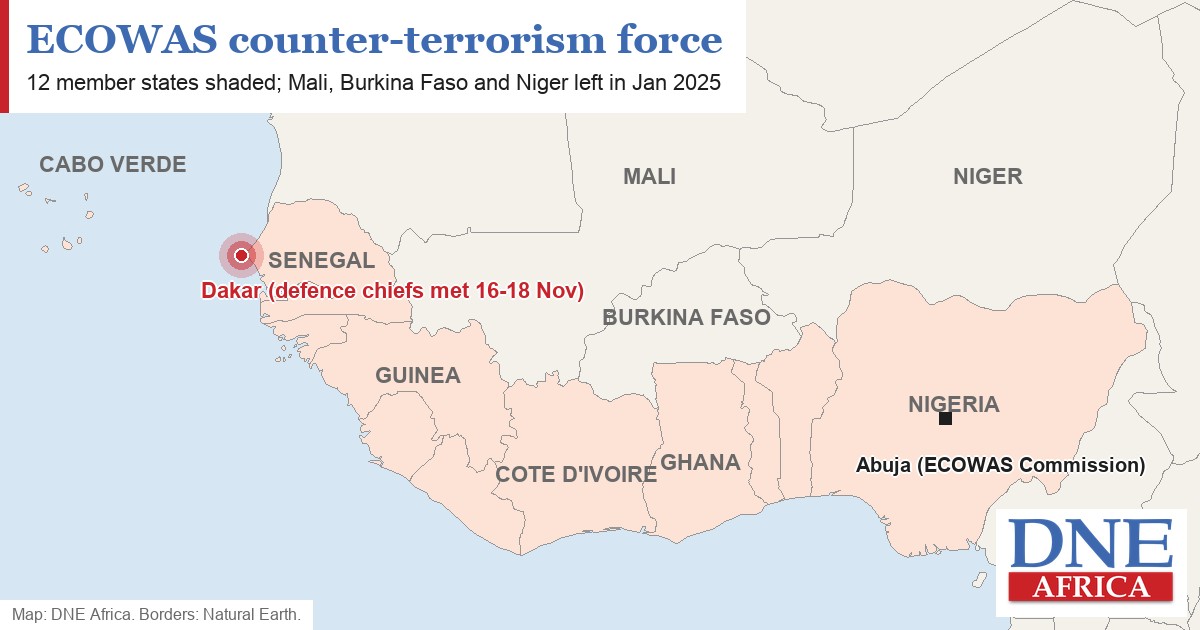
Mali, Burkina Faso and Niger, the countries worst hit by jihadist violence, left ECOWAS in January 2025 and formed the Alliance of Sahel States, which has its own joint force. ECOWAS now has 12 members. Any ECOWAS counter-terrorism force would therefore operate mainly in coastal and western states, where groups including Jama’at Nusrat al-Islam wal-Muslimin (JNIM) have expanded southwards.
The International Crisis Group said this month that Sahel leaders should weigh talks with JNIM alongside military action, a view Sahel governments have not adopted. Germany’s President Frank-Walter Steinmeier, visiting Abidjan on Monday, urged West African states to work together to “combat and contain terrorism”, the Ivorian presidency said.
What happens next?
The chiefs’ recommendations on the ECOWAS counter-terrorism force go to ECOWAS ministers and then to heads of state, who decide on deployment and funding. Senegal’s President Bassirou Diomaye Faye currently chairs the bloc. Senegal’s armed forces minister, Yankoba Diémé, told the Dakar meeting that member states must show “solidarity, coordination and collective responsibility”, the Commission said.
FAQ
When will the ECOWAS counter-terrorism force deploy?
Defence chiefs meeting in Dakar from 16 to 18 November set December 2027 as the target for deployment, with the operational framework due by July 2027.
How big is the ECOWAS counter-terrorism force?
The initial brigade was cut to 1,650 troops in February 2026 from a planned standby force of 5,000, according to SWP.
Which countries are in ECOWAS?
ECOWAS has 12 members after Mali, Burkina Faso and Niger left in January 2025: Benin, Cabo Verde, Côte d’Ivoire, the Gambia, Ghana, Guinea, Guinea-Bissau, Liberia, Nigeria, Senegal, Sierra Leone and Togo.
Who chairs the ECOWAS defence chiefs’ committee?
Vice-Admiral Oumar Wade, chief of the general staff of Senegal’s armed forces, took over the chair in Dakar.


