
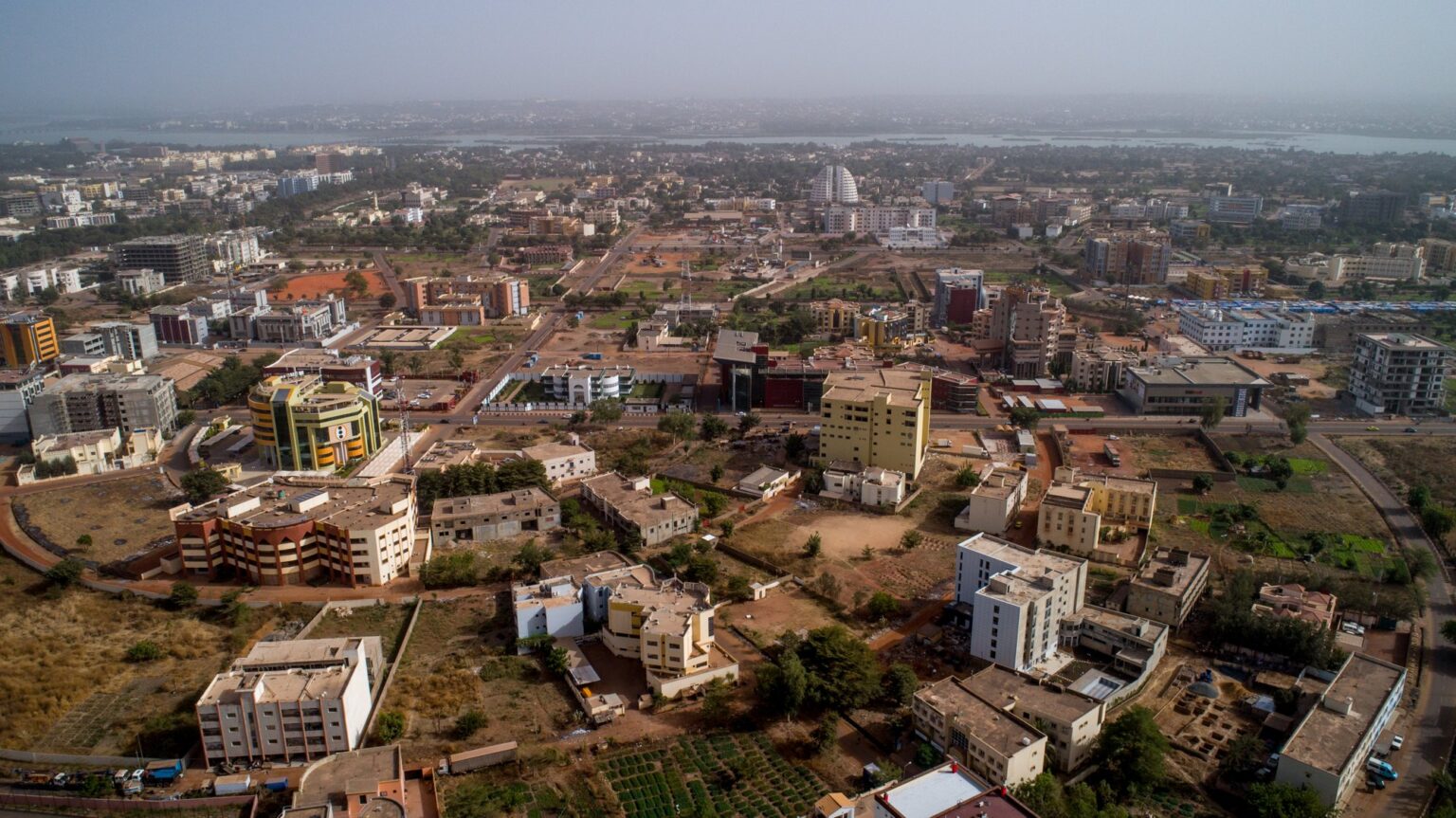

Mali, Burkina Faso and Niger should consider political talks with JNIM militants while keeping up military pressure, the International Crisis Group said on 20 November, as the al-Qaeda affiliate takes its war to the region’s cities.
The Brussels-based think tank said military victory over the group remained improbable after more than a decade of conflict, and that a negotiated way out “may prove the least harmful option” for the belligerents and the Sahel’s civilians.
What does Crisis Group say about JNIM militants and Sahel cities?
In Briefing 213, “Handling JNIM’s Threat to the Sahel’s Urban Heartlands”, Crisis Group traces how Jama’at Nusratul Islam wal Muslimin, formed in 2017 from four jihadist groups and led by Iyad ag Ghali, moved from rural areas and border zones to towns and cities.
Attacks by JNIM militants on urban areas more than tripled in 2022 compared with the year before, the briefing said, citing its own count of ACLED conflict data. Since 2023 the group has hit at least 30 secondary cities in Mali, including 15 of the country’s 19 regional capitals. A 2024 study cited in the briefing found that nearly 40 localities in Burkina Faso, among them Titao, Djibo and Pama, had been blockaded by JNIM militants.
In November 2024 a spokesman for the JNIM militants announced a “second phase” focused on major cities. From September 2025 they ambushed fuel trucks bound for Bamako, causing shortages that closed schools and universities for two weeks, according to the briefing. Crisis Group said the Malian authorities reportedly released imprisoned militants in March in exchange for an easing of the blockade; neither side has confirmed such talks.
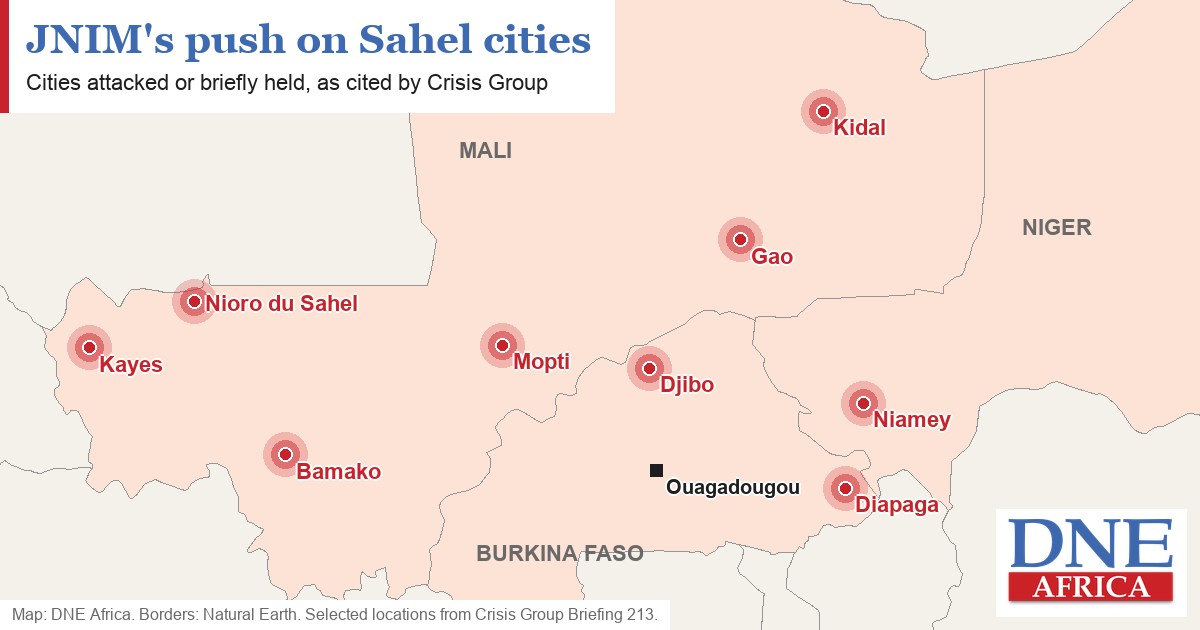
On 25 April JNIM and the mainly Tuareg Azawad Liberation Front (FLA) attacked military bases in seven Malian cities. The briefing said a car bomb in Bamako killed the defence minister, General Sadio Camara, and members of his family, and that the two groups held Kidal for five months before government forces retook it. About two months later JNIM militants attacked Niamey’s airport, which Nigerien forces repelled.
What are JNIM’s political aims?
For the first time in nearly 15 years of conflict, JNIM has made clear that it wants to remove the governments of all three states, Crisis Group said. It has appealed to students, unions and exiled politicians, though most opposition figures reject its violence and strict reading of sharia, the think tank said.
The briefing added that diplomats increasingly see a JNIM takeover in Mali or elsewhere as a realistic scenario, while noting that the group has no experience governing a densely populated area and that government forces still control the cities. It set out three possible paths: a widening war of attrition, unrest or a coup in a capital, or JNIM capturing cities or a national government.
What is the Sahel governments’ position?
The three governments have rejected political dialogue with JNIM militants and other jihadist groups and pledged to defeat them and restore state authority, relying on Russian allies and Turkish drones, according to Crisis Group. Mali’s Foreign Minister, Abdoulaye Diop, told diplomats in Bamako on 7 May that the government did not envisage dialogue with “terrorist armed groups”, including JNIM and the FLA, while remaining open to fighters who lay down their arms. The Alliance of Sahel States (AES) has also formed a unified force that is eventually meant to number about 15,000 troops.
What does Crisis Group recommend?
The think tank urged the three governments to explore talks with JNIM militants from a position of strength, in coordination with one another, and to encourage a public debate on the role of Islam in society. It also called on the regimes to ease restrictions on dissent, allow exiles to return and release political prisoners.
For JNIM, it said, any settlement would require distancing itself from al-Qaeda’s transnational programme and accepting that republican state institutions be preserved. Algeria, Mauritania and the coastal states of West Africa should push both sides toward dialogue, while making clear they would not recognise a government tied to al-Qaeda, the briefing said.
Over the past decade tens of thousands of people have been killed and more than four million displaced across the three countries, according to Crisis Group. DNE Africa has reported on the checkpoints set up around Bamako after the April offensive and on Senegal’s tighter border security.
FAQ
Who are JNIM militants?
JNIM, or Jama’at Nusratul Islam wal Muslimin, is al-Qaeda’s main affiliate in the Sahel. It was formed in 2017 and is led by Iyad ag Ghali, according to Crisis Group.
What did Crisis Group publish on 20 November?
Briefing 213, “Handling JNIM’s Threat to the Sahel’s Urban Heartlands”, in English and French. It analyses JNIM’s attacks on cities in Mali, Burkina Faso and Niger and recommends exploring talks.
Do Sahel governments negotiate with JNIM militants?
Officially, no. Mali’s foreign minister ruled out dialogue in May. Crisis Group said Niger carried out a prisoner swap with JNIM in 2024 and Mali reportedly released militants in 2026, but neither side has confirmed such deals.
What does Crisis Group want JNIM to do?
Seek its aims through negotiation, distance itself from al-Qaeda and stop foreign jihadists using the Sahel as a base.


