
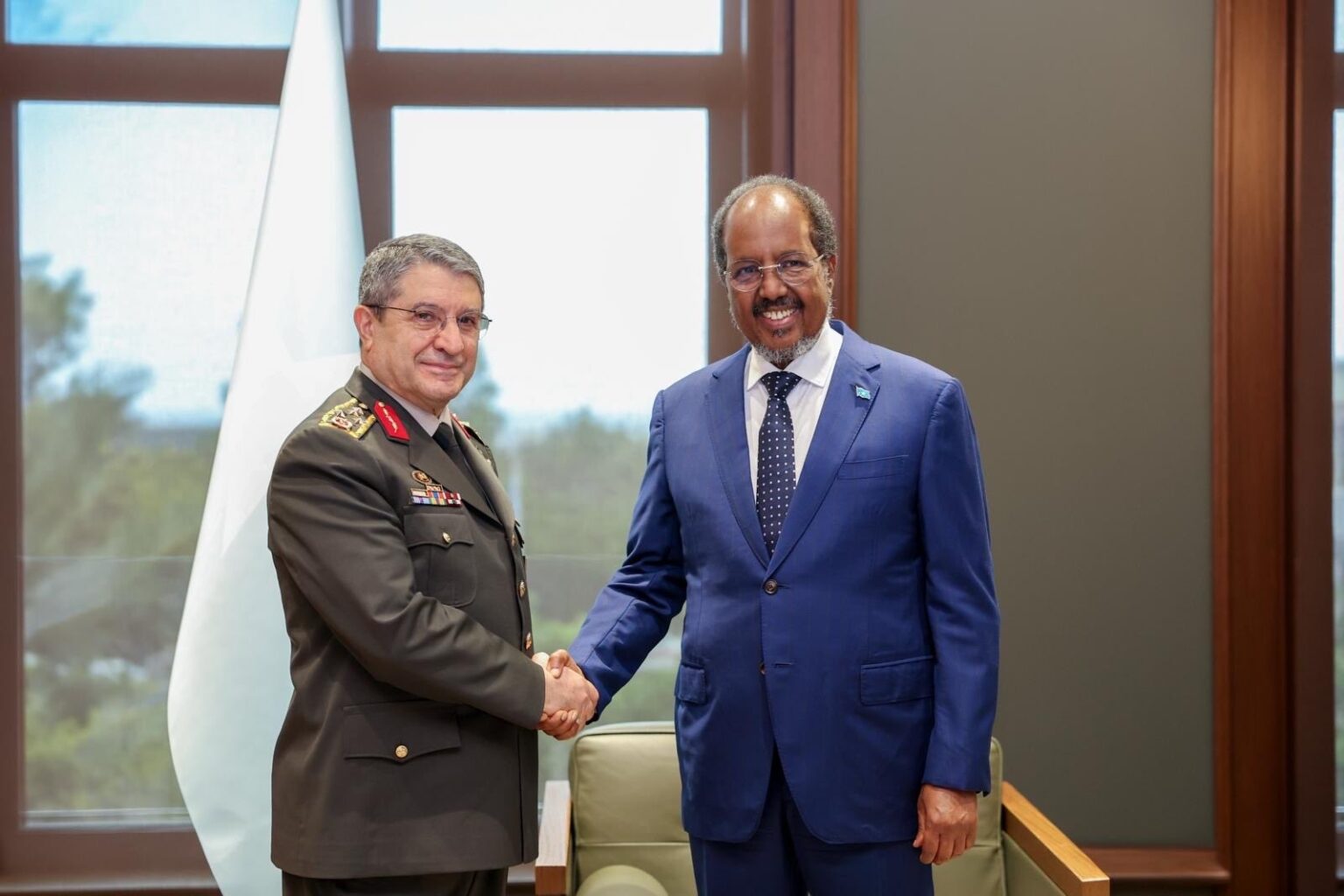

Somalia broke ground on a new Somali Navy headquarters in Mogadishu on Saturday as President Hassan Sheikh Mohamud hosted Turkey’s chief of the general staff, Gen. Selcuk Bayraktaroglu, and pledged closer defence co-operation.
The visit underlines Turkey’s growing role as Somalia’s main security partner at a time when Mogadishu’s relations with the United Arab Emirates have sunk to their lowest point in years. Turkish warships are already escorting a Turkish drillship searching for oil and gas off the Somali coast.
What did Somalia and Turkey agree?
The talks at the presidential palace focused on “further strengthening the long-standing Somalia-Türkiye strategic partnership, deepening bilateral defence and security cooperation, and enhancing joint efforts to combat international terrorism”, the Somali presidency said in a statement after the meeting.
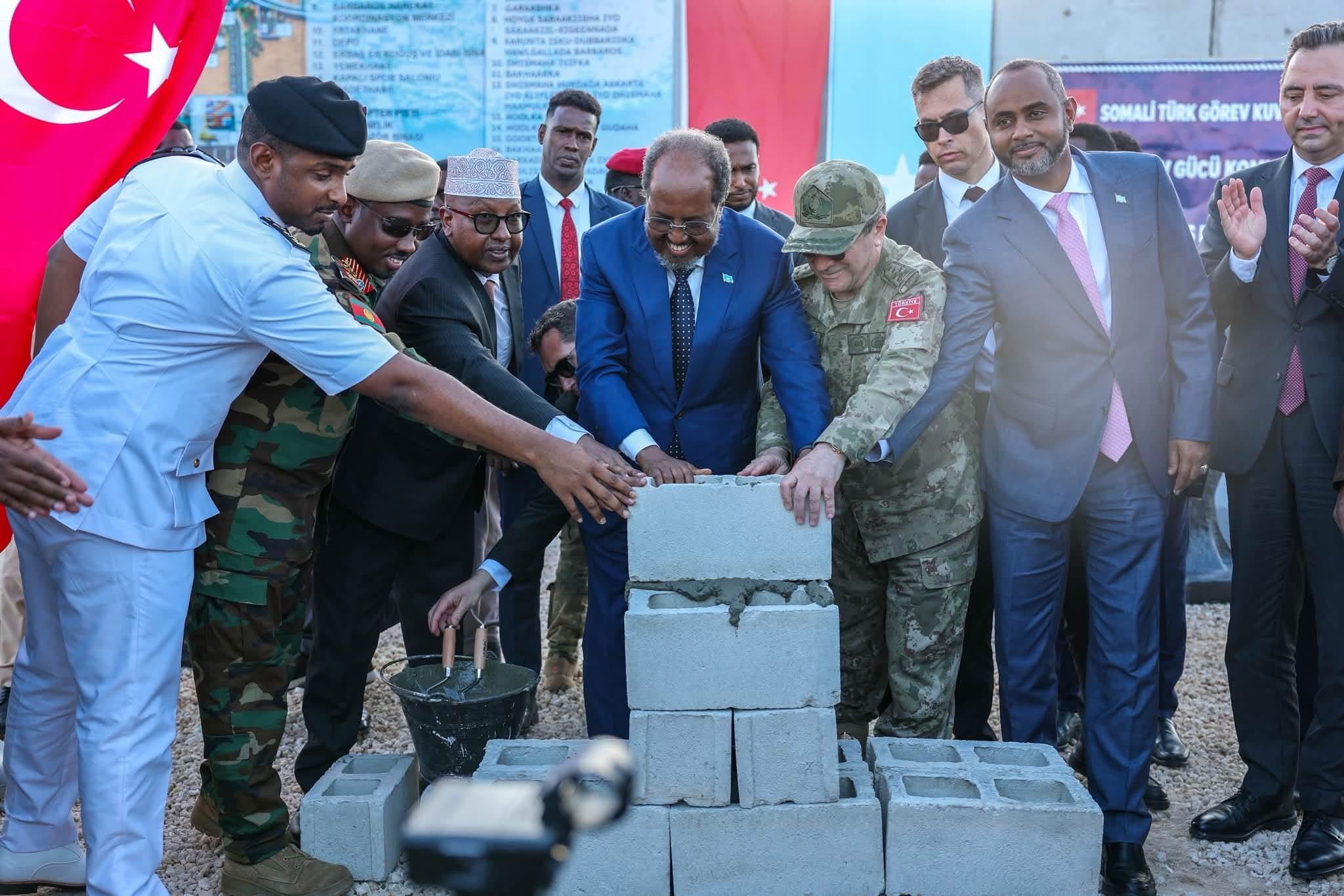
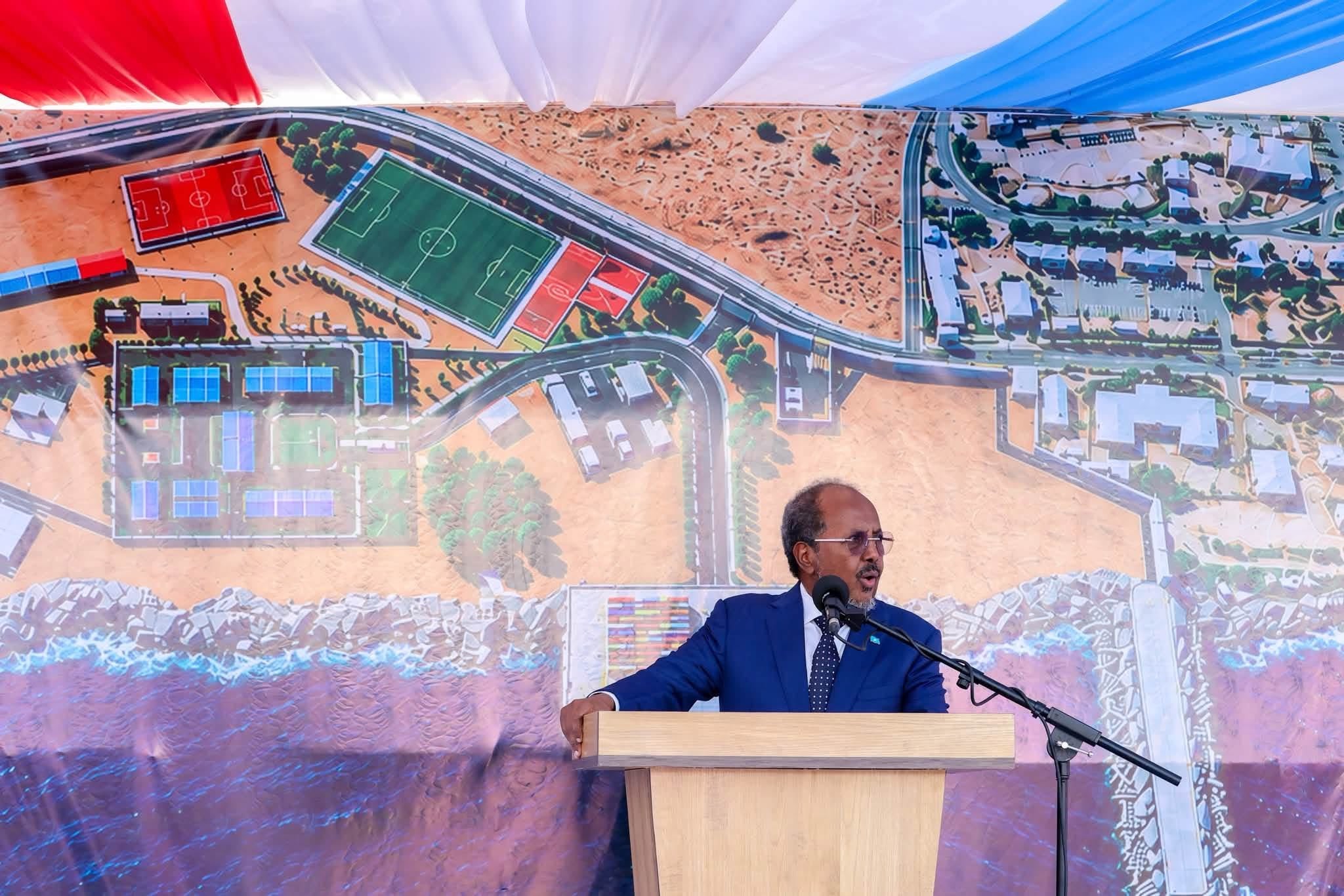
Mr Mohamud and Gen. Bayraktaroglu then laid the foundation stone for the Somali Navy headquarters in Mogadishu, according to the presidency. The Turkish general also met the speaker of parliament, the defence minister and the commander of the Somali National Army, the presidency said. Neither side gave the cost of the project or a completion date.
Why does Turkey matter to the Somali Navy?
Somalia has one of the longest coastlines in Africa but has had little naval capacity since the collapse of the central state in 1991. Under a ten-year defence and economic co-operation agreement signed in February 2024, Turkey undertook to help build and train the Somali Navy and to help protect Somalia’s territorial waters.
Turkey runs its largest overseas military training base, Camp TURKSOM, in Mogadishu, opened in 2017, which trains Somali soldiers to fight al-Shabaab. Turkey’s state oil company is also exploring for hydrocarbons in three offshore blocks under a separate 2024 deal.
The Somali-language site Hiiraan Online reported on Saturday that Turkey had sent six warships to Somalia’s coast to protect the oil exploration work. Turkish media have reported that the Somali naval task group escorting the Cagri Bey drillship includes frigates, a fuel tanker and a patrol vessel, citing Turkey’s defence ministry.
How does the visit fit Somalia’s rift with the UAE?
The visit came days after Somalia ordered the UAE’s ambassador to leave, accusing Abu Dhabi of interfering in its affairs, a charge the UAE rejects. The Gulf Co-operation Council has backed the UAE. Somalia’s national security adviser said this week that Somali territory would not be used for the wars in Yemen or Sudan, and the government has traded accusations with senior Emirati officials.
The UAE has long trained Somali forces and runs port and airport operations in the semi-autonomous regions of Somaliland and Puntland, which have their own disputes with Mogadishu. Turkey, by contrast, works mainly through the federal government, and its support has become more visible as the Emirati relationship has soured.
Somalia’s president also faces an opposition that rejects his offer of talks and says his mandate has expired, and African Union troops are drawing down. Uganda began reducing its contingent this month; Somalia’s information minister said on Saturday that the government had no concerns about the withdrawal, according to Hiiraan Online.
What happens next?
The presidency did not say when work on the Somali Navy headquarters would be completed. The UN Security Council is due to decide on the mandate of the AU mission in Somalia, AUSSOM, which European and Somali officials discussed in Brussels this week.
FAQ
Who laid the foundation stone of the Somali Navy headquarters?
President Hassan Sheikh Mohamud and Turkey’s chief of the general staff, Gen. Selcuk Bayraktaroglu, laid it in Mogadishu on 21 November 2026, according to the Somali presidency.
What is Turkey’s military role in Somalia?
Turkey trains Somali troops at Camp TURKSOM in Mogadishu and, under a 2024 agreement, helps build the Somali Navy and protect Somali waters. Turkish warships escort its oil drillship off Somalia.
Why is Somalia at odds with the UAE?
Somalia ordered the UAE ambassador to leave this month, accusing Abu Dhabi of interference. The UAE rejects the accusation and the Gulf Co-operation Council has backed it.


