
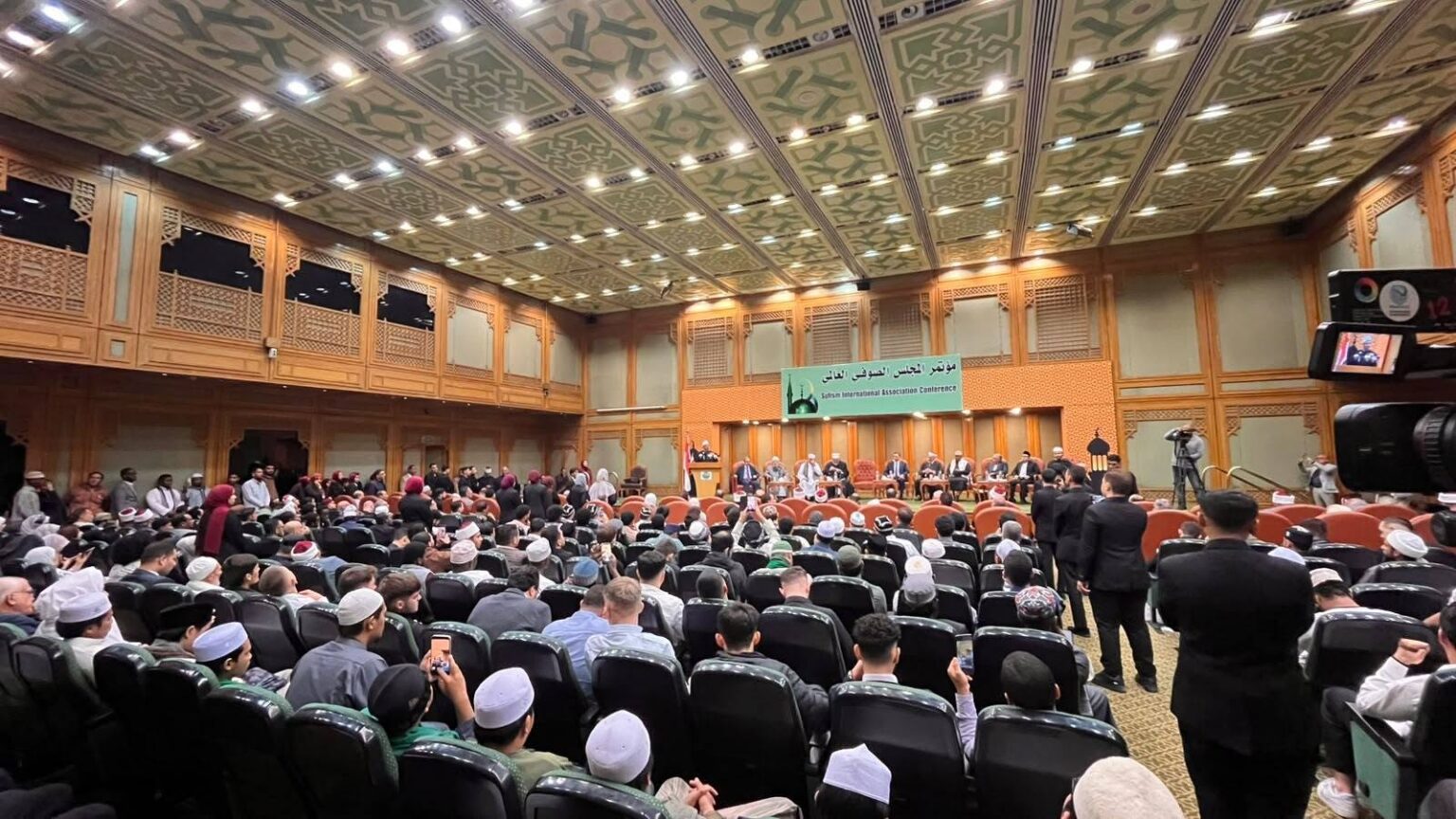

Kenyan Muslim scholars said on Saturday they would join the Sufism International Association, as the Cairo-based body relaunched with delegations from about 50 countries, at least 12 of them African.
The pledge, made at the Al-Azhar Conference Centre in Cairo, was the first concrete commitment from an African country at the relaunch. It gives Egypt a new platform for religious outreach to Sufi networks that stretch from the Horn of Africa to the Maghreb.
Why did Kenya’s scholars join the Sufism International Association?
“We welcome the founding of the Sufism International Association and announce that we are joining it,” said Amer Hassan al-Nahdi, a Kenyan scholar, speaking in Arabic. He spoke on behalf of Kenya’s scholars, preachers and sheikhs, and of Kenyan students at Al-Azhar.
He said the move came at a time “when we are most in need of reuniting ranks, unifying the word and renewing a rightly guided spiritual discourse that unites and does not divide, builds and does not destroy”.
“True Sufism is not a departure from the Sharia. It is its essence and its spirit,” he said. He said he hoped the association would become “a scholarly and spiritual beacon” that cleans Sufism of the impurities attached to it.
Which African countries attended?
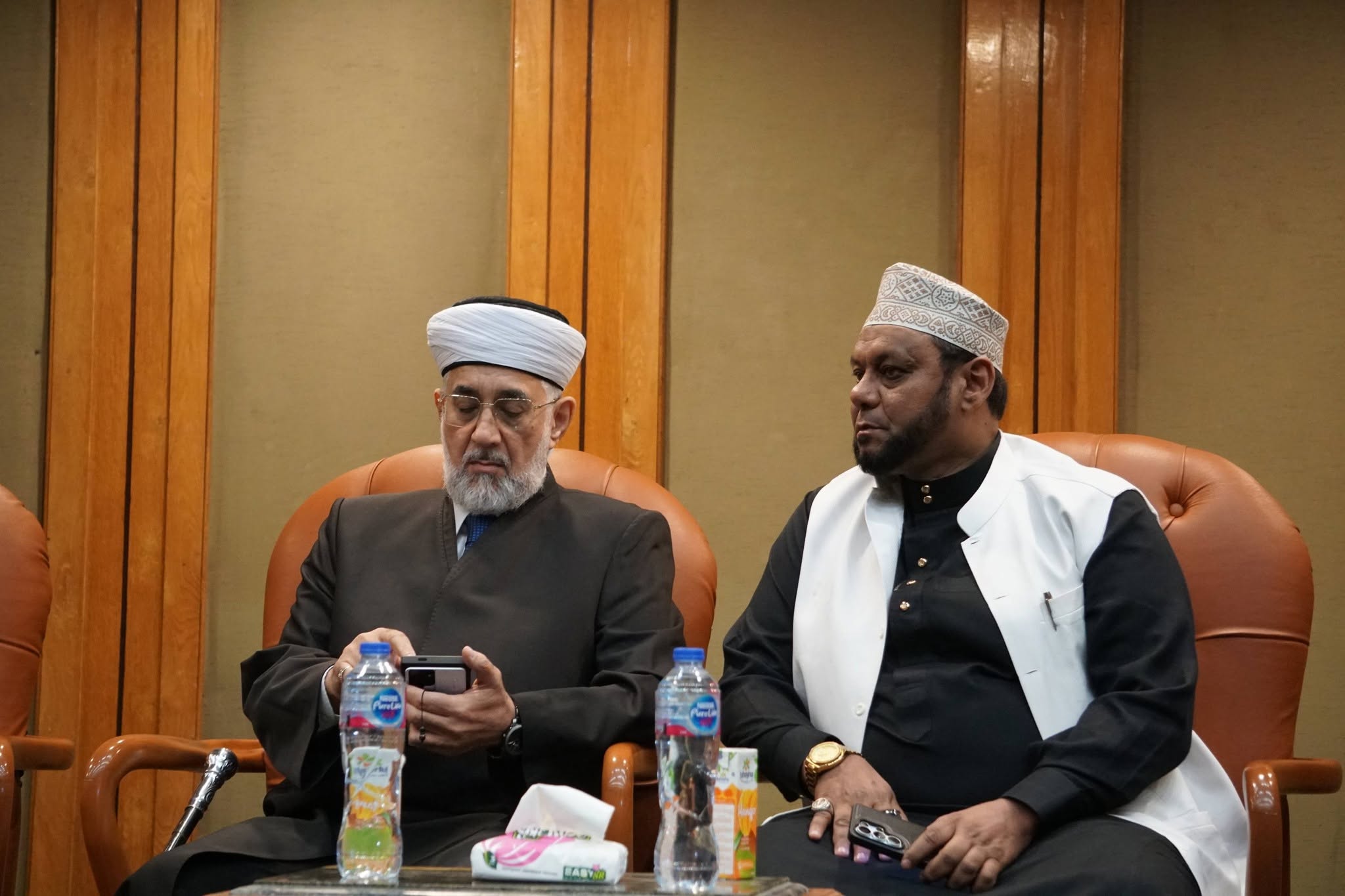
According to the organisers’ delegation lists, the African countries represented were Egypt, Libya, Tunisia, Algeria, Morocco, Mauritania, Sudan, Somalia, Djibouti, the Comoros, Kenya and Eritrea.
Somalia’s delegation included Sheikh Mohamed Ali Issa, the envoy to Egypt of Somalia’s Supreme Council of Senior Ahl al-Sunna wal-Jama’a Scholars and Sufi Order Leaders. He attended as part of the delegation and did not address the hall.
Speaking for the Maghreb delegations, Abdel Nabi Abu Gharara, dean of the Faculty of Human and Applied Studies at Zaytuna University in Tunisia, called the association’s founding “a pioneering step in unifying scholarly and spiritual efforts”. He urged it to tie Sufi studies to rigorous academic method, to stress Sufism’s ethical role against extremism and to work with universities to revive moderate Sufi heritage “in the language of the age”.
What does the Sufism International Association want to do?
The association’s president, Ramy El-Shahawy, who also heads Egypt’s Shahawiyya Burhamiyya order, presented the body as a defence for young people against “currents of extremism, atheism and moral decay”. He said its aim is to “extend bridges of cooperation between Sufi orders in all countries of the world” and to purge religion of “distortion, superstition and innovation”.
“There is no Sufism without knowledge that guides, no spiritual path without law that governs it, and no purification without following the guidance of the Prophet,” Mr El-Shahawy said.
Egypt’s religious establishment gave the event its public backing. Mohamed Wesam delivered an address on behalf of the Grand Mufti of Egypt, Nazir Mohamed Ayyad. “If Sufism is global in its message, it is Egyptian at heart,” he said.

Sheikh Mohamed El-Shahawy, Ramy’s late father, founded the Sufism International Association in 2008, with an administrative centre in London and an executive centre in Cairo. Organisers said Egypt accredited it in 2012 and that it now works under a formal agreement with Egypt’s foreign ministry; they described Saturday’s conference as a resumption of its activities. It follows the Ash’ari and Maturidi creeds and the four Sunni schools of law, the framework taught at Al-Azhar, and promotes what it calls “spiritual diplomacy”.
How deep are Sufism’s roots in Africa?
Sufi orders have shaped Islam in Africa for centuries, spreading mostly through scholars, traders and teaching lodges rather than conquest. In West Africa, the Qadiriyya spread along the trans-Saharan trade routes. The Tijaniyya, founded in the late 18th century by Ahmad al-Tijani, who is buried in Fez, became one of the largest orders on the continent, notably through Senegal’s Ibrahim Niass, whose followers stretch from Dakar to Kano. Senegal also produced the Mouride brotherhood of Amadou Bamba, whose annual pilgrimage to Touba draws millions.
In the Horn of Africa and along the Swahili coast, the Qadiriyya, Shadhiliyya and Ahmadiyya orders spread through Somalia, Ethiopia’s Harar, Zanzibar and Kenya’s Lamu, where the Riyadha Mosque’s annual Maulidi festival still draws pilgrims from across East Africa. Sudan’s political history is bound up with orders such as the Khatmiyya, whose leader Mohamed Osman al-Mirghani died in Cairo this month.
Sufism has also come under attack. In Somalia, al-Shabaab has destroyed Sufi shrines and graves, which it regards as idolatrous, prompting the Sufi militia Ahlu Sunna Wal Jamaa to take up arms against the group.
The new association has an Egyptian link to these networks. The Shahawiyya Burhamiyya traces its line to Ibrahim al-Desouki, the 13th-century Egyptian master, and Sudan’s Burhaniyya, which spread from Khartoum to Europe, claims descent from the same saint. Kenya’s announcement is the first sign of whether Cairo’s outreach will take root on the continent.
FAQ
What is the Sufism International Association?
It is a Cairo- and London-based body founded in 2008 by Sheikh Mohamed El-Shahawy to link Sufi orders worldwide. It relaunched on November 21st 2026 under his son, Ramy El-Shahawy.
Which African country joined the Sufism International Association?
Kenyan scholars announced they were joining, in a statement read by Amer Hassan al-Nahdi on behalf of Kenya’s scholars, preachers and students at Al-Azhar.
How many countries attended the Cairo conference?
Delegations came from about 50 countries, at least 12 of them African, according to the organisers’ delegation lists.


