

Egypt IMF talks have produced a staff-level agreement on the eighth and final review of the country’s $8bn loan programme, which would release about $2.3bn, the International Monetary Fund said on 18 November.
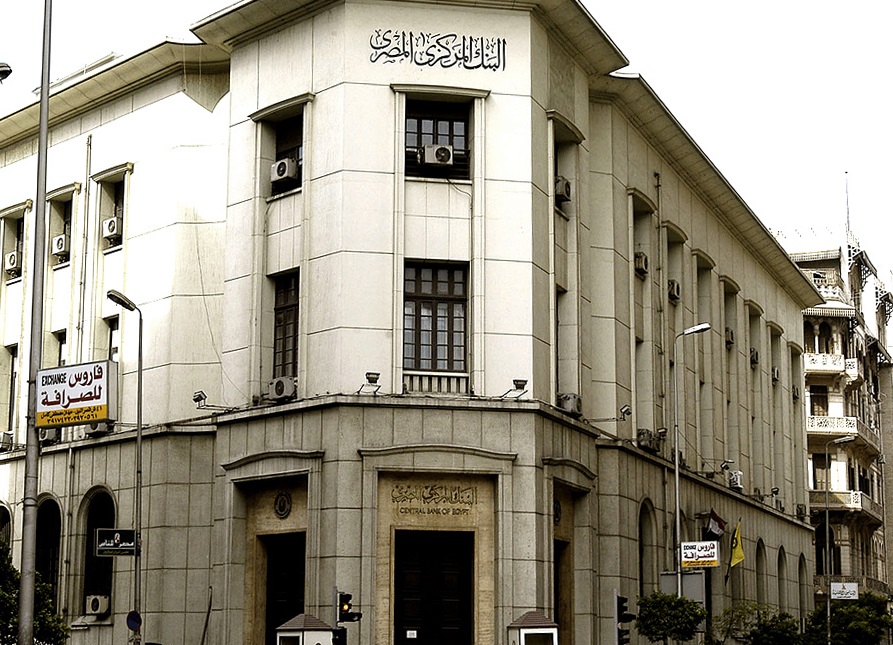
Subject to approval by the IMF Executive Board, Egypt would receive SDR1,113.02mn (about $1.5bn) under its Extended Fund Facility (EFF) and up to SDR600mn (about $0.8bn) under its Resilience and Sustainability Facility (RSF), according to an IMF press release. That would bring total disbursements under the two arrangements to SDR7,111.69mn, about $9.6bn.
The agreement would complete the programme Egypt entered in December 2022, which runs until 15 December. Finance Minister Ahmed Kouchouk said in August that the government was ready for the period after the IMF programme, with a debt strategy and a medium-term budget prepared for it, and that he expected Egypt to pass the eighth review before the end of the year (remarks in Arabic).
What did the Egypt IMF mission find?
The mission, led by Amine Mati, held talks in Cairo from 25 October to 5 November and continued virtually from 7 to 15 November. Mati said the authorities’ reform programme and their response to the Middle East war had “helped preserve macroeconomic stability” in the face of a series of external shocks.
Real GDP grew 5.1 per cent in the 2025/26 fiscal year, which ended on 30 June, the Fund said, helped by a recovery in Suez Canal and petroleum activity and by manufacturing, tourism and communications. In July the IMF had expected growth of about 4.6 per cent for the year.
Inflation, while still elevated, has been more favourable than expected, according to the statement. In July the Fund forecast that inflation would rise to 16.7 per cent in the second half of 2026; annual urban inflation slowed to 12.7 per cent in October, from 13.9 per cent in September, according to official data.
Higher imports have widened the current account deficit, the IMF said, and allowing the exchange rate to adjust helped keep gross reserves comfortably above the Fund’s reserve adequacy metric.
What does the Egypt IMF review say about rates and the budget?
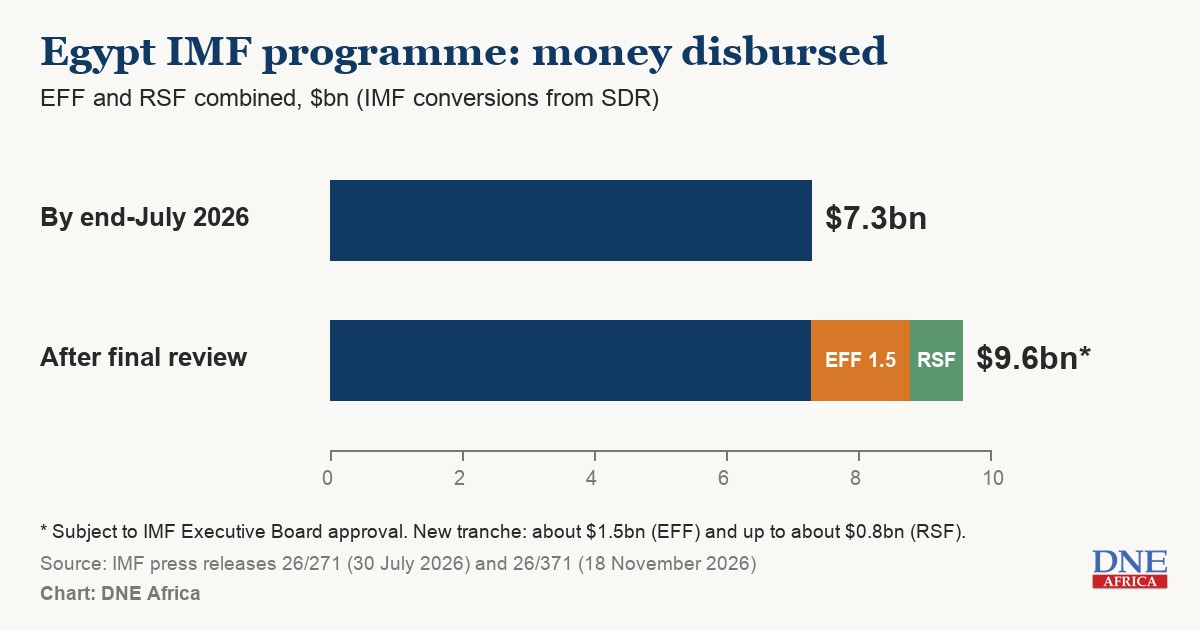
The Egypt IMF statement welcomed the 100 basis-point rise in policy rates by the Central Bank of Egypt (CBE) in October. The CBE’s Monetary Policy Committee raised the overnight deposit rate to 20 per cent and the lending rate to 21 per cent on 29 October, saying the move aimed to keep expectations anchored and safeguard the disinflation trajectory. Its target is inflation of 7 per cent, plus or minus 2 percentage points, in the fourth quarter of 2027.
On the budget, the primary surplus and tax revenue targets for end-September were exceeded, the IMF said. The authorities remain committed to a primary surplus of 5 per cent of GDP in 2026/27, and plan to cut gross financing needs by 5 per cent of GDP that year through longer maturities, liability management operations and divestment proceeds.
The Fund also called for continued implementation of the financial viability plan of the Egyptian General Petroleum Corporation, including collection of public-sector receivables and timely fuel price adjustments to recover costs. The government said this month that it had fully paid arrears to oil and gas companies, while LPG imports this winter are set to cost more.
How has the Egypt IMF programme changed the economy?
The Egypt IMF arrangement was agreed at $3bn in December 2022 and enlarged to $8bn in March 2024. When the IMF board completed the seventh review on 30 July, it released about $1.8bn and took total disbursements to about $7.3bn, according to the IMF’s July statement. Reserves stood at 119 per cent of the Fund’s adequacy metric at the end of June.
As the Egypt IMF programme ends, the Fund said, Egypt has made important progress through greater exchange rate flexibility, stronger external buffers, a strengthened monetary policy framework, better fiscal performance and a State Ownership Policy to reduce the state’s footprint gradually. Staff welcomed the completed Banque du Caire listing, plans to speed up the sale of state assets and the government’s new National Economic Transformation Program.
What happens next?
The Executive Board must approve the reviews before any money is paid. IMF spokesperson Julie Kozack said on 29 October that the aim was board approval before the EFF arrangement expires on 15 December. The Fund said downside risks remain significant, including an escalation of regional conflicts and tighter global financial conditions, while easing tensions and stronger Suez Canal traffic could lift growth.
FAQ
How much money does the Egypt IMF agreement release?
About $2.3bn: SDR1,113.02mn (about $1.5bn) under the EFF and up to SDR600mn (about $0.8bn) under the RSF, subject to IMF board approval.
Is this the last Egypt IMF review?
Yes. It is the eighth and final review of the 48-month EFF arrangement, and the third review of the RSF.
How much has Egypt received from the Egypt IMF programme in total?
About $9.6bn under the two arrangements once this tranche is paid, according to the IMF.
When will the IMF board decide?
The IMF has not given a date. It said in October that it aimed for board approval before the arrangement expires on 15 December.


