
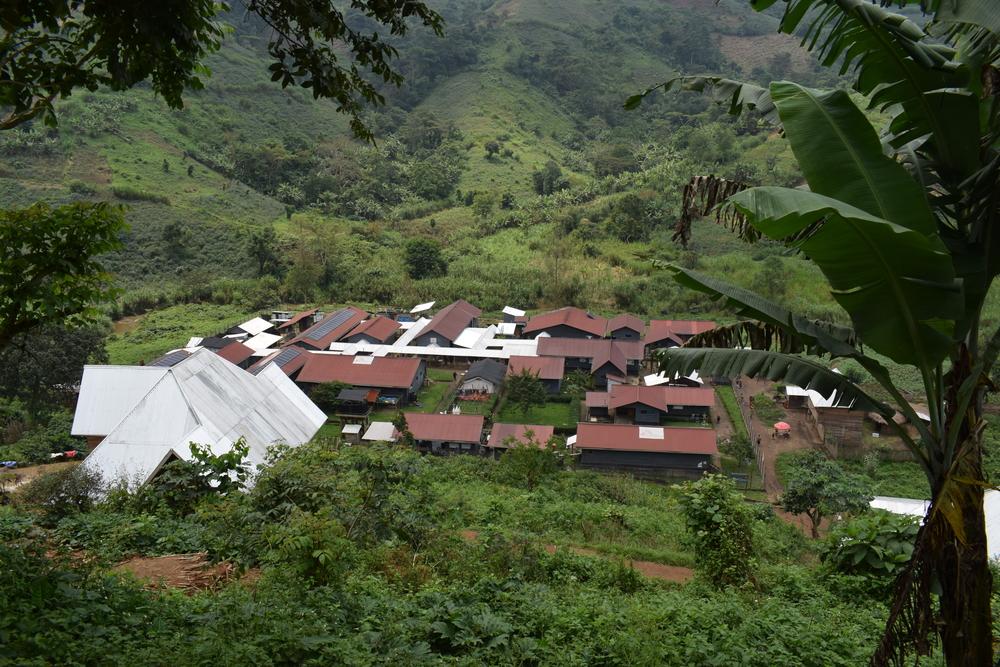

Médecins Sans Frontières (MSF) has moved Bunyakiri hospital’s services in South Kivu to a health centre after nearby drone strikes, as fighting between Congo’s army and FRN rebels spread to Masisi on Wednesday.
The disruption at the Bunyakiri hospital, which MSF said admitted more than 1,280 patients a month, shows how the conflict in eastern DR Congo is now reaching health services in areas already hit by cholera and malaria. Both the army and the rebels accuse each other of putting civilians and civilian buildings at risk.
What happened at Bunyakiri hospital?
Fighting intensified in the Bunyakiri health zone from 6 November between the Congolese army (FARDC), backed by local wazalendo militias, and the Front pour la Refondation de la Nation (FRN), MSF said in a statement on 17 November. MSF described the FRN as the movement formerly known as AFC/M23.
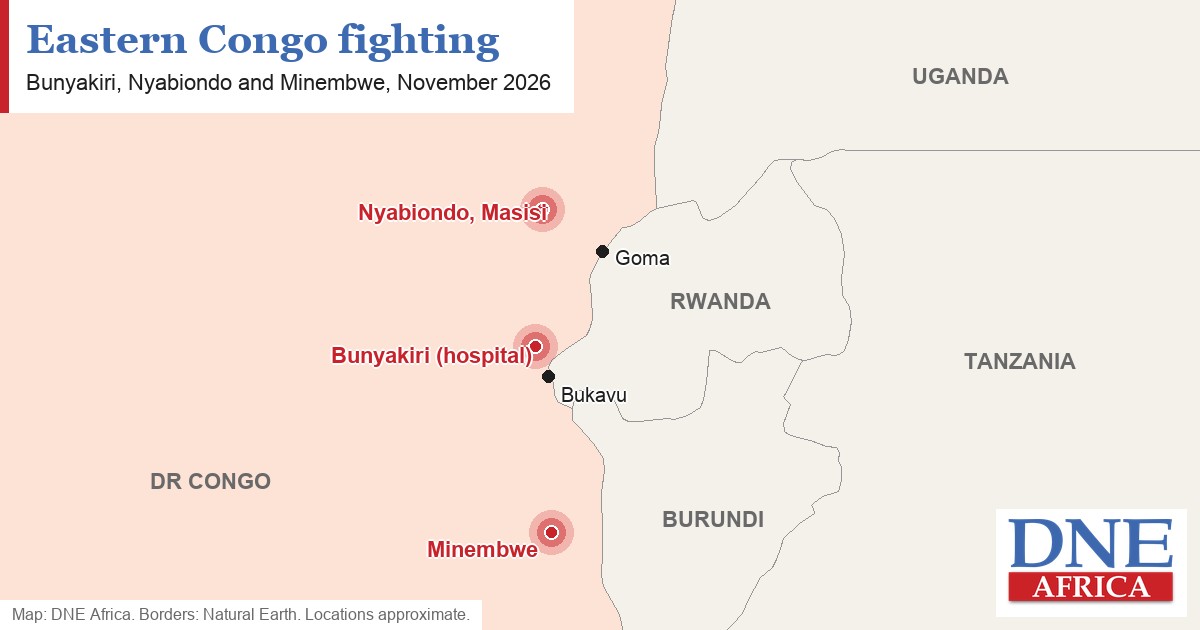
On 13 November, drone strikes hit the Bulambika area, near homes and the MSF-supported general referral hospital, the statement said. MSF did not say who carried out the strikes; Actualite.cd, a Congolese news site, attributed them to the army.
Staff moved the hospital’s services to the Maibano health centre for safety and tried to transport the 76 patients who were in the Bunyakiri hospital at the time, MSF said. Most medicines, supplies and equipment were still in the hospital. Some MSF staff were among those who fled, and the organisation said it was still trying to reach some of them. It has moved part of its team to Bitale and Bukavu.
“We hope to be able to resume all of our medical activities in the area as soon as possible,” said Giulia Panseri, MSF’s head of mission in South Kivu, adding that this would only be possible if the safety of civilians, patients and medical staff could be guaranteed (translated from French).
Why does the Bunyakiri hospital matter?
The Bunyakiri hospital recorded 1,438 new admissions in October alone, according to MSF, and serves communities across the health zone. MSF also supports hospitals in Bitale and Tchigoma and four health centres, providing malaria and malnutrition care, maternal and emergency services and care for survivors of sexual violence.
The health zone already faces a cholera outbreak and a peak in malaria cases, MSF said, and the fighting is disrupting supplies of medicines. Displacement had already been large: a preliminary estimate by the UN humanitarian office, cited by RFI, put the number of people displaced by the FRN offensive in Kalehe and Kabare territories at more than 323,000 in four days, as DNE Africa reported last week.
Where else is the fighting spreading?
In North Kivu, wazalendo fighters attacked FRN positions at Nyabiondo, in Masisi territory, from 4am on Wednesday, Actualite.cd reported, citing local sources. Heavy and light weapons were heard, schools and shops stayed shut, and many residents sheltered in a local health facility. No casualty figures were available.
Further south, the FRN accused the army on Tuesday of bombing schools and other basic infrastructure around Minembwe, in the high plateaux of South Kivu, Actualite.cd reported. Kinshasa rejected the accusation.
In a statement reported on Wednesday by 7sur7.cd, the FARDC accused the Rwandan army and the FRN of using schools and health facilities to store weapons. “Such practices constitute a serious threat to the security of civilian populations,” the army said (translated from French). It also said all communities in the Fizi high plateaux, including the Banyamulenge, had a right to protection, and called on national and international partners to condemn the military use of civilian buildings. The accusations could not be independently verified, and no response from the FRN or Rwanda was found by the time of publication. Rwanda has previously denied backing the M23.
What happens next?
Ceasefire verification missions have visited Minembwe and Masisi, and regional and international partners have called on both sides to respect a ceasefire, Actualite.cd reported. The fighting has continued regardless.
The UN Security Council’s sanctions committee added the FRN on 11 November as another name for the already-listed Alliance Fleuve Congo, led by former president Joseph Kabila. MSF has called on all parties to respect international humanitarian law and protect civilians, patients and health workers. DNE Africa has also covered the death sentences for 66 Congolese soldiers earlier this month.
FAQ
Why was Bunyakiri hospital moved?
MSF said drone strikes on 13 November near the Bunyakiri hospital, in South Kivu, forced staff to move services and 76 patients to the Maibano health centre for safety.
Who is fighting near Bunyakiri hospital?
The Congolese army, backed by wazalendo militias, and the FRN, which MSF describes as the movement formerly known as AFC/M23. Fighting there intensified from 6 November, MSF said.
What is the FRN?
The Front pour la Refondation de la Nation is a rebel movement led by former president Joseph Kabila. The UN sanctions committee lists it as another name for the Alliance Fleuve Congo.
Is MSF still working in Bunyakiri?
Yes, at a reduced level. MSF has moved some staff to Bitale and Bukavu and donated medicines to local health centres, and says it will resume full activities when safety allows.


