
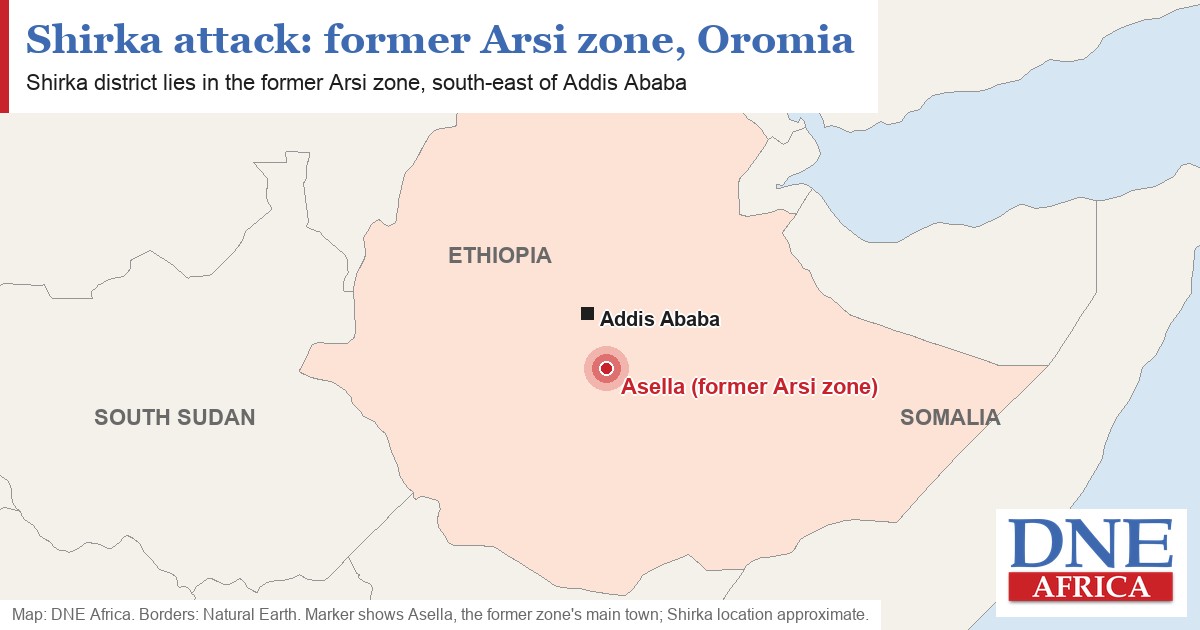

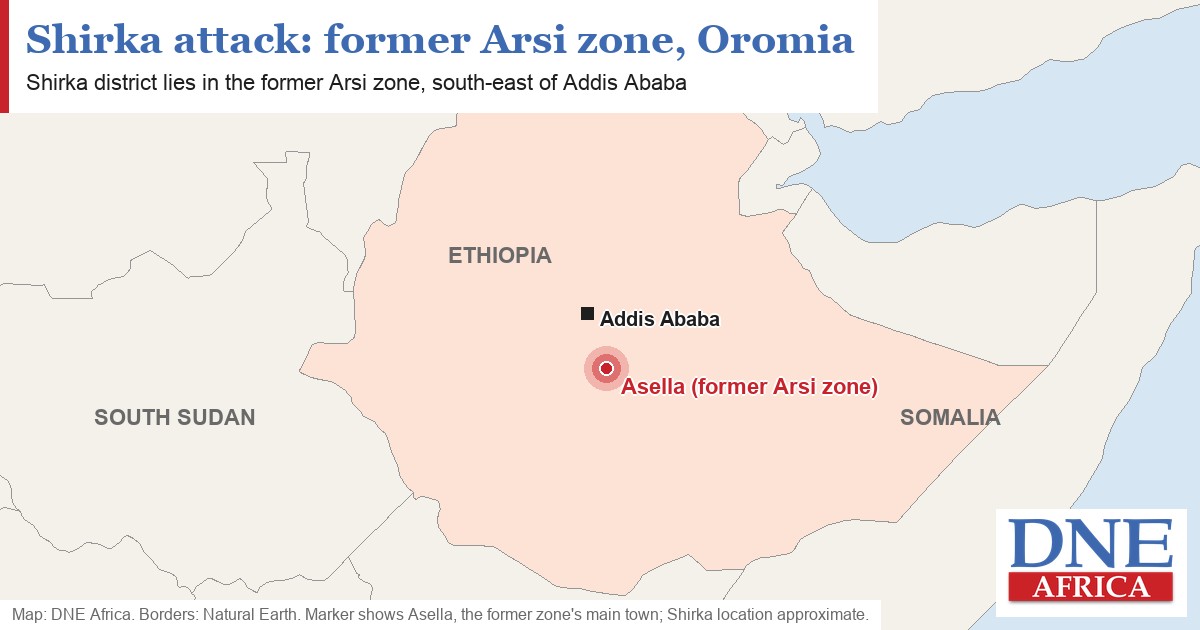
The Oromo Liberation Army (OLA) has admitted its fighters took “action” in last month’s Shirka attack in Ethiopia’s Oromia, which the rights commission said killed 48 people, but said the dead were “part-time combatants”.
The statement is the armed group’s first public account of the 24 October Shirka attack, one of the deadliest in a wave of killings in the former Arsi zone. It contradicts the Ethiopian Human Rights Commission, which found that most of those killed by the OLA were local security members and civilians, and the Ethiopian Orthodox Church, which said its followers were targeted.
What did the OLA say about the Shirka attack?
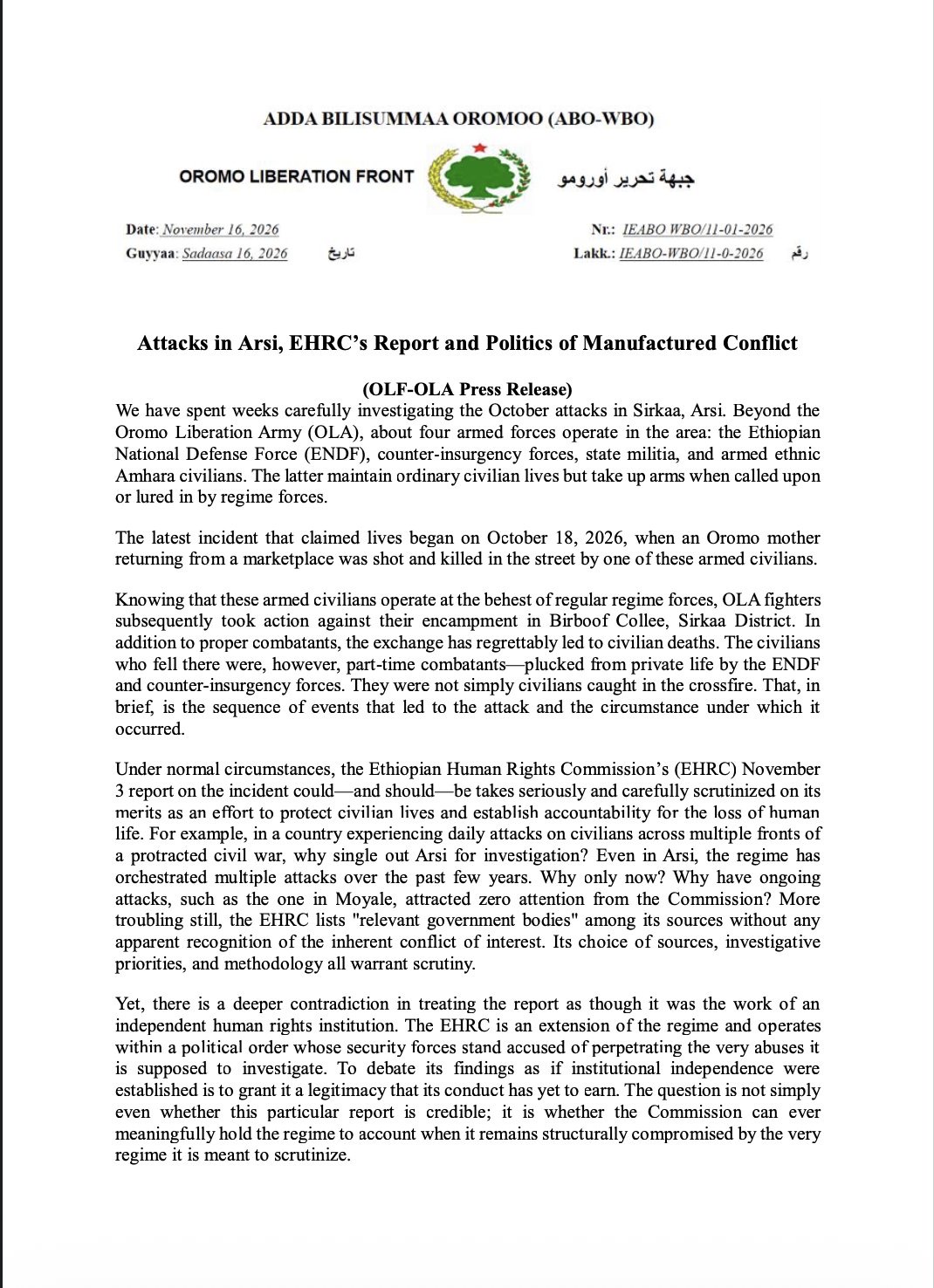
In a press release signed by the OLF-OLA High Command and dated 16 November, the group said: “We have spent weeks carefully investigating the October attacks in Sirkaa, Arsi.” It did not give a death toll, and it did not refer to the Orthodox Church or to the religion of those killed.
Besides the OLA, it said, four armed forces operate in the area: the Ethiopian National Defense Force, counter-insurgency forces, state militia and “armed ethnic Amhara civilians”, who “maintain ordinary civilian lives but take up arms when called upon or lured in by regime forces”. The latest violence began on 18 October, the statement said, when “an Oromo mother returning from a marketplace was shot and killed in the street by one of these armed civilians”.
“Knowing that these armed civilians operate at the behest of regular regime forces, OLA fighters subsequently took action against their encampment in Birboof Collee, Sirkaa District,” the statement said. “In addition to proper combatants, the exchange has regrettably led to civilian deaths. The civilians who fell there were, however, part-time combatants, plucked from private life by the ENDF and counter-insurgency forces. They were not simply civilians caught in the crossfire.”
What do independent sources say about the Shirka attack?
The Ethiopian Human Rights Commission (EHRC), the state-funded national rights body, said 48 people were killed and 20 injured in the Shirka attack in Birbona Chole kebele on 24 October. It attributed 41 deaths to the OLA: 23 members of kebele-level security structures, five militia members and 13 civilians. Seven other people were killed by “irregular armed individuals” in the area, the commission said.
Residents told the BBC at the time that 46 people were killed, including at least five children, the youngest aged five. The Orthodox Church put the toll at 46 in Shirka and said 60 of its followers were killed in Shirka and neighbouring Merti district within days.
The OLA’s claim that all the dead were fighters could not be independently verified. Access to the area is restricted, and the group’s account differs from the EHRC’s finding that civilians, including children, were among the dead. The OLA called the EHRC “an extension of the regime”, questioned why it had singled out Arsi but not attacks elsewhere such as in Moyale, and criticised its use of “relevant government bodies” as sources. It also accused Prime Minister Abiy Ahmed of “the deliberate cultivation and instrumentalization of ethnic and religious fault lines to prevent a common front against his regime”. The government has not responded to these accusations.
Why does the Shirka attack matter?
The former Arsi zone, now part of Oromia’s East zone, has seen repeated attacks. About two weeks after Shirka, gunmen killed 38 people in Robe district, residents said, including 10 civilians. DNE Africa has reported on the killing of Orthodox Christians in Arsi and on the Endeto toll.
The Oromia regional government blamed both attacks on the OLA, which the federal government designates a terrorist group and calls “Shene”; a regional spokesman also said Fano militia were active in the area. The US State Department’s Bureau of African Affairs condemned the Shirka attack, and the US ambassador met church and commission leaders about it. The Ethiopian Human Rights Council (EHRCO), an independent group, recorded 458 deaths in Arsi attacks over four years.
What happens next?
The Oromia government and the EHRC had not responded publicly to the OLA statement by the time of publication. Whether the admission feeds into any inquiry into the Shirka attack, and whether killings in the former Arsi zone continue, will test the region’s fragile security.
FAQ
What happened in the Shirka attack?
On 24 October 2026 an attack in Birbona Chole kebele, Shirka district, killed 48 people and injured 20, according to the Ethiopian Human Rights Commission.
Did the OLA admit the Shirka attack?
Yes. In a 16 November statement the OLF-OLA High Command said its fighters “took action” there and that civilian deaths occurred, but claimed those killed were “part-time combatants”.
Who does the rights commission blame for the Shirka attack?
The EHRC attributed 41 of the 48 deaths to the OLA and seven to irregular armed individuals.
Can the OLA’s claim be verified?
No. Access to the area is restricted, and the claim conflicts with the commission’s finding that civilians were among the dead.


