
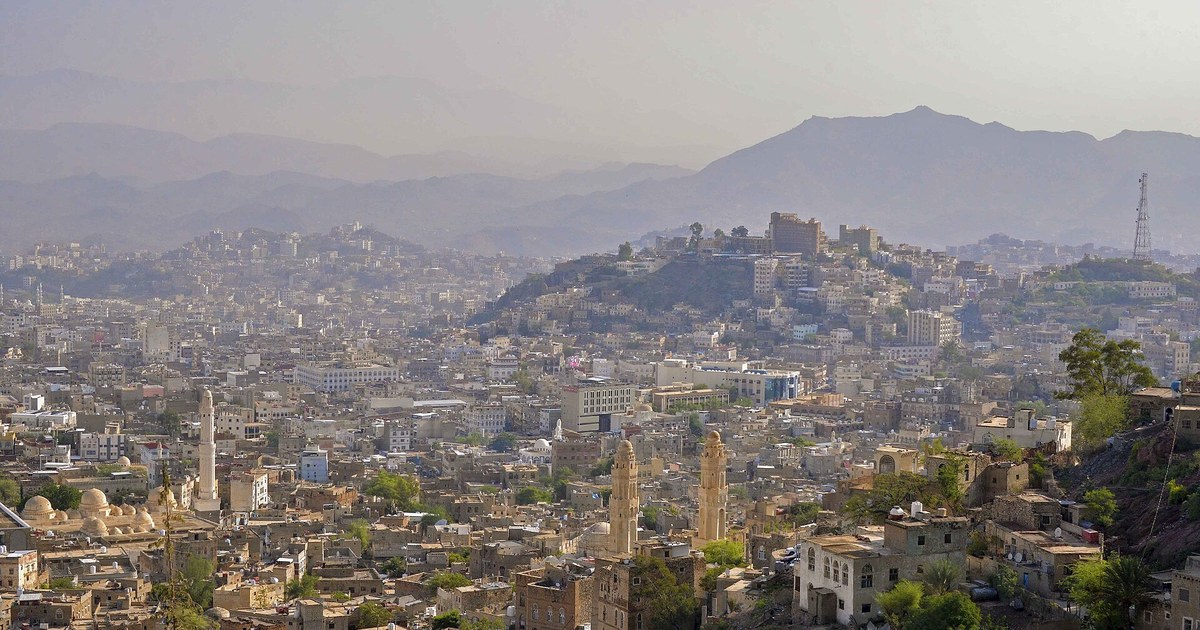

The Houthi offensive in south-western Yemen has taken ten districts in Taiz and Lahj provinces covering about 7,100 square kilometres, the group’s military spokesman said on Tuesday, a claim that could not be independently verified.
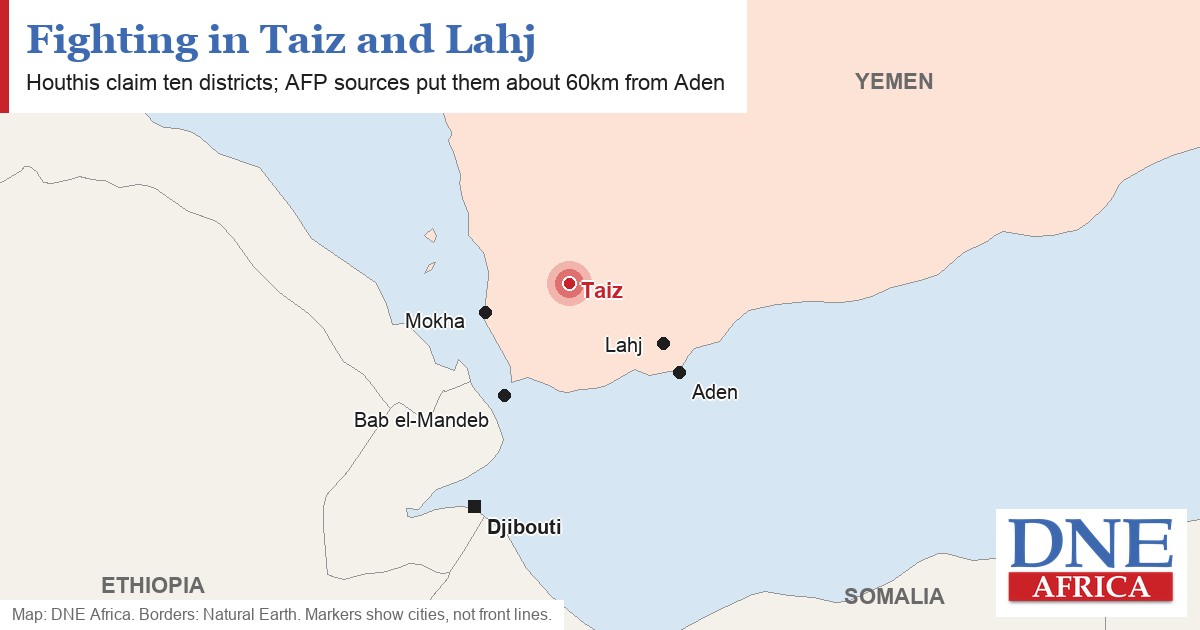
The statement matters well beyond Yemen. Lahj borders Aden, the seat of Yemen’s internationally recognised government, and the fighting runs along the Bab el-Mandeb strait, the southern gate to the Red Sea and the Suez Canal on which Egypt, Djibouti, Eritrea and other African economies depend.
What did the Houthis say about the offensive?
In a statement posted at about 13:00 GMT on the Telegram channel of Yahya Saree, the Houthi military spokesman, the group said it had “secured” ten districts and defeated 12 “military divisions” made up of 60 brigades of what it called Saudi-led forces. It said hundreds of vehicles and armoured carriers had been destroyed or captured. The statement, in Arabic with an English version, did not name the districts.
The Houthis said operations would continue “toward the Saudi depth” until what they called the siege of Yemen ends, and described their approach as “siege for siege”. They said the offensive was not aimed at Yemen’s southern provinces. Al-Masirah, the group’s television channel, quoted a military source as saying Saudi Aramco and its subsidiaries were a “main target”.
The statement also said navigation through the Bab el-Mandeb was now “safer”. It announced no new restrictions on shipping. Neither the Yemeni government nor Saudi Arabia had responded to the statement by Tuesday afternoon.
How close is the Houthi offensive to Aden?
Independent reporting on the Houthi offensive points to a significant advance, though on a smaller scale than the Houthi claim. Four military sources and two government sources told AFP on Sunday that the Houthis had seized the Al-Maqatirah and Al-Madaribah districts of Lahj and reached the Al-Kharaz military camp, about 60km from Aden.
Government forces said they were redeploying troops from the Red Sea coast to defend Aden and nearby provinces, AFP reported. Asharq Al-Awsat reported on Monday that government and southern forces were reorganising their lines in Lahj after withdrawing from the Bab el-Mandeb and Dhubab axes. On Tuesday Yemen’s transport minister, Mohsen al-Omari, ordered airports and land crossings to activate emergency plans, citing threats linked to the strait, the newspaper reported.
Before the Houthi offensive moved into Lahj, the group had besieged government-held parts of Taiz city since early September, and the government says it will keep fighting to break the siege. Saudi Arabia has carried out thousands of air strikes on Houthi-held areas since the summer, according to tallies published by the Houthis, which could not be verified.
What does the Houthi offensive mean for Africa?
The most direct effect of the Houthi offensive is on people. The International Organization for Migration (IOM) said displacement from the fighting has passed 347,000 people, with 18,780 displaced between 8 and 14 November alone, most of them in Taiz, Lahj and Aden. Djibouti has already received more than 2,000 Yemenis fleeing the west coast fighting, the IOM said in September.
The second is trade. Egyptian President Abdel Fattah al-Sisi said on Tuesday that Egypt had lost about $20bn in Suez Canal revenue in recent years because of regional crises, while traffic was now improving. A Houthi presence along the whole Yemeni shore of the strait would give the group more reach over that route, at a time when African importers are already absorbing higher fuel costs after tanker strikes in the Strait of Hormuz.
The UN human rights office has verified more than 70 civilian deaths in the fighting since early August, among more than 300 civilian casualties, Asharq Al-Awsat reported.
What happens next?
The government has said Aden and its approaches are its priority, and Yemen’s parliament is finalising a law to designate the Houthis a terrorist organisation. The Houthis’ pledge to strike deeper into Saudi Arabia, and their naming of Aramco, point to further attacks on Saudi energy sites. Shipping advisories from the UK Maritime Trade Operations centre will show whether the Houthi offensive changes conditions in the strait.
FAQ
What did the Houthi offensive statement claim?
The Houthis said on 17 November 2026 that they had taken ten districts in Taiz and Lahj, about 7,100 square kilometres, and defeated 12 divisions of Saudi-backed forces. The claims have not been independently verified.
How far are the Houthis from Aden?
Military and government sources told AFP on 15 November that Houthi fighters had reached the Al-Kharaz camp in Lahj, about 60km from Aden.
Has the Houthi offensive closed the Bab el-Mandeb?
No. The Houthi statement announced no new shipping restrictions and said navigation in the strait was safer, though Yemen’s government has put airports and border crossings on emergency alert.
How many people have been displaced?
More than 347,000 people have been displaced since August, according to the IOM, most of them in Taiz, Lahj and Aden.


