


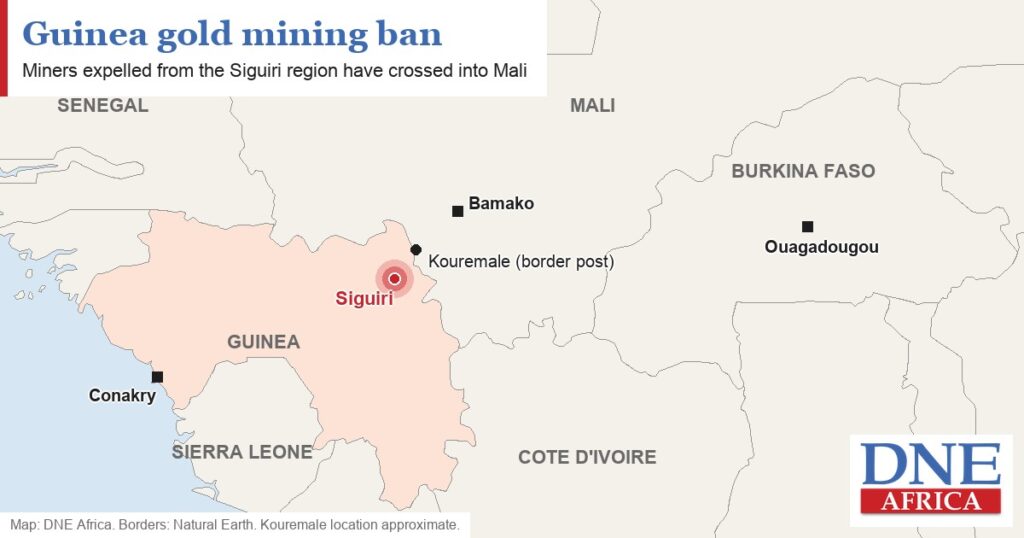
Guinea’s economic crimes court has sentenced 22 former officials from the Siguiri gold mining region, including a former regional governor, prefects and sub-prefects, to two years in prison for complicity in environmental damage caused by illegal mining.
The verdict, handed down late on Monday in Conakry, takes Guinea’s crackdown on Siguiri gold mining beyond the thousands of foreign miners arrested and expelled this month to the local administrators who were supposed to police the trade.
What did the court decide in the Siguiri gold mining case?
The Court for the Repression of Economic and Financial Offences (CRIEF) found the 22 former territorial administrators guilty of complicity in environmental degradation, destruction and water pollution, and fined each GNF10mn, Guineematin and Guinee360 reported (in French). The court acquitted them of corruption, illicit enrichment and money laundering.
The special prosecutor, Alphonse Charles Wright, had sought ten years for each. The officials denied authorising or facilitating illegal mining throughout the trial. One defence lawyer, Abdourahmane Dabo, argued that the damage predated his clients’ appointments and that no convincing material evidence of their responsibility had been produced.
The same court sentenced 202 miners, from Guinea, Burkina Faso, Mali, Mauritania and Togo, to three years in prison and a joint fine of GNF10bn, and banned them from Guinea for ten years. The miners had already been freed and taken out of the country with more than 1,300 others before the verdict, Guineematin reported.
Why is Guinea cracking down on Siguiri gold mining?
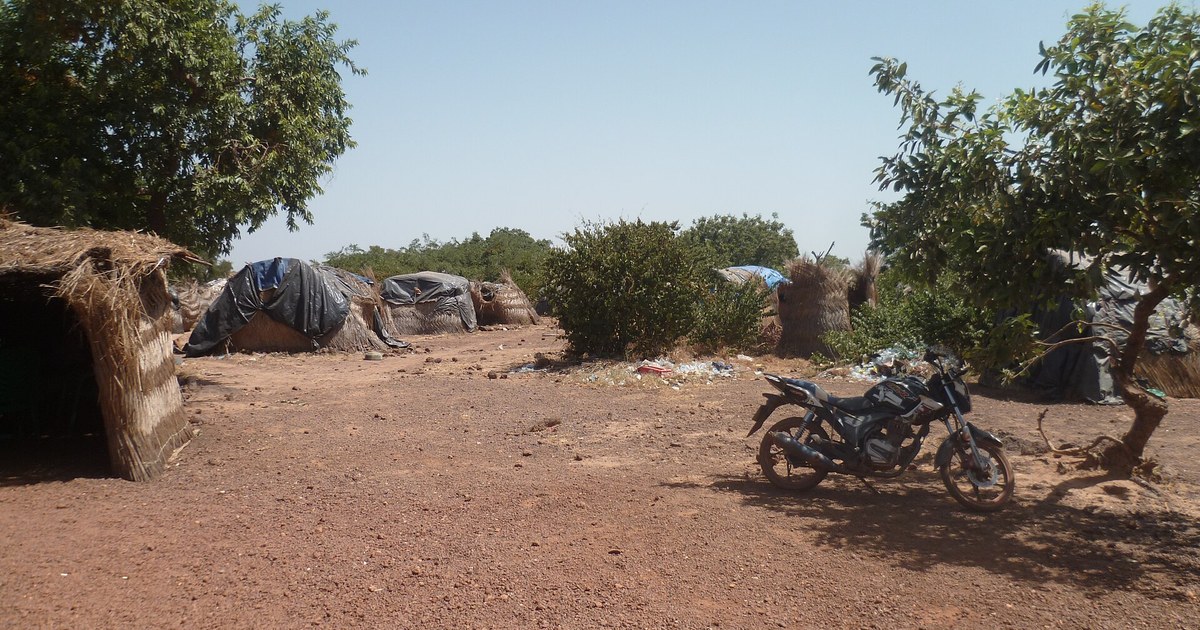
Guinea banned small-scale gold mining in its north-east on 2 November, citing pollution of farmland, rivers and vegetation. More than 1,200 people were arrested in the following days, and at least 10 were killed in clashes, as DNE Africa reported when neighbours decried the expulsions. RFI reported on Monday that 1,557 West African nationals had been expelled after being tried in Conakry.
At the trial the prosecution showed a video of environmental damage in Siguiri prefecture, including polluted rivers and dried-up streams, Guinee360 reported. The prosecutor based his requests partly on ECOWAS conventions, a point of tension because Burkina Faso and Mali, whose citizens make up much of the expelled workforce, left the bloc in 2025.
What does the Siguiri gold mining verdict signal?
Wright told reporters the ruling was a warning to officials and to anyone mining illegally. “When you are assigned to positions of responsibility, you have an obligation to do things in line with the regulations,” he said, according to Guinee7 (translated from French). He said more than 400 district chiefs would be questioned in the coming days.
The acquittals on corruption and money laundering charges mean the court did not find that the officials profited from the trade, only that they allowed it. Siguiri is Guinea’s main artisanal gold area, and gold from the region has fed the informal trade that a recent report said sent hundreds of tonnes of African gold to the UAE.

What happens next?
Defence lawyers said they would consult their clients before deciding whether to appeal. The questioning of district chiefs will show whether the crackdown reaches further into local administration, while Mali and Burkina Faso continue to receive and resettle tens of thousands of returning miners.
FAQ
Who was convicted in the Siguiri gold mining case?
Twenty-two former territorial administrators, including a former governor, prefects and sub-prefects, were sentenced to two years and fined GNF10mn each. 202 miners received three years and a ten-year ban from Guinea.
Were the officials convicted of corruption?
No. The CRIEF convicted them of complicity in environmental damage and water pollution, and acquitted them of corruption, illicit enrichment and money laundering.
Why did Guinea ban Siguiri gold mining?
The government banned artisanal gold mining in the north-east on 2 November, citing pollution of farmland and rivers.
Will there be an appeal?
Defence lawyers said they would decide after consulting their clients, according to the prosecutor.


