
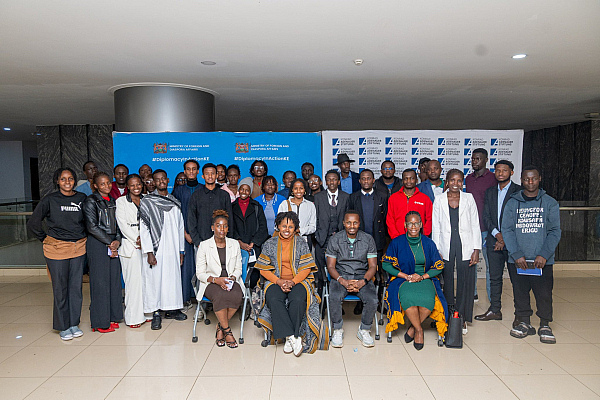

Kenya’s foreign ministry marked 20 years of the African Youth Charter with a dialogue at the University of Nairobi, where students and young leaders called for a real say in policymaking.
The forum, held under the theme “Charter at 20: Reflect. Reimagine. Reposition”, was organised with the Konrad-Adenauer-Stiftung (KAS) Kenya and the International Conference on the Great Lakes Region (ICGLR), according to a statement from Kenya’s Ministry of Foreign and Diaspora Affairs. The ministry did not give the date of the event.
What is the African Youth Charter?
The African Youth Charter was adopted by African Union heads of state in Banjul, The Gambia, in July 2006 and entered into force in 2009. It sets out the rights and duties of young people and commits states to policies on youth employment, education and participation in decision-making.
What did participants call for?
Participants said young people should move beyond being consulted to taking part in drafting, deciding and carrying out policy, the ministry said. Discussions covered skills, leadership, unemployment and barriers to leadership, as well as youth roles in peacebuilding, regional integration and economic diplomacy.
Speakers pointed to the African Continental Free Trade Area as a route for youth-led businesses and cross-border trade, and to openings in climate diplomacy and digital governance. They called for stronger co-ordination and accountability so that youth views shape national and regional policy, the statement said, but no new commitments were announced.
Youth representation has featured in other recent debates, from African students at COP31 to the reform of the Pan-African Parliament.
FAQ
When was the African Youth Charter adopted?
African Union leaders adopted the African Youth Charter in Banjul in July 2006; it entered into force in 2009.
Who organised the Nairobi dialogue?
Kenya’s Ministry of Foreign and Diaspora Affairs, with Konrad-Adenauer-Stiftung Kenya and the ICGLR.
What did young people ask for?
Meaningful involvement in drafting and implementing policy, not only consultation, along with more skills, jobs and leadership opportunities.


