
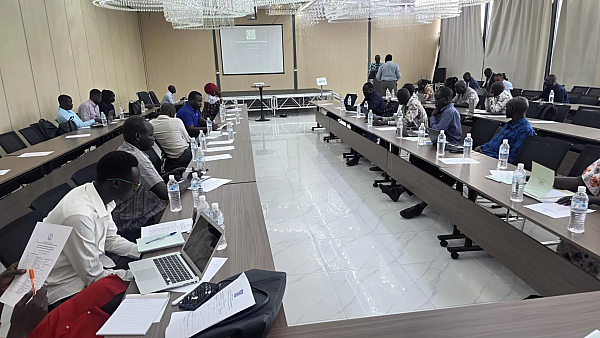

South Sudan has validated a new national immunisation policy, replacing guidelines from 2009 as the country tries to reach children who have never received a single vaccine.
The National Expanded Programme on Immunisation (EPI) Policy Guidelines, developed by the Ministry of Health with support from the World Health Organization, set out how vaccination services should be planned, governed, financed, delivered and monitored, according to a statement from the WHO Regional Office for Africa.
What does South Sudan’s new immunisation policy change?
The policy updates the 2009 framework to take account of new vaccines, advances in digital health and a growing humanitarian burden, the statement said. It is aligned with the National Health Sector Strategic Plan, the Primary Health Care Strategy and the National Immunisation Strategy for 2023 to 2027, as well as WHO’s Immunisation Agenda 2030.
Its main aims are to strengthen governance and sustainable financing, offer vaccination across all ages, improve supply chains, surveillance and data systems, and raise demand for vaccines in communities.
“It establishes a clear vision of a South Sudan where everyone, everywhere, at every age enjoys equitable access to safe, effective, high-quality, and sustainable immunisation services,” said George Awzenio Legge, who manages the immunisation programme at the Ministry of Health.
The policy is built on principles including equity, country ownership, evidence-based decisions, accountability, community participation and integration with primary health care, Legge said. Officials and partners took part in a validation process to agree the final framework.
Why is vaccination coverage low in South Sudan?
The statement acknowledged low and uneven coverage in parts of the country, a large number of children who are unvaccinated or under-vaccinated, recurrent disease outbreaks, insecurity and displacement, weak infrastructure, a shortage of skilled health workers and heavy reliance on external funding.
South Sudan has introduced malaria and measles vaccines into routine immunisation in recent years and improved disease surveillance and cold-chain storage, it said.
“Yet many children still miss protection because of distance, disrupted services and limited resources,” said Mutale Nsakashalo, cluster lead for health programmes at WHO South Sudan. The policy, she said, gives practical direction on delivering services, managing vaccines, coordinating partners and monitoring results.
What happens next?
The guidelines now set responsibilities at each level of the health system. The test will be funding: donor support for health has tightened across the region, and gaps in data have undermined vaccination drives elsewhere, as WHO has warned over Nigeria’s polio campaign.
FAQ
What is South Sudan’s EPI policy?
The National Expanded Programme on Immunisation Policy Guidelines are the framework for how vaccines are planned, financed, delivered and monitored in South Sudan.
Which policy does it replace?
It replaces the 2009 National Immunisation Policy.
Which vaccines has South Sudan recently introduced?
The country has added malaria and measles vaccines to routine immunisation in recent years, according to WHO.


