
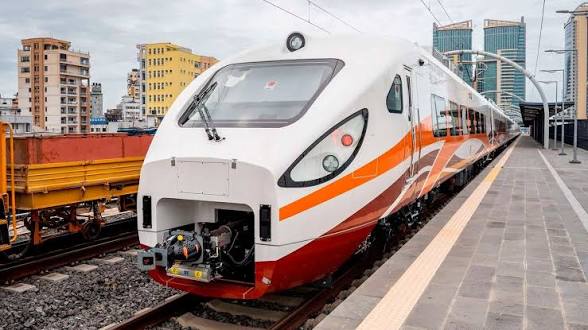

Titus Thobias tells DNE Africa the Mtwara–Songea–Mbamba Bay railway could create thousands of jobs and strengthen regional commerce, but warns that financing and cargo demand will be critical to its success
Tanzania’s proposed Mtwara–Songea–Mbamba Bay railway could create thousands of jobs, attract investment and open new trade routes linking the Indian Ocean with inland markets across southern and southeastern Africa, infrastructure expert Titus Thobias told DNE Africa.
However, the project’s long-term success will depend on sustainable financing, sufficient freight demand and coordinated investment in ports, roads and cross-border transport infrastructure, according to Thobias, a senior planning professional on Tanzania’s Standard Gauge Railway (SGR) project.
The railway moved a step forward after Tanzania Railways Corporation (TRC) signed a memorandum of understanding (MoU) with Egypt’s Arab Contractors to undertake preliminary and feasibility studies for the proposed line.
The project is intended to connect Mtwara Port on the Indian Ocean with Songea and Mbamba Bay on Lake Nyasa, with proposed branches serving the Mchuchuma coal and Liganga iron ore projects.
Thobias said the railway could stimulate economic growth in southern Tanzania through employment, local procurement and increased investment, while reducing transport costs and connecting producers to domestic and international markets.
“During construction, it will create thousands of direct and indirect jobs and provide opportunities for Tanzanian contractors, suppliers and small businesses,” he said.
He cited the Julius Nyerere Hydropower Project, a nearly $2.5 billion development completed by Arab Contractors in a joint venture with Elsewedy Electric, as an example of the potential economic benefits of major infrastructure investments. The project employed more than 10,000 people, most of them Tanzanians, he said.
In the longer term, the railway could strengthen Mtwara’s position as an energy and logistics hub and contribute to Tanzania’s ambition under National Development Vision 2050 to become a $1 trillion economy.
Railway Could Strengthen Regional Trade
Beyond its domestic economic impact, the proposed railway could provide an alternative route to the Indian Ocean for neighbouring countries, particularly Malawi, while strengthening trade connections with Mozambique and Zambia.
Thobias said improved access to Mtwara Port could support regional commerce and advance integration under the Southern African Development Community (SADC) and the African Continental Free Trade Area (AfCFTA).
However, he cautioned that the corridor’s competitiveness would depend on affordable freight tariffs, reliable transit times and efficient customs procedures at national borders.
Connecting Mtwara Port with Songea and Mbamba Bay could also expand the port’s role as a regional logistics hub, linking maritime trade with inland markets around southern Tanzania and Lake Nyasa.
Potential cargo would include agricultural produce, minerals, fuel, construction materials and containers, Thobias said.
But railway construction alone would not guarantee the port’s transformation into a regional trade centre. Efficient port operations, storage facilities, competitive pricing and integration with road and lake transport would also be essential.
Mining Projects Critical to Commercial Viability
The Mchuchuma coal and Liganga iron ore projects could play a central role in determining whether the railway attracts enough freight to sustain its operations.
Thobias identified the two developments as potential anchor customers, noting that bulk mineral shipments could generate the substantial cargo volumes required to support railway services.
Their development could also stimulate steel production, energy generation, engineering and related industries. Existing businesses, including Dangote Cement, could benefit from improved freight connectivity, he added.
However, he warned that the railway should not depend entirely on the mining projects, which have faced delays over the years.
Feasibility studies should consider a diversified cargo base that includes agricultural products, fuel, containers, general freight and passenger services, he said.
The railway could retain strategic value even if the anticipated mining volumes failed to materialise, but its commercial viability would become more challenging and might require greater government support.
Securing commitments from industrial and mining customers will therefore be important in assessing the railway’s potential revenue and long-term financial sustainability.
Egypt’s Arab Contractors and the Financing Challenge
The MoU between TRC and Egypt’s Arab Contractors marks an initial step towards determining the railway’s technical requirements, projected costs and economic viability.
Thobias said comprehensive feasibility studies would need to establish construction costs, traffic forecasts, environmental and social impacts, land requirements and expected economic returns.
Financing will be a significant challenge given Tanzania’s other major infrastructure commitments, he said.
Potential funding options include government financing, loans from development partners, public-private partnerships (PPPs) and engineering, procurement and construction arrangements combined with financing.
Thobias said he considered PPPs a viable option, pointing to Tanzania’s ambition under Vision 2050 to involve the private sector in approximately 70% of achieving its development goals.
He affirmed, however, that any financing model should be assessed against debt sustainability, foreign-exchange exposure, demand risks, potential government guarantees and overall value for money.
The feasibility phase will be important in determining whether the project can attract private investors and development financiers without creating unsustainable fiscal risks.
Implementation Risks and Regional Coordination
The railway could face a range of implementation challenges, including cost overruns, inflation, exchange-rate fluctuations, supply-chain disruptions, land acquisition and delays in decision-making.
Thobias said realistic planning, effective project controls, transparent procurement and timely approvals would be necessary to manage these risks.
Credible freight commitments from mining and industrial customers, together with cooperation from neighbouring countries, would also be important.
He urged Tanzania to draw lessons from infrastructure projects elsewhere in the region, particularly those that have incurred heavy debt or struggled to attract sufficient cargo.
Beyond the railway itself, the project could help revive the wider Mtwara Development Corridor vision, which seeks to integrate transport infrastructure with mining, agriculture, energy, industry and regional trade.
Thobias said the corridor could provide Malawi and other neighbouring countries with an alternative gateway to the Indian Ocean, strengthening transport competition and supply-chain resilience across southern and southeastern Africa.
Realising that potential would require coordinated investment in Mtwara Port, Mbamba Bay, lake transport, roads, border facilities and logistics centres, alongside effective cross-border agreements.
What Comes Next?
Thobias said observers should monitor the completion of feasibility and environmental and social studies, firm freight commitments from mining and industrial customers, agreements with regional partners and the development of a transparent, sustainable financing model.
Progress on project approvals, land acquisition and implementation arrangements will also indicate whether the proposal is advancing beyond preliminary planning.
He added that local employment, skills development and participation by Tanzanian businesses would be important measures of the railway’s broader economic benefits.
“In my view, the clearest signs of meaningful progress will be completed studies, secured financing, firm commercial commitments and construction beginning under a clear and accountable implementation schedule,” Thobias said.
For now, the agreement between TRC and Egypt’s Arab Contractors places the project in the study phase. Whether the proposed railway becomes a commercially viable regional trade corridor will depend on the findings of those studies and Tanzania’s ability to secure financing, attract sufficient cargo and develop the complementary infrastructure needed to support cross-border commerce.


