
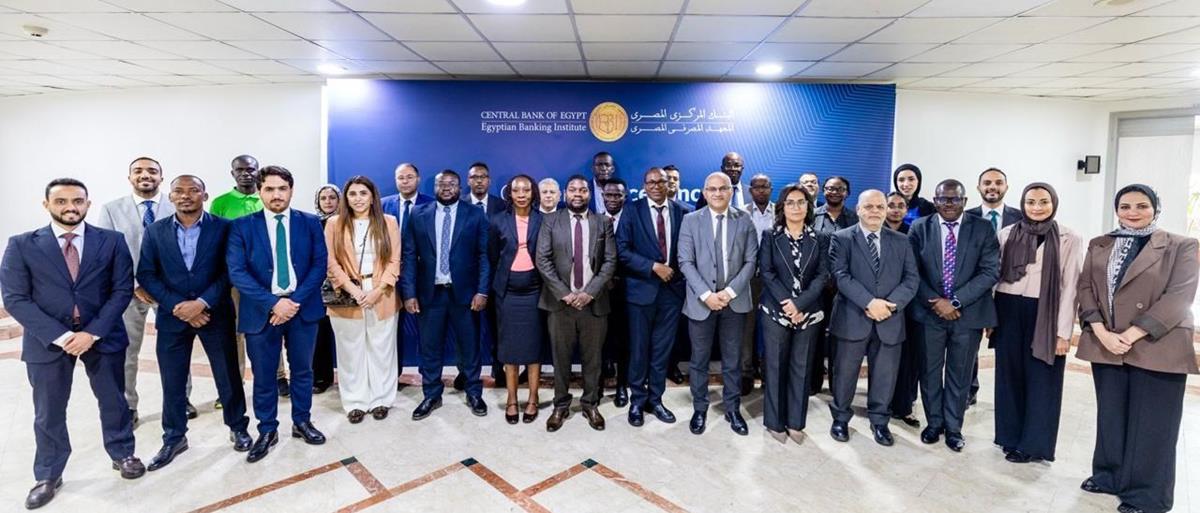

The Central Bank of Egypt (CBE) has trained 25 representatives from 11 central banks across the Common Market for Eastern and Southern Africa (COMESA) on integrating climate risks into banking stress tests, as regional regulators strengthen their capacity to safeguard financial stability against climate-related shocks.
The five-day programme, held at the Egyptian Banking Institute (EBI) in Cairo, also brought together a delegation from the COMESA Monetary Institute (CMI), according to a CBE statement issued on Wednesday ( Oct. 21).
Organised as part of the CBE’s ongoing cooperation with the CMI, the programme focused on strengthening central banks’ ability to assess how climate change could affect financial institutions, banking-sector performance and overall financial stability.
Participants examined methods for incorporating climate risks into microprudential and macroprudential stress-testing frameworks, using econometric models and practical exercises to assess the impact of different scenarios on financial institutions, the statement read.
The sessions covered key banking risks, including credit and liquidity risks, climate-related exposures and contagion between banks, with discussions focusing on how these factors could affect the resilience of financial institutions under adverse conditions.
Lecturers from the CBE’s Macroprudential Supervision Sector, Off-site Supervision Sector and Sustainability Department within the Financial Inclusion Sector delivered the programme, combining theoretical instruction with practical applications.
The training also provided a platform for participating central banks to exchange expertise and discuss challenges in assessing climate-related financial risks, while exploring ways to strengthen supervisory practices and improve banks’ resilience to economic and financial shocks.
At the end of the programme, participants developed proposals and recommendations on integrating climate risks into stress-testing frameworks and the implications for central banks across COMESA member states.
The recommendations are scheduled to be discussed by central bank governors at their next annual meeting in Malawi in Nov. 2026.
The initiative underscores regional efforts to strengthen cooperation among African central banks and develop supervisory tools to address emerging risks, as climate-related threats become an increasingly important consideration in banking-sector risk management and financial stability.


