

A UN-backed political agreement aimed at paving the way for elections in Libya faces growing implementation challenges, with key political institutions rejecting its outcomes and the United Nations exploring a broader dialogue mechanism to overcome divisions.
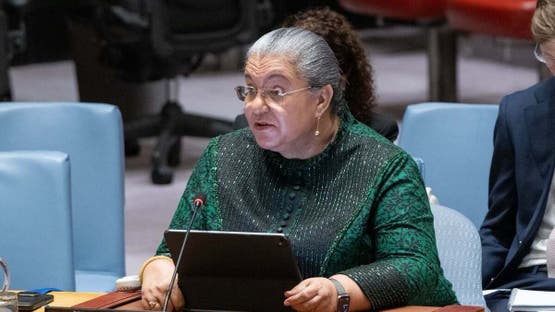
UN Special Representative for Libya (UNSMIL) Hanna Tetteh told the Security Council on Wednesday that the 4+4 mini-dialogue agreement marked an important development in the political process, alongside progress made in recent months.
But she acknowledged that some parties had been unwilling to engage constructively with the agreement, underscoring the difficulties facing efforts to translate the deal into an electoral roadmap.
The UN mission will continue consultations with committee members this month on the next steps, Tetteh said, adding that discussions would also address other priorities needed to create conditions for national elections in a relatively peaceful environment.
UNSMIL said she would explore with committee members the possibility of establishing a more broadly representative national mechanism under Article Five of the agreement, in consultation with the UNSC.
The proposal signals an effort to widen participation in a process whose political legitimacy remains contested.
The 4+4 committee, comprising four representatives of the Tripoli-based Government of National Unity and four representatives of eastern Libya’s forces, signed the agreement in late August. Its 24-month roadmap envisages restructuring the High National Elections Commission, reviewing electoral legislation and unifying the executive authority as steps towards national elections.
Implementation, however, remains stalled by legal and political disputes. Although parliament approved the agreement last month, it has yet to be fully incorporated into the constitutional declaration, while disagreements persist over amendments to some of its provisions.
The High Council of State has rejected the agreement’s outcomes. Its chairman, Mohamed Takala, told Tetteh in a letter last week that the UN mission should facilitate and support the political process, while any settlement should reflect Libyan national will and be grounded in established constitutional and political principles.
Also, Presidential Council head Mohamed al-Menfi has voiced reservations, warning against arrangements that reproduce divisions or distribute positions and influence among rival factions. He has called instead for a national consensus that preserves state institutions and enables simultaneous presidential and parliamentary elections without exclusion.
The objections highlight a central challenge for the UN effort: securing agreement among competing political institutions on both the framework for elections and the authority responsible for delivering them.
On her part, Saleh Afhima, a member of parliament’s Legislative and Constitutional Committee, said the 4+4 agreement could contribute to a settlement if political and legal concerns were addressed through dialogue rather than exclusion or the imposition of a fait accompli.
Expanding national dialogue would be constructive, he said, provided it complemented existing institutions rather than replacing them or bypassing their mandates.
The agreement is the latest attempt to break Libya’s prolonged political deadlock, which has been marked by rival centres of power and repeated difficulties in establishing a path to national elections.


