
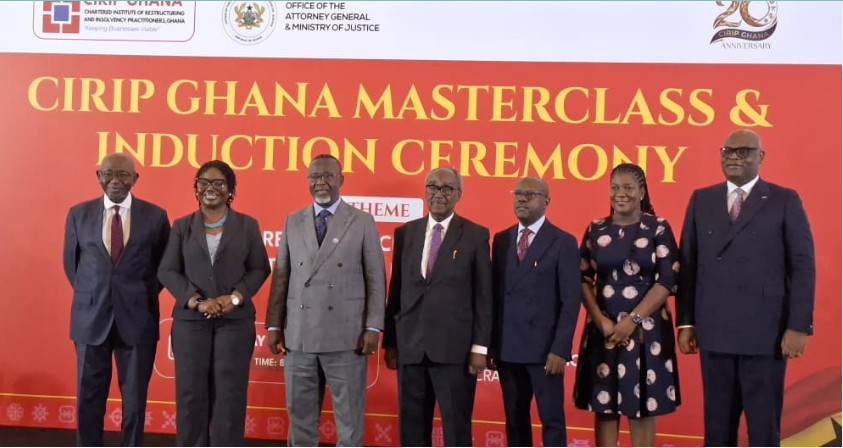

The Bank of Ghana (BoG) has urged greater use of business restructuring to rescue viable companies facing financial distress, saying liquidation should not be the first option when businesses can be restored to financial health.
Elliot Amoako, Head of the Resolution and Restructuring Unit at the BoG, said some companies face temporary liquidity constraints that could be addressed through effective restructuring rather than immediate liquidation.
Amoako made his remarks on Tuesday at a masterclass organised by the Chartered Institute of Restructuring and Insolvency Practitioners (CIRIP) as part of the institute’s 20th anniversary celebrations, according to the Ghana News Agency (GNA).
He said restructuring could involve renegotiating debt, securing new financing and making changes to a company’s management or business operations.
“For a viable business, restructuring can preserve productive assets, jobs, commercial relationships and creditor value,” Amoako said, stressing the importance of determining whether a distressed company has realistic prospects for recovery.
Also, he called for credible viability assessments based on sound financial analysis, while highlighting the role of post-commencement financing in helping distressed but viable businesses continue operating.
Amoako cautioned, however, that new financing should not be used to conceal losses or undermine credit discipline.
The call comes as Ghana seeks to strengthen its corporate insolvency framework and shift the approach to financially distressed companies from simply closing businesses to rescuing those with viable operations.
Under Ghana’s Corporate Insolvency and Restructuring Act, 2020 (Act 1015), restructuring is designed to reorganise a distressed but viable company and restore its financial health, while administration can provide a temporary framework for keeping a business operating as a going concern. Ghana’s Office of the Registrar of Companies says the restructuring process is intended to improve returns for creditors and shareholders while preserving viable businesses.
Felix Addo, President of CIRIP, said only licensed professionals are authorised under Ghanaian law to undertake restructuring, liquidation, receivership and the management of distressed assets.
He warned that unlicensed practitioners could face two to five years in prison and financial penalties upon summary conviction, according to GNA.
Ghana enacted the Chartered Institute of Restructuring and Insolvency Practitioners, Ghana Act, 2024 (Act 1117) in July 2024, transforming the Ghana Association of Restructuring and Insolvency Advisors into CIRIP Ghana.
The law came into force on July 26, 2024, transferring the former association’s assets, liabilities, members and responsibilities to the new institute.
The push for greater restructuring also comes amid efforts to address Ghana’s non-performing loans and strengthen the financial system. The BoG said in a notice issued on October 6 that it had reviewed its policy on problem assets in response to high non-performing loans and related risks to banks’ profitability, liquidity and solvency.


