
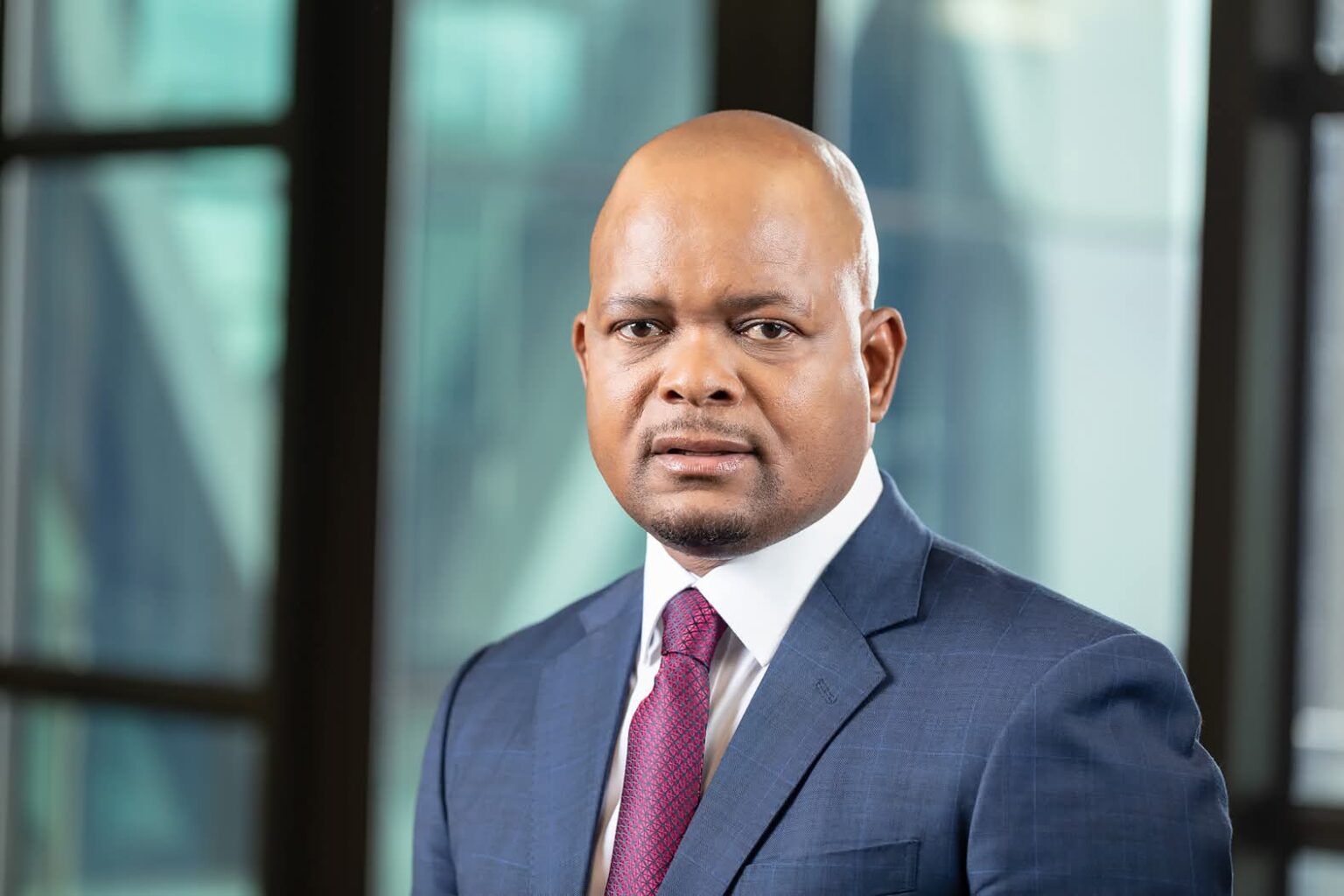

Thapelo Tsheole, CEO of the African International Financial Exchange (AFRINEX), spoke exclusively to DNE Africa about the exchange’s strategy to deepen African capital-market integration, expand the Africa-India investment corridor, attract international capital and develop new financial products.
Tsheole also discussed AFRINEX’s partnerships with the Nairobi Securities Exchange and Rwanda Stock Exchange, the challenges posed by fragmented African capital markets, the role of domestic institutional investors, the impact of technology and tokenisation, and his vision for AFRINEX over the next three to five years.
Regional Liquidity
AFRINEX’s MoU with the Nairobi Securities Exchange focuses on deepening market integration, capital raising and unlocking regional liquidity. What specific mechanisms will enable East African companies to access international capital through Mauritius?
AFRINEX’s strategic agreements, including its partnership with the Rwanda Stock Exchange (RSE) and collaboration with the Nairobi Securities Exchange (NSE), aim to establish robust financial corridors across African markets.
East African companies will be able to access international capital through the Mauritius International Financial Centre by leveraging AFRINEX’s unique value proposition, including AFEXtree, an exclusive capital-raising platform that connects capital seekers and companies with a broad range of capital providers, including investors and arrangers, to mobilise global capital for African growth opportunities.
By leveraging Mauritius’ position as an international financial hub and AFRINEX’s technological infrastructure, backed by BSE Technologies, issuers can gain greater visibility and connectivity to global and Asian pools of capital.
Cross-Listings
The agreements with NSE and the Rwanda Stock Exchange are expected to facilitate multi-currency cross-listings. When do you expect the first dual- or cross-listed securities to become available, and which sectors are most likely to lead this process?
The roadmap for dual- and cross-listed securities is expected to produce initial offerings over the short to medium term as regulatory and technological alignment progresses.
Sectors with strong regional footprints, including banking and financial services, telecommunications, energy and fast-moving consumer goods (FMCG), are well positioned to lead this process because of their cross-border operations and need for diversified foreign-currency capital.
Regulatory Integration
African capital markets remain highly fragmented, with differences in regulations, settlement systems and market infrastructure. How will AFRINEX work with NSE and the Rwanda Stock Exchange to overcome these barriers?
We have seen capital markets in different regions initially operate in fragmented environments before gradually aligning through robust regulation, harmonised legal frameworks and ecosystem development.
Overcoming fragmentation across African capital markets requires bridging differences in legal frameworks and clearing systems.
AFRINEX is addressing this through structured operational protocols, greater alignment of compliance standards through collaborative MoUs, and closer links between market infrastructures, including central securities depository-to-central securities depository (CSD-to-CSD) partnerships.
Joint working groups between exchanges can also help create interoperable systems that reduce friction for cross-border brokers and institutional participants.
Investor Access
How could these partnerships change the way international investors access African assets, particularly by creating a more connected investment route across East and Southern Africa?
These partnerships can reshape the investment landscape by creating an integrated route between East African growth markets and global institutional capital through Mauritius.
International investors could gain a single gateway to multiple African jurisdictions without having to establish separate arrangements in each market, reducing transaction friction and operational costs.
Africa-India Corridor
AFRINEX has increasingly positioned itself as a bridge between African and Indian capital markets. How do you plan to expand this corridor and attract more African companies to raise capital through AFRINEX?
AFRINEX is a Pan-African-focused international securities exchange established as an initiative of the Government of Mauritius, supported by the Government of India, with technology from the Bombay Stock Exchange (BSE).
There are more than 200 million investors in India’s capital market, with strong interest in diversifying into other markets, including Africa.
Through our partnership with India INX, an international exchange based in GIFT City, we are working to develop a framework connecting the capital markets of India and Africa, with curated products designed to meet the needs of investors and issuers on both sides.
Expanding this corridor will involve targeted roadshows, issuer education and awareness campaigns, as well as specialised instruments such as Foreign Currency Convertible Bonds (FCCBs), structured products, depository receipts and ETFs tracking Indian and African indices and commodities.
These initiatives can help connect Indian institutional funds and strategic investors with high-growth African enterprises.
Foreign Currency Convertible Bonds
AFRINEX has attracted foreign-currency instruments, including Foreign Currency Convertible Bonds (FCCBs). What does the growing use of such instruments tell you about the financing needs of African companies and investors?
AFRINEX’s value proposition in listing, clearing and settlement, together with the benefits offered by the Mauritius International Financial Centre, has attracted various international issuers seeking to list FCCBs on the exchange.
FCCBs are hybrid instruments that provide an option for conversion into traded equity in the issuer’s home market. This can allow investors to hold the bonds in Mauritius while potentially receiving equity in India upon conversion, depending on the terms of the instrument.
African companies increasingly need to manage exposure to local-currency depreciation and are looking for flexible hybrid financing instruments.
FCCBs can provide one avenue for attracting global capital while expanding a company’s equity base. Their use also demonstrates that sophisticated issuers are seeking to attract international capital without immediate equity dilution, balancing debt characteristics with potential long-term equity upside.
New Products
Which new financial products or asset classes are you currently prioritising, including green bonds, REITs, derivatives or other structured products, and why?
Our priority product lines include a range of equity and commodity ETFs, green bonds, Real Estate Investment Trusts (REITs) and structured foreign-currency products.
These products are being prioritised because they address structural needs across the continent, including financing sustainable infrastructure, unlocking capital from relatively illiquid real estate assets and providing tailored risk-return profiles for institutional investors navigating currency volatility.
African Issuers
What are the main factors currently preventing more African companies from accessing international capital markets, and what role can AFRINEX play in addressing these challenges?
Key barriers include high transaction costs, complex cross-border compliance requirements, a lack of international credit ratings and limited visibility among global institutional investors.
AFRINEX seeks to address these challenges by providing an efficient, transparent and cost-effective listing environment that offers greater visibility and credibility, multi-asset and multi-currency trading capabilities, and specialised pathways designed to help small and mid-cap African companies meet international market standards.
Pan-African Capital Markets
What would a genuinely integrated Pan-African capital market look like, and how far is Africa from achieving that vision?
A genuinely integrated Pan-African capital market would feature unified trading platforms, harmonised listing rules, seamless cross-border settlement and passporting of regulatory approvals.
Initiatives such as the African Exchanges Linkage Project (AELP) are making progress toward greater integration. However, Africa remains some distance from full integration because of differences in national exchange controls, central bank policies and legal frameworks.
Domestic Capital
With global interest rates and international capital flows remaining volatile, how important is it for African markets to mobilise domestic institutional investors such as pension funds, insurers and sovereign wealth funds?
Mobilising domestic institutional capital from pension funds, insurance companies and sovereign wealth funds is paramount.
Given global macroeconomic volatility and fluctuations in foreign portfolio flows, domestic pools of capital can provide a stable anchor for local capital markets and reduce vulnerability to sudden capital outflows.
India provides an example of how domestic retail and institutional investors can contribute significantly to capital-market development. Mutual fund systematic investment plans (SIPs) in India reached more than $3.8 billion in August 2026, according to our reference point.
In such circumstances, foreign investors withdrawing or reallocating capital may have less impact on overall market stability, helping strengthen investor confidence.
Foreign Investment
How should African exchanges balance attracting foreign portfolio investment with developing deeper domestic capital pools?
Exchanges must strike a balance by cultivating strong domestic retail and institutional investor bases while keeping their markets open to foreign portfolio investment.
The introduction of curated products and the listing of companies that appeal to both local and global investors is essential.
Deep domestic liquidity can support market stability and valuation, while foreign capital provides the scale required for major infrastructure and corporate expansion projects.
AfCFTA
What role could the African Continental Free Trade Area play in accelerating capital-market integration and cross-border investment across the continent?
The African Continental Free Trade Area (AfCFTA) can serve as a major catalyst for capital-market integration.
By liberalising trade and services across the continent, AfCFTA can support the emergence of larger regional companies that require cross-border capital. This, in turn, can encourage regulators and exchanges to harmonise financial-market rules and accelerate integration.
Digital Transformation
How is technology changing the way African exchanges can connect investors and issuers across borders?
Technology is effectively removing physical borders, allowing modern exchanges to provide unified order books, remote electronic participation and real-time data feeds.
This digital infrastructure can enable international investors to trade African assets with greater ease and efficiency.
AFRINEX uses technology provided by BSE Technologies in India, offering low-latency and high-throughput electronic platforms for listing, trading and capital raising.
The technology is designed to meet the needs of local and international stockbrokers, while supporting efficient client onboarding and market participation.
Advanced mobile applications and systems can also allow investors, both global and local, to trade through smartphones, supporting liquidity across asset classes and helping transform participation in African capital markets.
Tokenisation
What role do you see for asset tokenisation and blockchain-based infrastructure in the future of African capital markets? Could these technologies help overcome some of the traditional barriers to cross-border investment?
Asset tokenisation and blockchain infrastructure are among the fastest-growing areas of the digital-assets industry, and I see significant potential in the tokenisation of real-world assets.
However, recent reports highlight an activity paradox in the tokenised real-world asset market. While the market was valued at around $60 billion across 7,000 products, more than $32.9 billion across 910 assets reportedly had zero weekly transfer activity, with activity concentrated among a relatively small number of products.
This shows that much work remains to be done, particularly in developing progressive regulatory sandboxes, robust regulatory frameworks and greater investor awareness.
Fintech
How can exchanges work more closely with fintech companies to expand access to capital markets, particularly for smaller companies and younger investors?
An exchange itself operates as a fintech platform and works with a wide range of capital-market intermediaries, including brokers, custodians, registrars and transfer agents.
Exchanges need to encourage new forms of participation by integrating application programming interfaces (APIs) into mobile-money platforms and digital brokerage applications.
This can lower barriers to entry and empower retail and younger investors to participate directly in capital markets through smaller investments.
Such integration can expand access to SMEs, retail investors and younger generations while helping more people understand wealth creation and the benefits of investing from an early age.
Tsheole’s Vision for AFRINEX
Having previously led the Botswana Stock Exchange and played a prominent role in the African Securities Exchanges Association, how have those experiences influenced your strategy and priorities at AFRINEX?
My experience leading the Botswana Stock Exchange for eight years, serving as CEO of the Capital Market Authority of Rwanda for two years, and presiding over the African Securities Exchanges Association (ASEA) and the Committee of SADC Stock Exchanges has given me a deep understanding of the structural bottlenecks unique to African markets.
AFRINEX was established as a government-to-government initiative with a vision of supporting the Mauritius International Financial Centre through capital-market development, market integration and the creation of financial corridors across regions.
My background in capital markets has shaped a strategic focus on pragmatic regional integration, cross-border participation, regulatory policy, advocacy, lean technological infrastructure and purposeful product innovation rather than simply replicating Western models.
The Next Three to Five Years
What would you like AFRINEX to achieve over the next three to five years in terms of listings, market connectivity and its role in Africa’s financial ecosystem?
Over the next three to five years, AFRINEX aims to cement its position as a leading cross-border gateway for African-Asian capital flows, significantly scale its multi-billion-dollar market capitalisation, expand its network of exchange partnerships across East, West and Southern Africa, and further establish sustainable and innovative asset classes as core offerings.
Message to International Investors
Finally, as African economies navigate geopolitical tensions, currency volatility and global economic uncertainty, what is your key message to international investors considering African capital markets?
Africa remains one of the world’s major long-term growth frontiers.
Despite short-term macroeconomic and geopolitical uncertainty, the continent’s demographic growth, rapid urbanisation and increasing regional integration present significant opportunities for patient capital willing to work with resilient regional institutions such as AFRINEX.


