
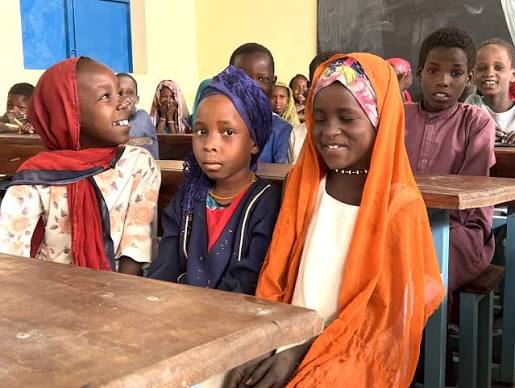

Chad is stepping up efforts to improve girls’ access to quality education through a major school infrastructure and literacy initiative supported by the African Development Bank (AfDB), with new facilities aimed at equipping young women with scientific, technological and digital skills.
The Girls’ Education and Women’s Literacy Project (PEFAF), implemented by the Chadian government with support from the AfDB, is nearing completion after five years of investment in educational infrastructure, scholarships and community engagement programmes designed to boost girls’ school attendance and retention.
Approved in 2020, the project is financed through an $11.26 million grant from the AfDB’s Transition Support Facility, which assists countries facing fragility, conflict and institutional challenges. The Government of Chad has also contributed an estimated $713,000 to the initiative.
The programme focuses on two major investments: the refurbishment and expansion of the Amriguébé school complex in N’Djamena, which includes the Bilingual Girls’ Secondary School and the Arabic Girls’ Secondary School, and the construction of a new girls’ secondary school in Massakory, located in Hadjer-Lamis province.
The facilities feature modern classrooms, science and information technology laboratories, digital learning equipment, libraries, first-aid rooms, accessible sanitation facilities, drinking water systems and solar-powered infrastructure.
According to project officials, the upgraded Amriguébé complex has already become a flagship achievement, providing a safer and more inclusive learning environment while helping students develop skills needed in a rapidly evolving economy.
“We are looking forward to studying in modern laboratories and well-equipped computer rooms. These investments give us greater confidence in our future,” said Halimé Haroun Hassaballah, a second-year high school student in the Arabic stream at the Amriguébé Bilingual Girls’ School.
School headteacher Youssouf Malloum Malla said the new facilities would significantly enhance learning outcomes.
“Thanks to the new facilities, pupils will benefit from improved learning conditions and be able to fully develop their scientific, digital and technical skills,” he said.
Beyond infrastructure development, the project also seeks to address social barriers to girls’ education. Planned measures include scholarships and school kits for vulnerable students, as well as counselling centres that will provide support services for adolescent girls, particularly those affected by gender-based violence.
Awareness campaigns are also being conducted to encourage families, teachers, community leaders and local authorities to support girls’ education and protection.
In addition, mothers’ associations are receiving training in leadership, governance and income-generating activities to strengthen their role in preventing school dropouts and promoting girls’ continued attendance.
“Investing in girls’ education means investing in Chad’s sustainable development. Every modernised school represents an additional opportunity for future generations,” said Moussa Bedei Ali, the project’s national coordinator.
As the programme approaches its conclusion in 2026, authorities are focusing on consolidating achievements and exploring a possible second phase that would expand support to additional provinces and further strengthen girls’ access to education, retention and academic success.
The initiative reflects Chad’s broader efforts to position girls’ education as a key driver of social and economic transformation, with policymakers viewing investment in young women as essential to building the country’s future workforce and accelerating sustainable development.


