

The Africa Rice Center (AfricaRice) has strengthened its collaboration with leading Chinese agricultural research institutions through a series of new agreements aimed at accelerating rice innovation, boosting productivity and supporting Africa’s efforts to achieve greater food security and reduce dependence on imports.
The agreements were concluded during a high-level mission to China led by AfricaRice Director General Baboucarr Manneh, who held talks with five major agricultural research institutions. The engagements resulted in new research partnerships, capacity-building initiatives and technology transfer frameworks designed to link African rice research more closely with China’s advanced agricultural innovation ecosystem.
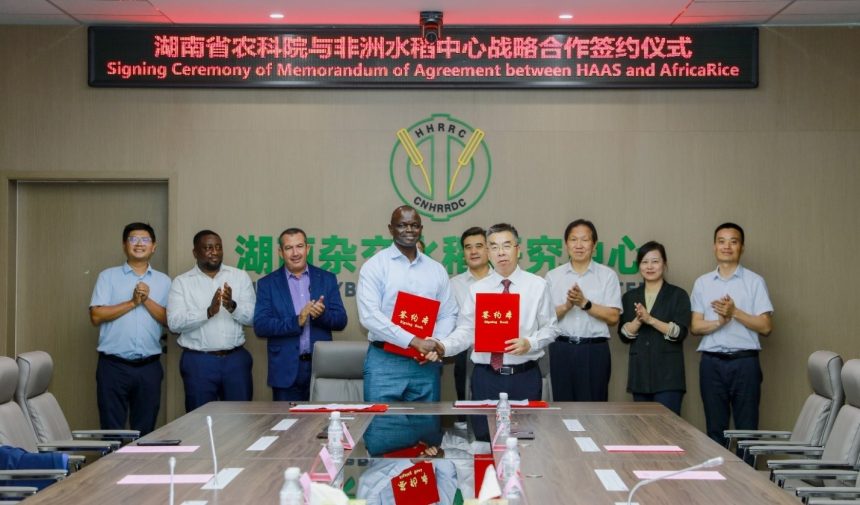
A key milestone was reached on May 27, when AfricaRice inked a strategic cooperation agreement with the Hunan Academy of Agricultural Sciences (HNAAS). The agreement, signed by Manneh and HNAAS President Yu Yinghong, aims to promote collaboration in hybrid rice breeding, molecular genetics and agricultural technology dissemination.
The partnership will support joint research projects, scientific exchanges and training programmes, with a focus on developing rice technologies capable of increasing yields while helping farmers adapt to climate change, population growth and rising food demand.
A second agreement was signed on May 30 between AfricaRice and the China National Rice Research Institute (CNRRI) to establish a Joint Laboratory for Rice Research and Innovation. The facility is expected to serve as a platform for deeper scientific cooperation, bringing together African and Chinese researchers to develop solutions tailored to the challenges facing rice farmers across the continent.
The AfricaRice delegation also met with scientists from the Hunan Hybrid Rice Research Center (HHRRC), one of the world’s leading institutions in hybrid rice research. Discussions focused on advanced technologies with potential applications in Africa, including third-generation hybrid rice breeding systems based on gene-edited male sterility, molecular breeding techniques and innovations considered ready for deployment.
Beyond technology development, the partnerships place significant emphasis on strengthening Africa’s scientific capacity. AfricaRice and its Chinese counterparts agreed to expand opportunities for African researchers through MSc, PhD and postdoctoral training programmes aimed at building a new generation of rice scientists.
The collaboration comes as African governments seek to boost domestic rice production and reduce the continent’s heavy reliance on imports. Rice consumption continues to rise across Africa, yet many countries remain dependent on overseas supplies despite significant agricultural potential.
The talks also reviewed progress under the Bill & Melinda Gates Foundation-funded clonal rice project, which seeks to develop rice varieties capable of maintaining hybrid performance across multiple generations. If successfully commercialised, the technology could allow farmers to retain the benefits of hybrid rice without purchasing new seed each season, potentially lowering production costs and expanding access to high-yielding varieties.
AfricaRice said it has already developed two hybrid rice lines that have been successfully gene-edited without traces of foreign DNA, marking an important step toward the development of advanced rice varieties adapted to African growing conditions.
On his part, Manneh said international scientific cooperation would be essential to translating research breakthroughs into practical benefits for farmers.
“Stronger international partnerships will play a critical role in delivering innovative technologies that improve productivity, enhance food security and reduce Africa’s dependence on rice imports,” he explained.
The new agreements reflect a broader effort by AfricaRice to leverage global expertise in support of Africa’s agricultural transformation. Analysts say that improving access to high-performing rice varieties, strengthening local research capacity and accelerating technology adoption could help African countries narrow production gaps, enhance food security and build more resilient food systems.


