
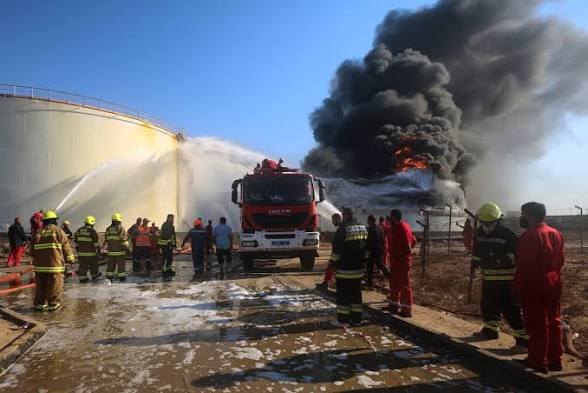

Libya’s Ministry of Defense on Wednesday vowed to take “decisive” action against those responsible for attacks on oil and other vital state facilities in the western city of Zawiya, warning that continued attacks threatened national security and economic stability.
In a statement, the ministry described the attacks as “systematic hostile acts” and accused unnamed parties of receiving support and encouragement from foreign actors to destabilize Libya, harm its economy and fuel violence and disorder.
The ministry said it would hold accountable anyone proven to have been involved in the attacks, including those who carried them out, planned or financed them, incited them or provided protection or logistical support.
It also said tribal or social ties would not shield those found responsible from prosecution, calling on tribes and social groups in Zawiya and across Libya to withdraw their support from anyone involved.
“Targeting the resources of the Libyan people does not represent a tribe, city or community; it is an attack on all of Libya,” the ministry said, describing the country’s security, resources and vital infrastructure as a “red line.”
The ministry also affirmed it had exercised maximum restraint in dealing with recent developments but warned that its patience was running out as attacks continued.
It said it would move beyond warnings and take “deterrent and decisive measures” against those responsible, in coordination with relevant authorities and within the law.
The ministry did not identify those it accused of carrying out or backing the attacks, and did not provide details of the incidents or the measures it planned to take.
It urged residents of Zawiya and Libyans nationwide to reject violence and attempts to destabilize the country, stressing that protecting state assets and vital infrastructure was a national responsibility.
Zawiya, about 45 km (28 miles) west of Tripoli, is home to major oil facilities and has experienced periodic armed clashes and security tensions.
The latest statement comes as Libya continues to grapple with political and security divisions that have persisted since the 2011 uprising that toppled longtime ruler Muammar Gaddafi.


