
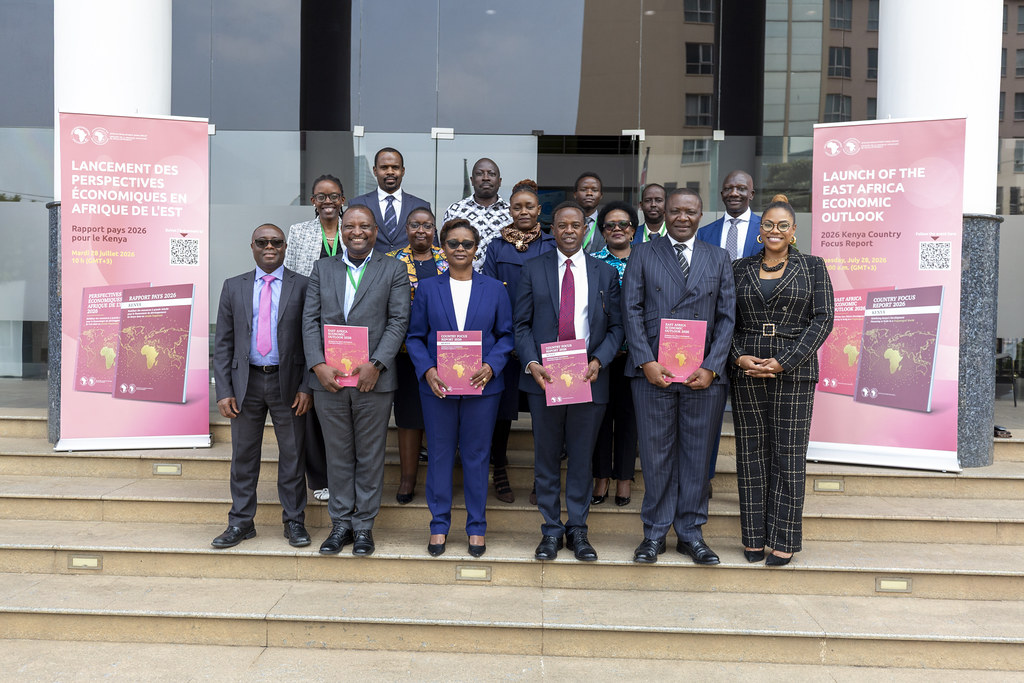

East Africa will remain Africa’s fastest-growing region despite global economic headwinds, but governments must adopt innovative financing and accelerate reforms to sustain growth, the African Development Bank Group (AfDB) said in its 2026 East Africa Economic Outlook.
The report said regional growth accelerated from 4.3% in 2024 to an estimated 6.6% in 2025, before moderating to 5.9% in 2026 due to higher energy prices, geopolitical tensions and tighter global financial conditions.
The AfDB identified Rwanda, Tanzania, Uganda and Ethiopia among the region’s strongest-performing economies, while warning that East Africa faces an annual $119 billion development financing gap.
“Resilience cannot be achieved through isolation,” said Eva Ruganzu, the Bank’s East Africa Regional Implementation Support Manager. She affirmed that countries must strengthen domestic capabilities while deepening regional cooperation and mobilising capital at a larger scale to sustain long-term growth.
The report recommended strengthening tax administration, improving public spending efficiency and reducing illicit financial flows in the short term, while expanding public-private partnerships, mobilising pension and diaspora capital, and developing bankable investment projects over the medium term.
It also called for deeper regional financial integration and stronger local currency capital markets to improve resilience against external shocks.
Alongside the regional outlook, the AfDB’s 2026 Kenya Country Focus Report said Kenya requires innovative financing to meet its development needs, estimating an annual financing gap of $12.5 billion by 2030 despite its position as a regional trade, finance and digital innovation hub.
Kenyan officials said the country’s newly established $38 billion National Infrastructure Fund is expected to mobilise private investment and proceeds from state asset sales to finance major infrastructure projects while reducing reliance on sovereign borrowing.
The report also urged Kenya to strengthen domestic revenue mobilisation, expand green finance and deepen financial markets to support sustainable economic growth.


