
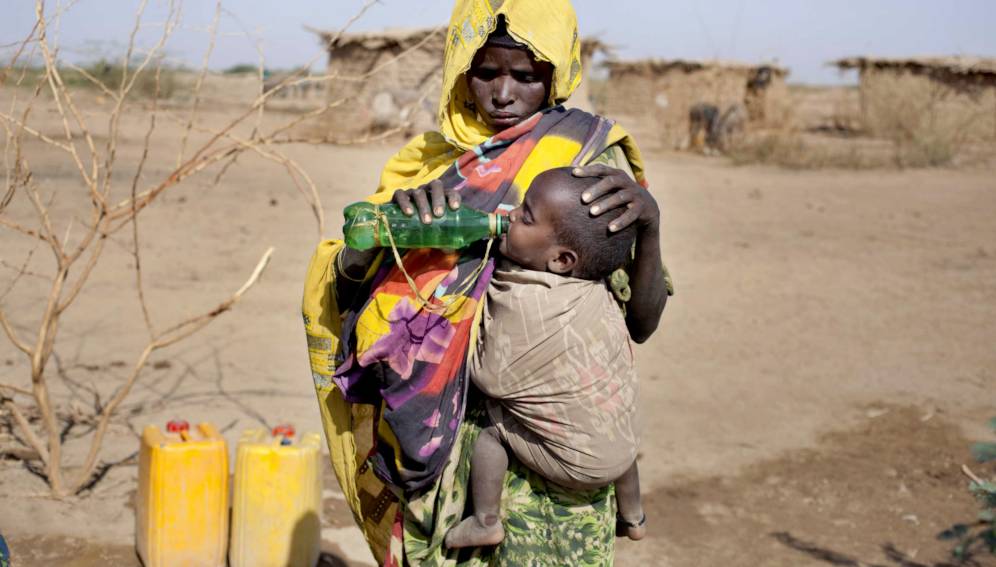

Africa is home to an estimated 309 million people experiencing hunger in 2025, the highest regional total globally, according to a new United Nations report, underscoring the scale of food insecurity even as the continent shows early signs of improvement after years of rising hunger.
The annual report, jointly published by the Food and Agriculture Organization (FAO), the International Fund for Agricultural Development (IFAD), UNICEF, the World Food Programme (WFP) and the World Health Organization (WHO), said Africa now accounts for the highest number of undernourished people globally, compared with 292 million in Asia, largely due to rapid population growth.
While the share of Africa’s population experiencing hunger eased slightly to 20.0% in 2025 from 20.3% in 2024, the continent continues to bear the world’s heaviest hunger burden in absolute terms.
The report said broader measures of food access also showed gradual improvement worldwide. Around 2.1 billion people, or 25.8% of the global population, experienced moderate or severe food insecurity in 2025, down from 27.1% in 2024 and 28.7% in 2020.
That represents nearly 86 million fewer people facing food insecurity than a year earlier and 135 million fewer than during the COVID-19 pandemic in 2020, although global levels remain above those recorded before the pandemic.
Despite the global progress, regional disparities remain significant. More than 56.6% of Africa’s population experienced moderate or severe food insecurity in 2025, compared with 20.3% in Asia, 22.9% in Latin America and the Caribbean, and 8.7% in Northern America and Europe.
The report also found that food insecurity remained more widespread in rural areas than in urban and peri-urban communities, while women continued to face higher levels of food insecurity than men, although the gender gap narrowed slightly during the year.
The U.N. agencies warned that the conflict in the Middle East, alongside extreme weather events and declining humanitarian funding, could jeopardize global efforts to eradicate hunger.
According to updated projections, between 510 million and 520 million people could still face hunger by 2030, compared with a pre-conflict projection of 503 million, as rising energy and fertilizer prices fuel food inflation.
The report noted that these projections do not account for additional risks, including severe weather events such as El Niño expected in 2026 and 2027, which could further worsen food insecurity.
The five U.N. agencies cautioned that the combined impact of conflict, climate-related shocks and reductions in official development assistance threatens to reverse recent gains in tackling hunger.
The report also highlighted that progress in improving maternal and child nutrition remains too slow to meet internationally agreed 2030 nutrition targets, calling for stronger investment and coordinated action to accelerate progress toward ending hunger and malnutrition worldwide.


