
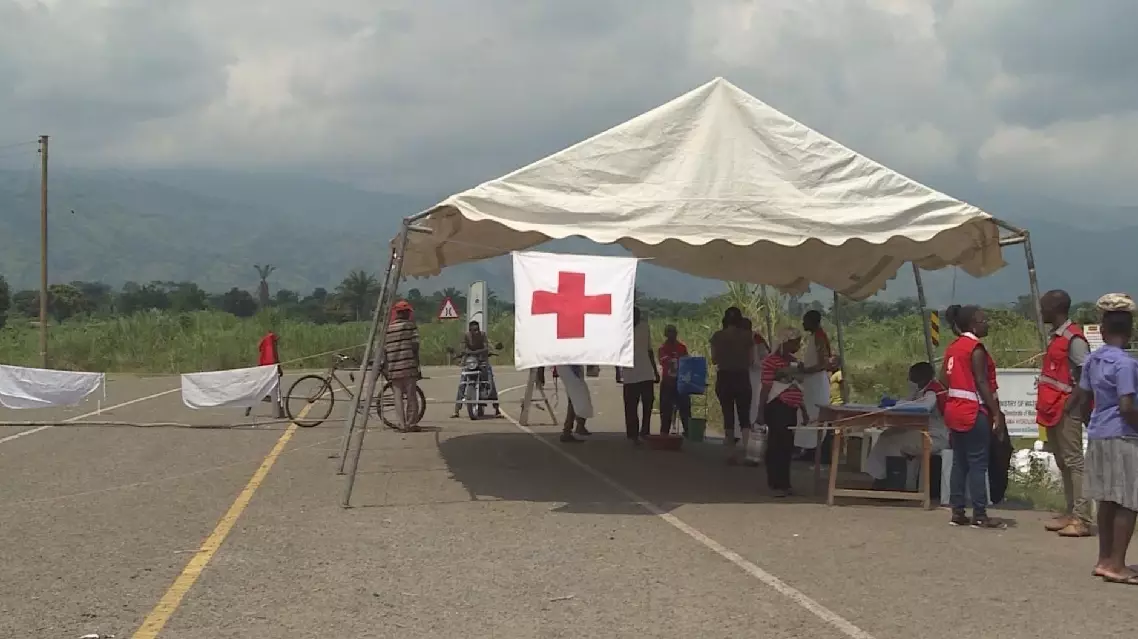

As Uganda and the Democratic Republic of the Congo (DRC) battle an outbreak of the rare Bundibugyo strain of Ebola, health authorities are placing community trust at the heart of their response, relying on local volunteers and grassroots networks to detect infections early and contain transmission.
The strategy, developed from lessons learned during previous Ebola epidemics, mobilizes trusted community leaders, Red Cross volunteers and Ebola survivors to deliver public health messages, identify suspected cases and encourage residents to seek medical care before the virus spreads further.
Unlike emergency responders deployed from outside affected areas, the volunteers live in the communities they serve, enabling them to build confidence among residents who may be reluctant to engage with formal health services. They have been trained to recognize Ebola symptoms, raise awareness about prevention measures and promptly report suspected cases to health authorities.
The community-led approach comes as Uganda and neighboring DRC continue efforts to contain an outbreak caused by the Bundibugyo strain, a rare form of the Ebola virus for which no licensed vaccine is currently available. Health officials say early detection, rapid reporting and strong public cooperation are essential to breaking chains of transmission.
“One of the challenges has been that the bearer of the messages may not be people they know, people whom they trust, or they understand,” said Irene Nakasiita, Director of Communications, Resource Mobilization and Strategic Partnerships at the Uganda Red Cross Society.
“That is why, for us, the Red Cross, we come in so strong to do risk communication and community sensitization. Even with these outbreaks, we may not use a lot of medicine, but the information we carry to communities does a lot for prevention and control at the community level,” she said.
The emphasis on trusted local networks reflects hard-earned lessons from earlier Ebola outbreaks, particularly in eastern DRC, where fear, misinformation and mistrust of health authorities often undermined containment efforts.
During previous epidemics, some communities associated Ebola with witchcraft or rejected hospital treatment, delaying diagnosis, contact tracing and the isolation of infected patients. Insecurity in conflict-affected areas also limited access for health workers, allowing the virus to spread more easily.
Ugandan health officials say working through community structures has helped counter rumors, encourage residents to report symptoms promptly and accelerate the identification and monitoring of people exposed to the virus.
“That is how Uganda has succeeded in putting in place mechanisms for rapid alerts, isolating those who are sick and identifying those who have been in contact,” said Dr. Pontiano Kaleebu, Director of the Uganda Virus Research Institute.
“That was delayed in the DRC because of the security situation and other challenges,” he added.
The current outbreak has renewed concerns about the threat posed by the Bundibugyo strain, which is far less common than the Zaire strain responsible for several major Ebola epidemics in Africa. While supportive treatment and infection prevention measures improve patients’ chances of survival, the absence of an approved vaccine or targeted treatment has increased the importance of surveillance, community engagement and rapid response.


