
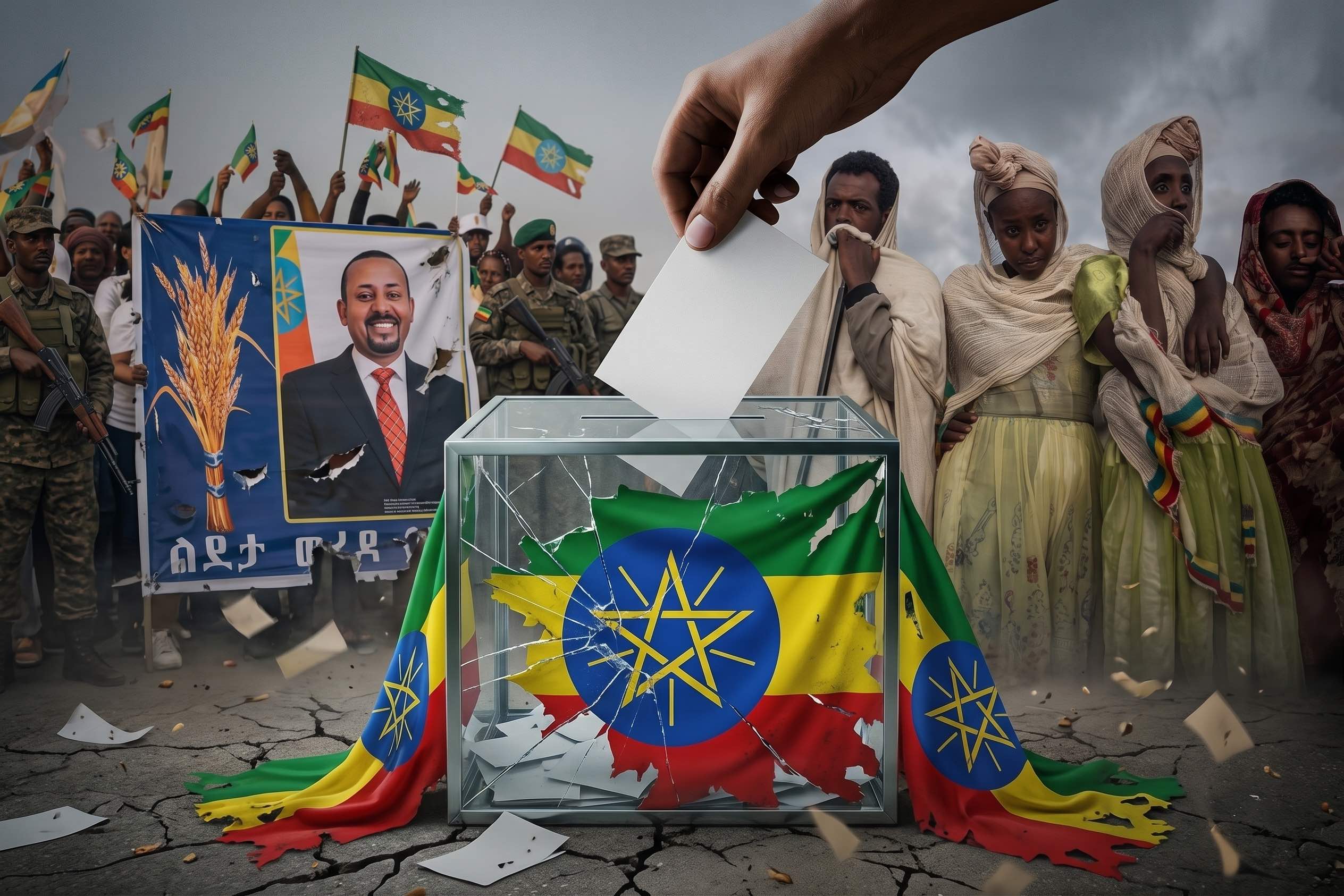

The Amhara Fano National Movement has publicly challenged the legitimacy of any electoral process conducted in Ethiopia under current conditions, arguing that ongoing armed conflict, civilian displacement, and a deteriorating security environment have fundamentally undermined the prerequisites for credible democratic participation.
In a statement obtained by DNE Africa, the movement contended that elections held in a context of war and severe security crisis cannot fully meet democratic principles, and that the capacity of citizens to freely exercise their right to vote and to stand as candidates has been severely compromised.
Prerequisites for Credible Elections Absent, Amhara Fano Movement Says
The movement set out what it described as the essential conditions for a genuine election: peace, the rule of law, political freedom, and the full participation of all citizens. Amhara Fano argued that none of these conditions is sufficiently present in the current situation, and that any electoral process conducted under such circumstances faces serious legitimacy challenges.
“Democratic processes cannot function properly under coercion or armed pressure,” the movement stated, adding that citizens should not be compelled to participate in elections under fear or intimidation. A source familiar with the movement’s position, who spoke on condition of anonymity, told DNE Africa that the movement views any participation extracted through duress as fundamentally incompatible with democratic principles.
Security Situation Across Amhara Region Cited as Core Concern
The Amhara Fano movement pointed specifically to the security situation across parts of the Amhara region and other areas of Ethiopia as a source of acute concern for human security and civilian protection. It argued that these conditions make it impossible to conduct a vote that accurately reflects the will of the people.
The statement alleged that ongoing military activities are directly affecting electoral preparations in affected areas, and called for urgent political solutions to prevent further deterioration of the situation.
The DNE Africa could not immediately and independently verify these claims. Ethiopian government officials were not immediately available for comment.
Amhara Fano Acknowledges Restricting Civilian Movement
In a notable disclosure, the movement acknowledged that it has taken steps to restrict movement in certain areas. It characterised these measures as intended to protect civilian safety and to address what it described as a collapsing democratic environment, rather than as acts of territorial control.
The statement did not specify which areas are affected by the restrictions or for how long they are expected to remain in effect.
International Community Urged to Act
The Amhara Fano National Movement directed a direct appeal to the international community and what it called relevant stakeholders, arguing that sustainable peace and justice are necessary foundations for any credible electoral process. It maintained that a situation in which citizens cast ballots under the threat of violence cannot produce a legitimate democratic outcome.
The statement concluded with a warning that democracy in Ethiopia is under severe strain and requires urgent intervention and protection to ensure that the rights and safety of citizens are respected.
The Amhara Fano National Movement emerged as a significant armed actor during the conflict that has engulfed parts of the Amhara region of Ethiopia in recent years. The movement has been in confrontation with federal security forces, and large swathes of the region have experienced civilian displacement, infrastructure damage, and disrupted public services as a result of the fighting.
While Fano began as a decentralized grassroots force—propelled by local youth and self-defense units—its effectiveness was frequently hindered by regional silos and the lack of a singular voice. In early 2026 the movement declared unity, which addressed these structural vulnerabilities, presenting a more sophisticated and coordinated front both on the battlefield and at the political negotiating table.
Ethiopia has faced considerable international scrutiny over its human rights record in conflict zones. The African Union and various international partners have called for negotiated solutions to the crisis, though a comprehensive ceasefire has yet to materialise.


