
By using this site, you agree to the Privacy Policy and Terms of Use.
Accept
DNE Africa
  • Home
  • Politics
    in eastern africa the
    Science

    East Africa Rift Study Suggests Continent Slowly Splitting—and May Explain Fossil Richness

    By Mohammed El-Said 5 Min Read
    unnamed
    Science

    Less Intensive Farming Can Boost Coconut Yields and Protect Soil

    By Mohammed El-Said April 25, 2026
    embryo fossil found in 1
    Science

    250-Million-Year-Old Fossil Egg Solves Mystery of Early Mammal Relatives

    By Mohammed El-Said April 16, 2026
  • Business
    Mahmoud Mohieldin: Africa’s share of global FDI does not exceed 6%
    Business

    Mahmoud Mohieldin: Africa’s share of global FDI does not exceed 6%

    Dr Mahmoud Mohieldin, Chair of the African Advisory Council to the G-FAFS,…

    By DNE Africa 2 Min Read
    climate shocks vulnerability
    BusinessScience
    Climate Change Could Deepen Food Crisis in East Africa by 2050
    WhatsApp Image 2026 02 02 at 4.01.57 PM
    BusinessHealth
    Takeda hosts regional summit in Cairo to improve care for rare hereditary angioedema
    omega 1 130922 cakuo
    BusinessScienceTechnology
    Heat and Dust Are Cutting Solar Power Output Across Sub-Saharan Africa, Study Finds
    Double-Edged Sword- Backbase Reveals How AI is Redefining Trust in African Banking
    Business
    Beyond the Chatbot: Backbase Report Charts Africa’s AI-Driven Financial Revolution
  • Culture
  • Opinion
  • Technology
  • World
  • My Bookmarks
Reading: East Africa Rift Study Suggests Continent Slowly Splitting—and May Explain Fossil Richness
Sign In
  • Join US
DNE AfricaDNE Africa
Font ResizerAa
  • Home
  • Politics
  • Business
  • Culture
  • Opinion
  • Technology
  • World
  • My Bookmarks
Search
  • Home
  • Politics
  • Business
  • Culture
  • Opinion
  • Technology
  • World
  • My Bookmarks
Have an existing account? Sign In
Follow US
© Foxiz News Network. Ruby Design Company. All Rights Reserved.
in eastern africa the

East Africa Rift Study Suggests Continent Slowly Splitting—and May Explain Fossil Richness

Mohammed El-Said
Last updated: April 25, 2026 7:03 am
By Mohammed El-Said 5 Min Read
Share
SHARE

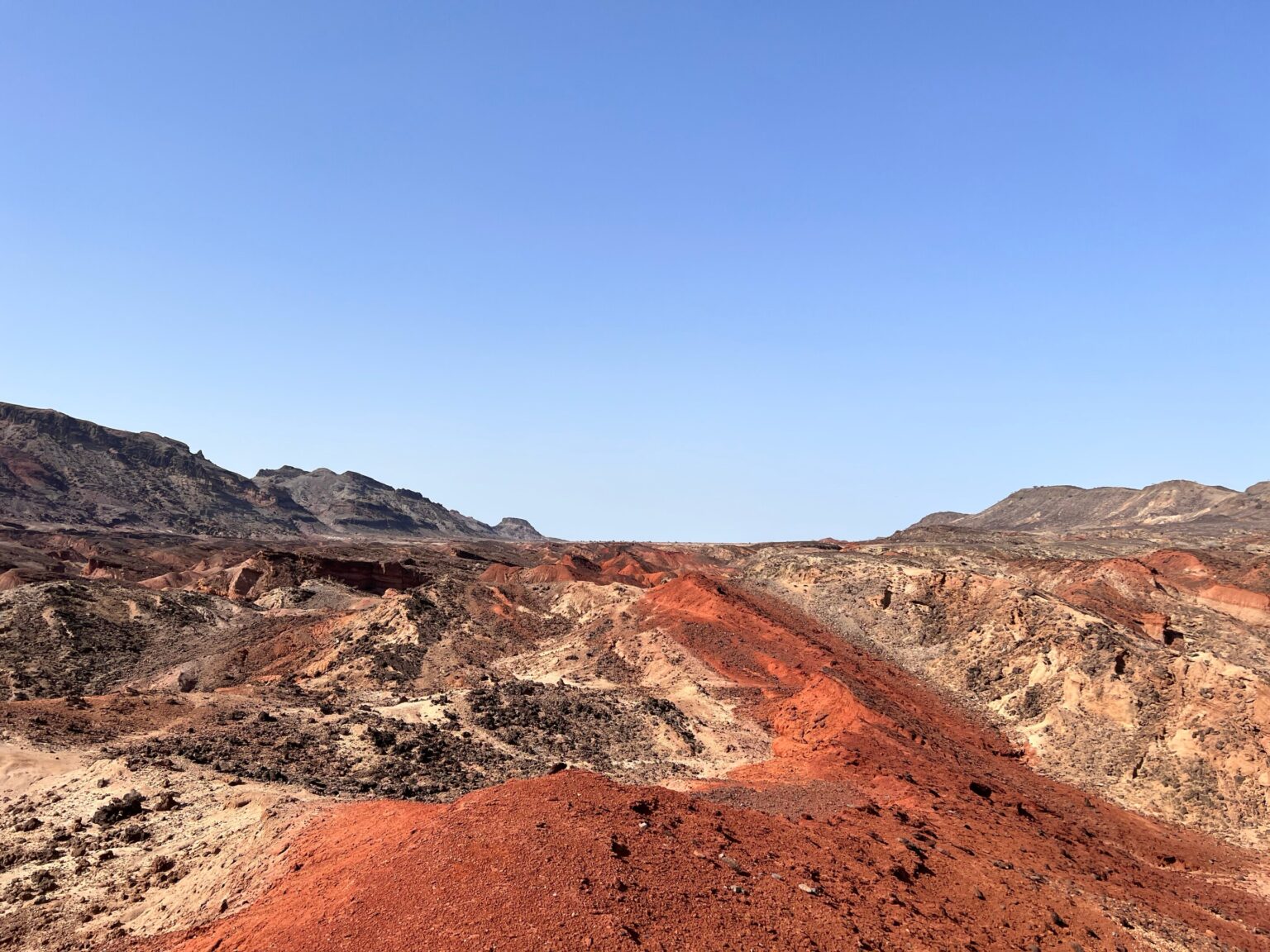
A new study has found that the Earth’s crust beneath a key region in East Africa is thinning more than scientists previously thought—bringing the continent closer to a future split and offering new clues about why the area holds so many early human fossils.

Contents
A continent slowly pulling apartA thinner crustA future ocean—millions of years awayRethinking a famous fossil siteLinking geology and human history

The research, published in Nature Communications, focuses on the Turkana Rift, a vast geological region that stretches across parts of Kenya and Ethiopia.

A continent slowly pulling apart

The Turkana Rift is part of the larger East African Rift System, one of the few places on Earth where a continent is actively breaking apart.

Here, tectonic plates are slowly moving away from each other. The African plate is separating from the Somali plate at a rate of about 4.7 millimeters per year.

This process, known as rifting, stretches and weakens the Earth’s crust. Over millions of years, it can eventually split a continent and form a new ocean.

The new study shows that this process is more advanced in the Turkana Rift than previously believed.

“We found that rifting in this zone is more advanced, and the crust is thinner than anyone had recognized,” said lead author Christian Rowan from Columbia University’s Lamont-Doherty Earth Observatory.

A thinner crust

Using seismic data—similar to sound waves used to map underground structures—the researchers were able to “see” deep beneath the Earth’s surface.

They found that the crust along the center of the rift is only about 13 kilometers thick. In comparison, areas outside the rift have crust more than 35 kilometers thick.

This thinning is part of a process called “necking,” where the crust stretches and narrows, much like a piece of candy being pulled from both ends.

As the crust becomes thinner, it also becomes weaker, making it more likely to eventually break apart.

Scientists believe the Turkana Rift has now reached a critical stage where this process is accelerating.

A future ocean—millions of years away

Although the findings sound dramatic, the changes are happening very slowly.

The rift began forming around 45 million years ago. The thinning phase likely started about 4 million years ago, after a period of intense volcanic activity.

It could take several million more years before the crust fully breaks apart and a new ocean begins to form, as water flows in from the Indian Ocean.

Still, scientists say the region offers a rare chance to observe how continents split.

“We now have a front row seat to observe a critical phase of continental breakup,” said one of the study’s co-authors.

Rethinking a famous fossil site

The findings may also change how scientists understand the region’s importance for human evolution.

The Turkana Rift is one of the richest fossil areas in the world. It has produced more than 1,200 fossils of early human relatives—about one-third of all such fossils found in Africa.

Because of this, some researchers have suggested the region was a key center of human evolution.

But the new study offers a different idea.

Around 4 million years ago, as the crust thinned and the land subsided, the region began to fill with fine sediments. These conditions are ideal for preserving fossils.

This means the area may not have been the main center of human evolution, but rather a place where fossils were especially well preserved.

“The conditions were right to preserve a continuous fossil record,” Rowan explained.

Linking geology and human history

The study highlights how geological processes can shape not just landscapes, but also the scientific record.

By understanding how the Earth’s crust moves and changes, researchers can better interpret where fossils are found—and why.

The findings may also help scientists explore how shifting landscapes and climates influenced the evolution of early humans.

As research continues, the Turkana Rift remains one of the most important places on Earth for studying both the planet’s deep history and the origins of humanity.

And deep below its surface, the slow forces reshaping Africa are still at work—quietly preparing the ground for a very distant future.


You Might Also Like

Less Intensive Farming Can Boost Coconut Yields and Protect Soil

250-Million-Year-Old Fossil Egg Solves Mystery of Early Mammal Relatives

Somalia condemns Israeli diplomatic appointment to breakaway Somaliland

Africa’s Elephants Are Losing Genetic Diversity as Habitats Shrink, Study Finds

Blending Traditional Knowledge and Modern Science Could Help Africa Fight Crop Diseases

TAGGED:AfricaEthiopiaKenyaRift Valley
Share This Article
Facebook Twitter Pinterest Whatsapp Whatsapp LinkedIn Reddit Telegram Email Copy Link

You Might Also Like

Cheick-Oumar Sylla, Director for North Africa and the Horn of Africa at IFC
Business

IFC eyes over $2.2bn investments in North Africa this year

By DNE Africa 2 Min Read
Mahmoud Mohieldin: Africa’s share of global FDI does not exceed 6%
Business

Mahmoud Mohieldin: Africa’s share of global FDI does not exceed 6%

By DNE Africa 2 Min Read
Low Res Sampling Image 1
HealthScience

Wastewater Plants in South Africa May Be Spreading Antibiotic Resistance

By Mohammed El-Said 5 Min Read

More Popular from DNE AFRICA

Ad imageAd image
BusinessScience

Pandemic Financial Worries Slowed Digital Finance Adoption in Africa

A new study suggests that financial worries during the COVID-19 pandemic made many people in Africa…

By Mohammed El-Said
Politics

Sudan warns Ethiopia against “hostile” drone incursions into its territory

The Sudanese government on Monday warned Ethiopia of the consequences of "hostile acts" following what it…

By DNE Africa
Politics

Jawar Mohammed Exposes Ethiopian Airlines Alleged Transport of Sudan’s RSF Forces to Assosa

Prominent activist Jawar Mohammed is accusing Ethiopian Airlines of using civilian aircraft to transport Sudan's Rapid…

By DNE Africa
Science

Rethinking the Green Revolution: What Tanzanian Farmers Are Teaching Development Planners

In a rural village in Tanzania, farming decisions are rarely simple calculations about seeds, fertilizer, or…

By Mohammed El-Said
DNE Africa

News by Africans, For Africans

Categories

  • The Escapist
  • Entertainment
  • Business

Quick Links

  • Advertise with us
  • Newsletters
  • Complaint
  • Deal

DNE Africa.All Rights Reserved.

Welcome Back!

Sign in to your account

Username or Email Address
Password

Lost your password?