
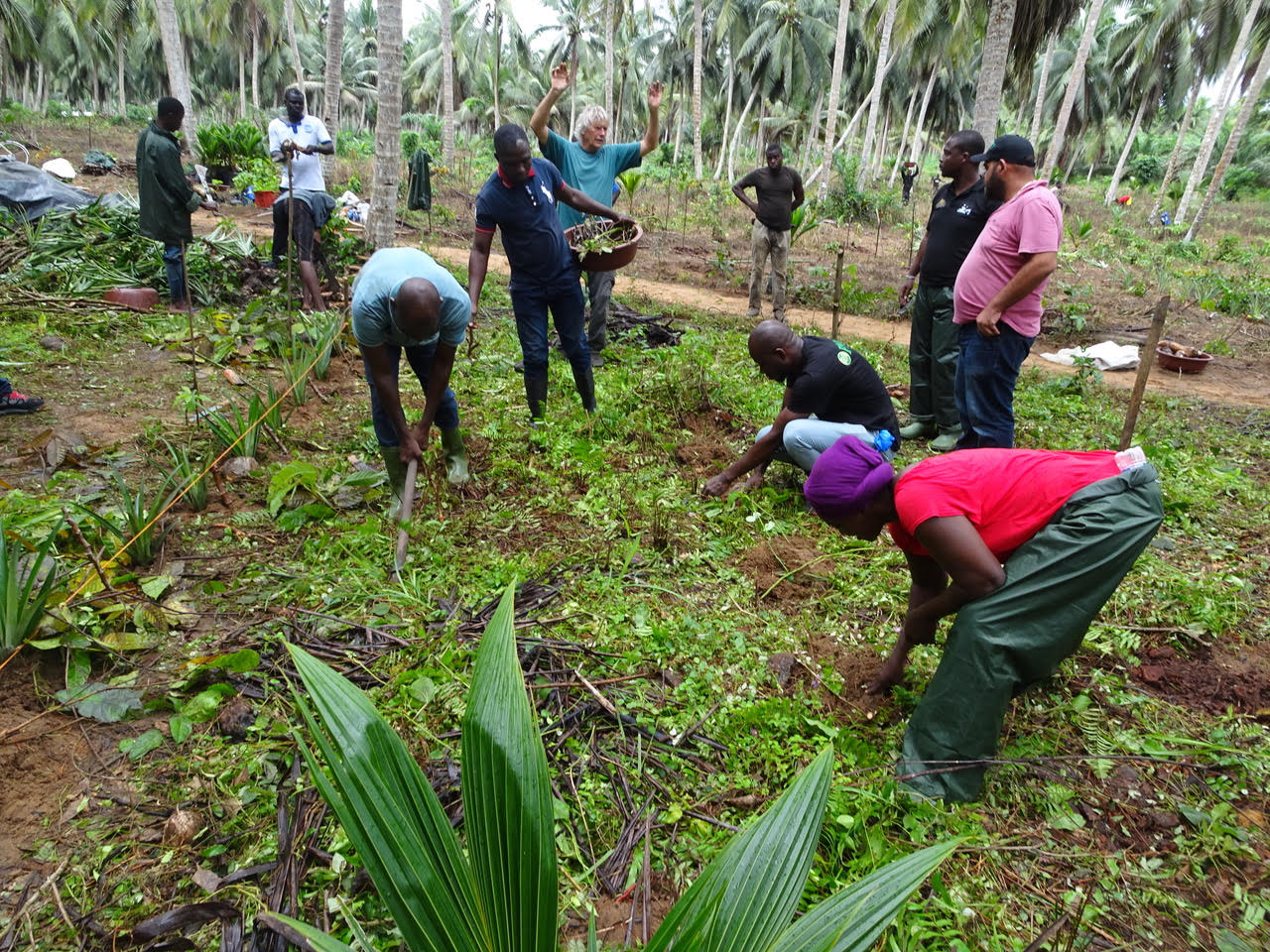

A new study suggests that coconut farmers may not need to rely on intensive farming methods to increase production. Instead, using lower-intensity practices could improve both crop yields and soil health.
The research, published in Plants, People, Planet, shows that reducing disturbance in coconut plantations can support beneficial soil life while limiting harmful pathogens.
The study was carried out by an international team including scientists from Imperial College London and Côte d’Ivoire’s Centre National de Recherche Agronomique.
A shift in how plantations are managed
Coconut and oil palm crops are among the world’s most important sources of vegetable oil. Demand has grown rapidly in recent decades, leading to the expansion of plantations, often at the cost of tropical forests.
Traditionally, farmers have used high-intensity methods—clearing vegetation, disturbing soil, and simplifying ecosystems—to increase yields.
But this new research challenges that approach.
Scientists tested different farming methods at a long-running coconut plantation site in Côte d’Ivoire. They compared high-intensity plots, where undergrowth was cleared, with lower-intensity plots that allowed natural vegetation to grow.
The results showed that medium- and low-intensity practices could match—or even outperform—high-intensity farming in terms of yield.
The role of soil life
A key factor behind these results is the health of the soil.
Healthy soil contains a wide range of microorganisms, including fungi that help plants absorb nutrients. One important group is Mycorrhizal fungi, which form beneficial partnerships with plant roots.
These fungi help coconut trees take in water and nutrients more efficiently, supporting growth and productivity.
However, intensive farming can damage this system.
The study found that heavily managed plots had more harmful fungi, including pathogens such as Pestalotiopsis and Lasiodiplodia, which can reduce yields and harm plant health.
In contrast, less intensive farming allowed beneficial fungi to thrive while reducing harmful organisms.
“By fostering a diverse soil community, lower-intensity practices suppress harmful pathogens while promoting beneficial fungi,” said Professor Vincent Savolainen, one of the study’s authors.
Benefits for farmers
The research also highlights economic advantages.
Under typical conditions, farmers using lower-intensity methods could earn an additional $800 to $1,200 per hectare each year. This is equivalent to producing 1,800 to 2,700 more coconuts per hectare.
These practices are relatively simple to adopt, making them suitable for smallholder farmers across tropical regions.
Co-author Ben Roberts said finding ways to maintain high yields while reducing environmental harm is critical.
“Palm species are extremely important crops,” he said. “If we can reduce their environmental impact while keeping productivity high, that’s very exciting.”
Rethinking agricultural intensity
The findings come at a time when global demand for vegetable oils continues to rise.
Since 2000, oil palm production has tripled, and coconut remains one of the top five sources of vegetable oil worldwide.
But expanding plantations has raised concerns about deforestation, biodiversity loss, and soil degradation.
This study suggests that increasing productivity does not always require more intensive farming.
Instead, maintaining ecological balance—such as preserving ground vegetation—can support both production and environmental health.
A more sustainable future
Researchers say the study is one of the first to clearly link soil biodiversity, plant disease, and crop yield in African coconut plantations.
It shows that protecting natural processes in the soil can lead to better long-term outcomes for both farmers and ecosystems.
The work also highlights the importance of international collaboration in developing practical solutions for agriculture.
Beyond the research, some of the scientists are working to apply these findings in real-world settings.
Two of the study’s authors have launched a startup called Rhynco, which focuses on improving sustainability in palm farming.
The company uses insects to recycle agricultural waste—such as palm fronds—into useful products like fertilizer, protein, and oil. This approach aims to reduce pollution while creating new income sources for farmers.
Balancing food production and the environment
As pressure grows on tropical ecosystems, the study offers a hopeful message.
It shows that farming methods can be redesigned to support both productivity and biodiversity.
By reducing intensity and working with natural systems rather than against them, farmers may be able to produce more food while protecting the environment.
In a world facing climate change and rising demand for food, such approaches could play an important role in building a more sustainable agricultural future.


