
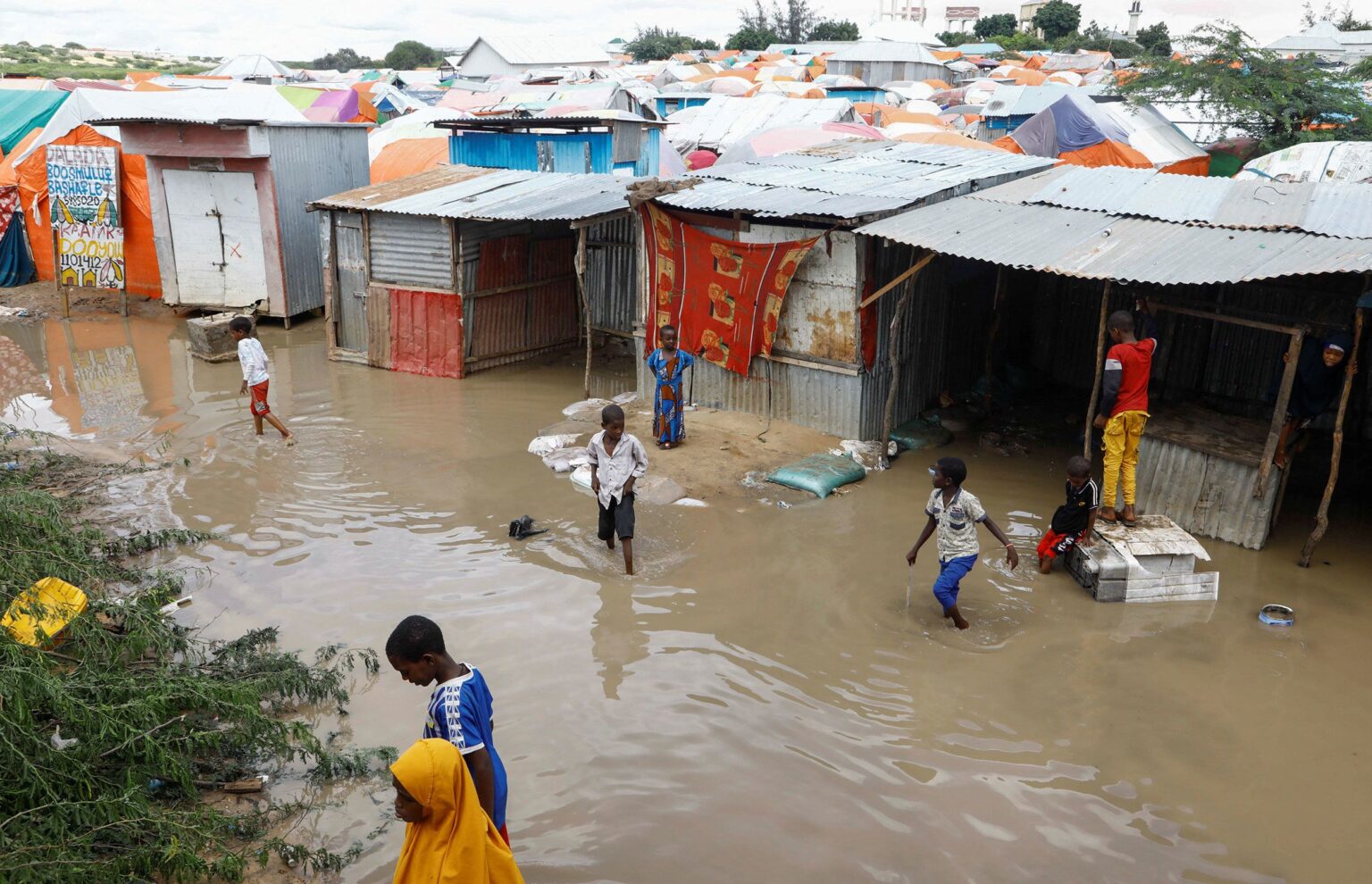

Extreme weather events such as droughts, floods and heatwaves are increasingly influencing how African communities respond to climate change, affecting not only adaptation strategies but also environmental attitudes and everyday behaviour, according to a new scientific review.
The study, published in the journal Climatic Change, examines evidence from across the continent on how climate shocks are shaping pro-environmental actions, climate awareness and household adaptation decisions.
Researchers found that severe droughts and other extreme climate events can act as “turning points”, pushing people to change farming practices, conserve resources or support environmental policies — but they can also trigger short-term survival responses that undermine long-term sustainability.
The paper provides one of the most comprehensive scoping reviews to date of the behavioural impacts of climate extremes in Africa, where climate vulnerability remains among the highest globally.
Behavioural response is becoming central
Most climate research in Africa has traditionally focused on physical impacts — crop loss, water scarcity and infrastructure damage — but the authors argue that understanding behavioural change is now equally critical.
Extreme weather does not only destroy livelihoods, they note, but also reshapes how individuals perceive environmental risk and whether they invest in adaptation.
“Adaptation behaviour and pro-environmental actions are increasingly shaped by direct experience of climate extremes,” the review concludes.
Drought emerged as the most dominant extreme event affecting behavioural decisions, particularly in agriculture-dependent regions.
The review finds that repeated drought exposure often forces farmers to adopt climate-adaptive practices, including drought-resistant crops, altered planting schedules and improved water management.
However, researchers warn that drought also intensifies poverty and food insecurity, sometimes reducing people’s ability to invest in sustainable long-term solutions.
In some cases, households respond by cutting forests for fuel, overusing groundwater or abandoning land — actions that may worsen environmental degradation.
Floods and storms can weaken resilience
Flooding and cyclones were also linked to changes in environmental behaviour, but often in more disruptive ways.
Unlike drought, which builds gradually, floods frequently destroy infrastructure and displace communities, weakening institutional support and interrupting adaptation plans.
The review highlights that in many African contexts, extreme weather reduces access to education, financial services and government assistance — limiting the capacity for long-term behavioural change.
Beyond immediate coping strategies, the study finds evidence that climate shocks can increase climate awareness and support for environmental action.
Communities exposed to repeated climate disasters are more likely to recognise climate risks and express willingness to adopt conservation practices.
At the same time, behavioural shifts depend heavily on trust in institutions and the availability of resources.
Where governments fail to provide reliable support, climate extremes may lead to fatalism, migration or disengagement, rather than proactive environmental behaviour.
Data gaps remain significant
Despite growing interest, the authors note that behavioural research on climate extremes in Africa remains limited and uneven.
Most studies are concentrated in East and Southern Africa, while evidence from Central and West Africa is far weaker.
The review calls for stronger integration between behavioural science, climate policy and disaster risk planning.
The authors also stress that climate adaptation programmes must account for social and psychological dimensions, not only technical solutions.
Africa is warming faster than the global average, and extreme weather events are becoming more frequent and intense.
With hundreds of millions of Africans dependent on rain-fed agriculture, behavioural adaptation will be crucial in determining whether societies can withstand accelerating climate stress.
The review suggests that policymakers should treat climate extremes not only as environmental hazards, but as drivers of social and behavioural transformation.
Investing in resilience, early warning systems, education and community-based support could help ensure that climate shocks lead to sustainable adaptation rather than deeper vulnerability.


